
Contour: A Peek Behind The Canvas
Twist Gallery’s Contour exhibit explores growth, change, and renewal through layered textures, shifting landscapes, and expressive abstract forms. Viewers are able to step into an immersive visual experience where texture becomes story and time unfolds in cycles. From shifting horizons to textured surfaces that echo seasons passing, each piece reflects the rhythms of life, inviting viewers to pause, reflect, and connect with the ever-evolving nature of memory, place, and transformation.
We invite you to meet the artists behind these fabulous pieces and delve deeper into their artistic methods, passionate beginnings, and their inspirations.
Divyani Chandorkar
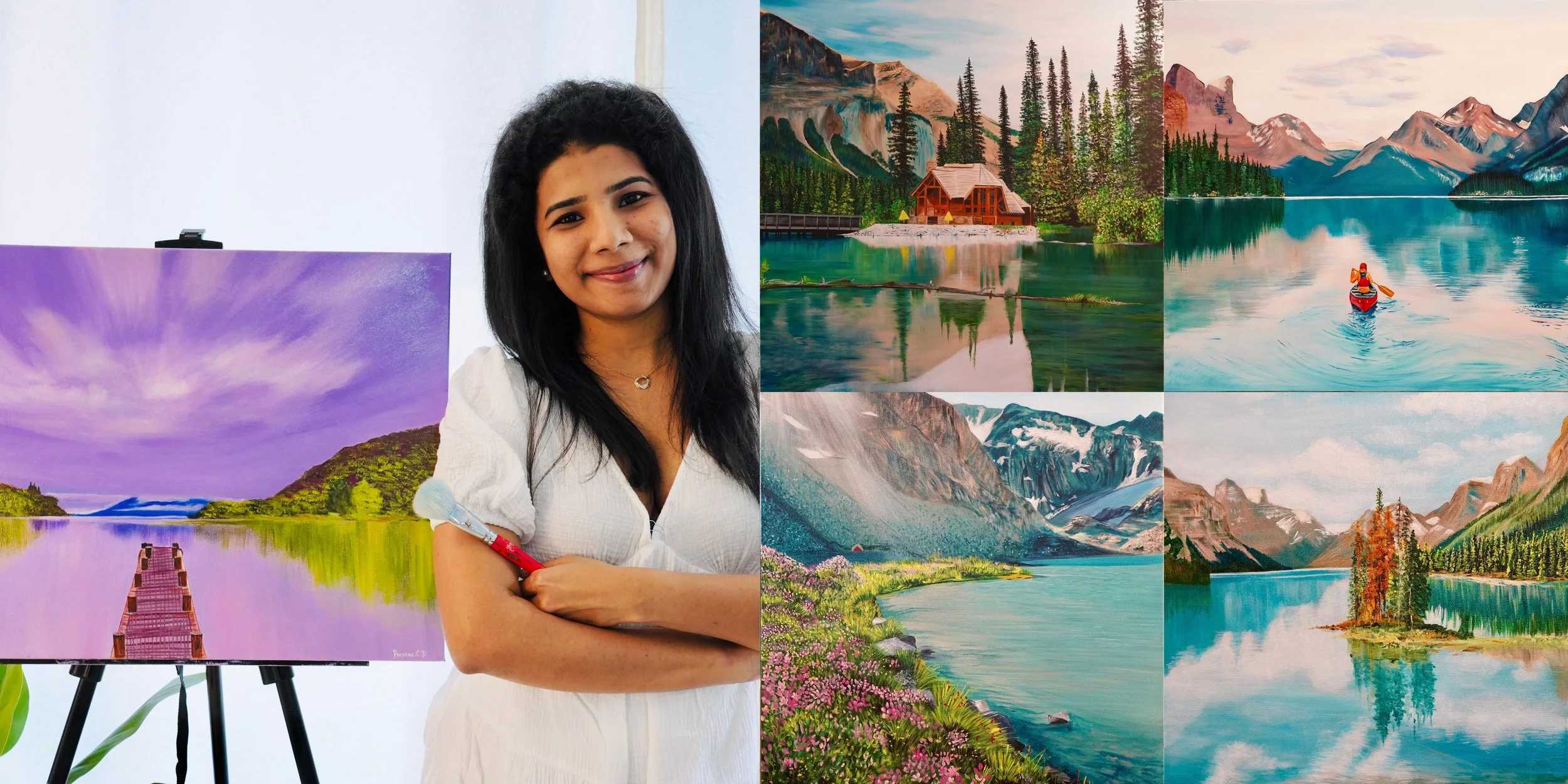
You’ve stated that you are less interested in capturing realism and more inclined to leave space for the viewer’s own interpretation. Do you believe a piece becomes more meaningful when viewers are able to project their own memories, experiences, and emotions onto what they see?
“Absolutely. I love when a painting allows the viewer to bring their own memories and emotions into it. I don’t want to tell someone exactly what they should feel or see. If a painting reminds them of a place, a moment, or simply makes them feel calm or connected to nature, that makes the work more meaningful to me.”
You are particularly drawn to the Canadian Rockies as a subject within your work. What is it about the Rockies that continues to resonate with you compared to other elements of the Canadian landscape?
“The Canadian Rockies became a big inspiration for me after my recent trip. There is something very powerful and peaceful about the Rockies. The combination of dramatic mountains, quiet lakes, and endless wilderness really draws me in. Every time I see them, the light, colours, and atmosphere feel different, so there is always something new that inspires me to paint.”
As a self-taught artist, how has teaching yourself to paint shaped your creative process and the way you approach each new landscape?
“Being self-taught has allowed me to explore at my own pace and develop my own way of seeing and painting. I’m always experimenting and learning from each painting. When I approach a new landscape, I focus less on getting every detail right and more on capturing the feeling and atmosphere of the place.”
Lynden Cowan
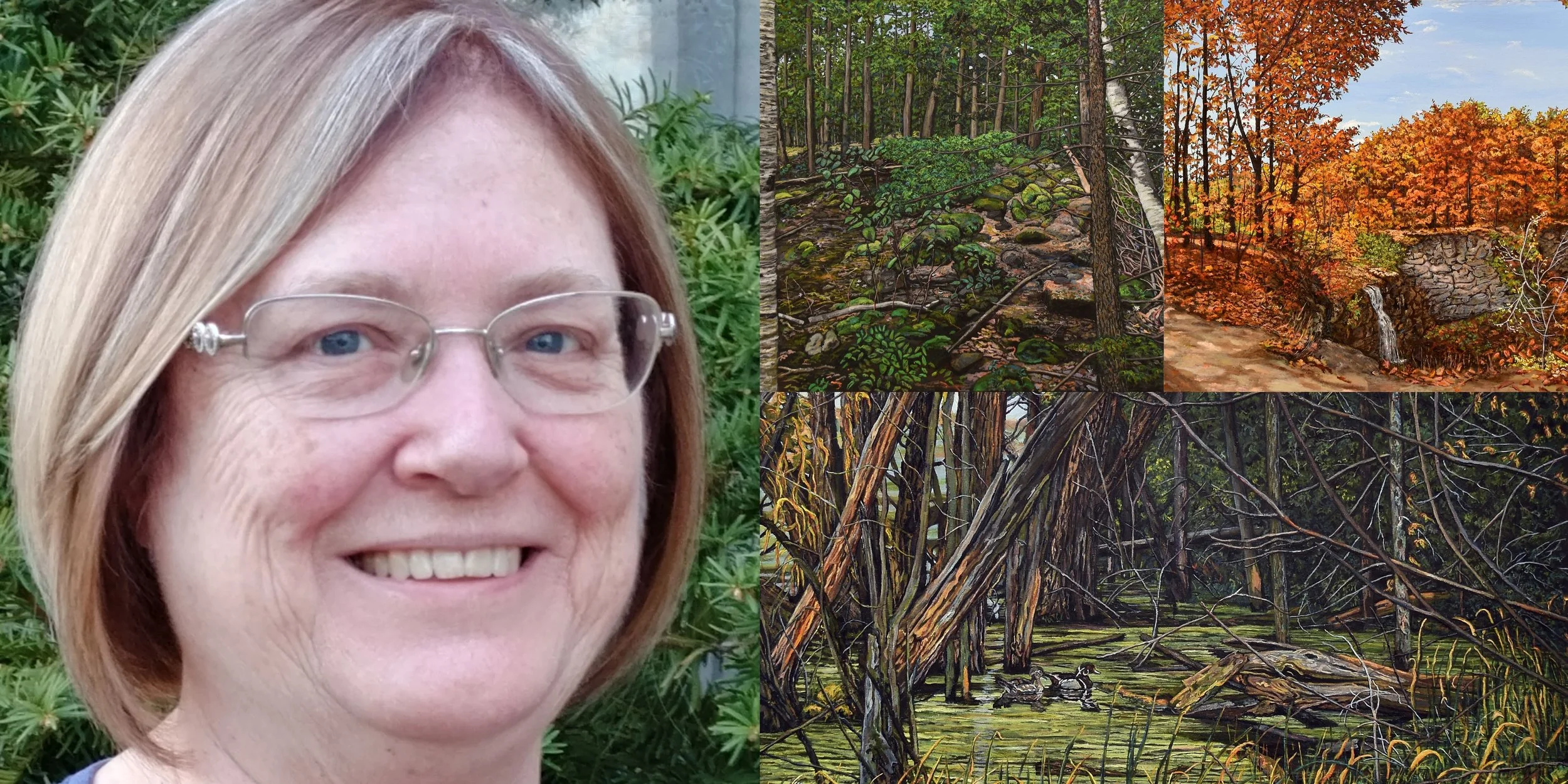
Your childhood summers in rural Nova Scotia clearly shaped your connection to nature. How do those coastal and woodland memories continue to guide your selection of landscape subjects today?
“Growing up, summers were spent at my grandmother’s home in rural Nova Scotia, where I played by the ocean, ran through the woods, and more, so this influenced how I paint. When you sit in the mist of the rolling fog from the ocean, or crouch down in the bushes to hide from and observe a nearby moose, or dig clams in the fading light of the day when the tide is out, the subjects meld with your soul and you try to convey the feeling you are experiencing to others in your artwork. Paintings are meticulously rendered from multiple layers of thinly applied paint, and small strokes pick up the desired natural light, leaving the viewer with the sense that they are standing right there, as part of the painting.”
You’ve described yourself as a self-taught artist. What initially inspired you to pursue painting, and what motivated you to develop your practice independently?
“I first started painting when I was eight years old and would grab the left- over wood that my father had, who was a cabinet maker, to use as my canvas. Paints were created from vegetables and fruits and using my mother’s pots, but I gradually evolved to real paint, when a group of teachers brought a small gift to my home at Christmas, of real oils and canvas. When I was fourteen, since there were not many jobs available for kids that age, I opened art classes, and at one point had eighty- three students in several small groups, and also started doing commissions for various requests. Through the week I paint in my studio at home, but on weekends you most often find me in my studio at the Alton Mill Art Centre. As a self- taught artist, I prefer oil paint on canvas, and for the most part, using triple zero brushes for working on fine detail.”
You’ve expressed a desire to capture the beauty of nature in your work as a means of encouraging viewers to appreciate, protect, and improve the environment. Was there a particular experience or moment that inspired this environmental focus, or has it developed from a longstanding personal passion?
“I try to share some of the beauty of an area and hope that it will entice the viewer to enjoy more of what Mother Nature has to offer in the outdoors, and hope that they will engage in protecting and trying to improve our environment. My deep commitment to environmental causes continues to this day, and as a Signature member of the Artists for Conservation, I fulfill my core obligation of needing to have a personal conservation project and providing education, by looking after the turtles at the Alton Mill Arts Centre, where my official title with another artist belonging to the same group is Turtle Nanny.”
Daria Gavrilina
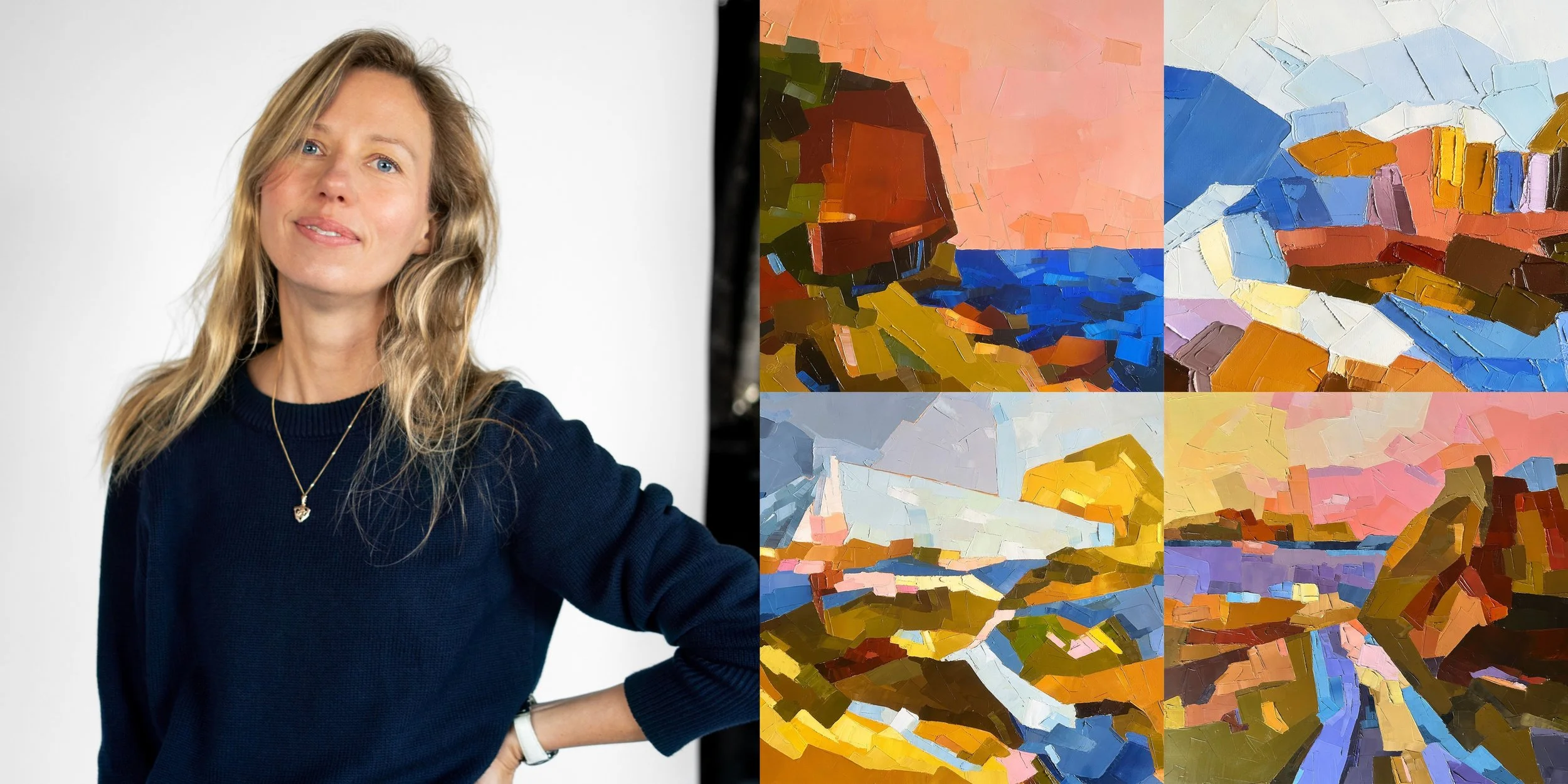
You frequently incorporate the palette knife technique into your work. What initially inspired you to employ this particular method of painting compared to other styles?
“The palette knife offered a level of structural flexibility that is challenging to achieve with using brushes. It allowed me to shift away from soft blending toward defining nature through clean, geometric planes. This technique provides the freedom to switch instantly between broad, colour fields and crisp edges, giving the canvas both architectural geometry and rich tactile depth.”
When observing nature and identifying sources of inspiration for your work, do you follow a particular process or set of criteria? How has this approach to observing and interpreting your surroundings evolved throughout your artistic practice?
“I usually capture numerous photos on nature trips, bring them to the studio, start with sketches, and then progressively simplify and break the compositions into clean geometric blocks. This semi-abstract approach creates a grounded, tranquil experience while leaving open space for your own personal interpretation.”
Your paintings often evoke a strong sense of calm and tranquility. What initially inspired your interest in conveying these qualities, and why have they become such an important part of your artistic expression?
“I wanted to create visual spaces where people can truly pause and unwind. Even when working with vibrant hues, the colours are carefully balanced to complement rather than overwhelm - inviting you into a warm, dreamy space that offers a sense of grounding and stability.”
Irina Laskin
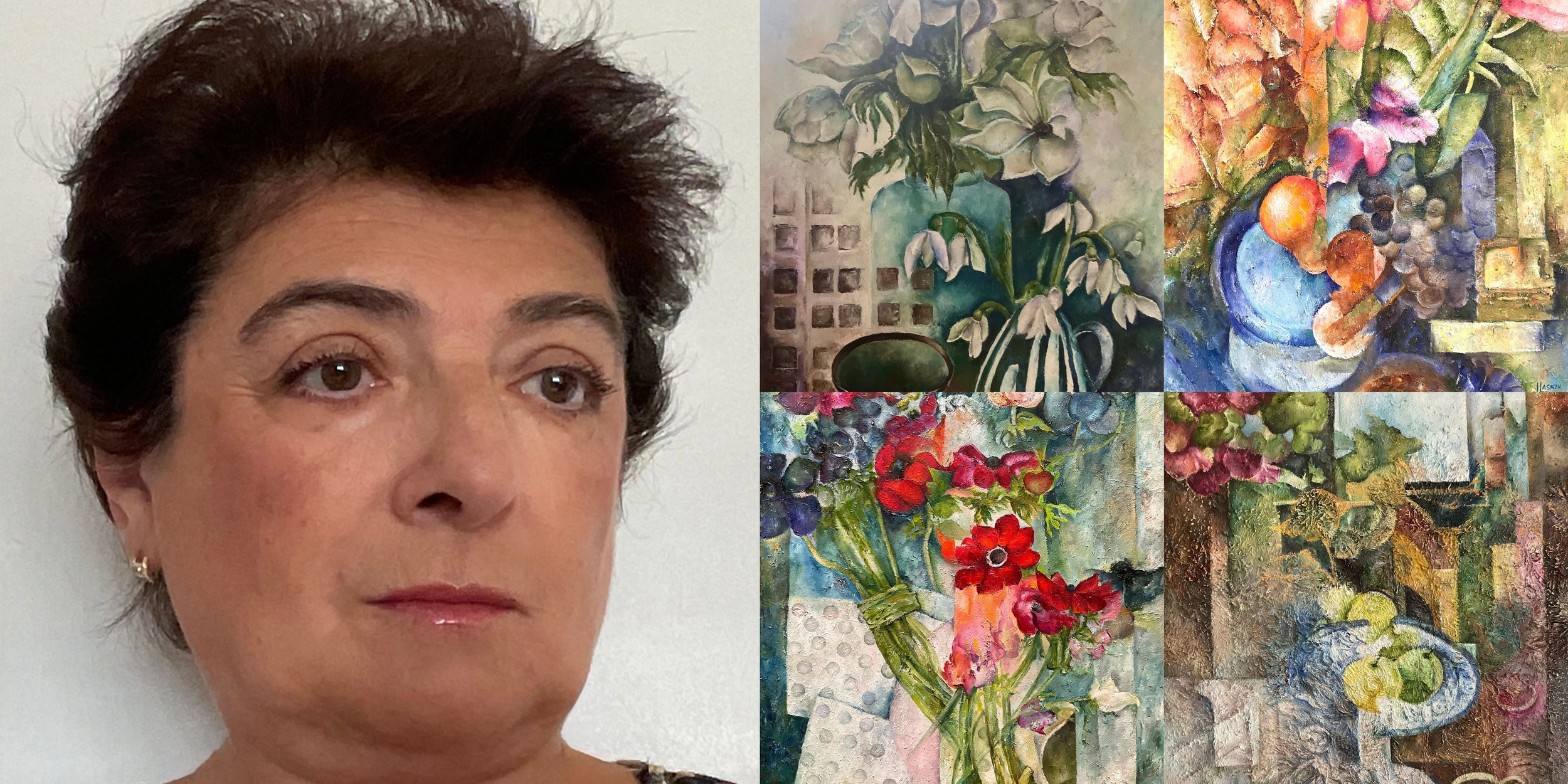
Your work often brings together elements of architecture and nature in ways that feel both unexpected and cohesive. How do you identify relationships between these seemingly distinct sources of inspiration? Are you drawn to particular formal elements or is the connection more intuitive and rooted in an emotional response?
“My background in architecture has strongly influenced the way I see the world. As an Architect, I learned to look at objects not only for what they are, but also for how they can be transformed and brought together to create a new composition. Nature provides a very different kind of inspiration. It is less controlled and more spontaneous, but it has its own rhythm, structure, and harmony. I often find connections between architectural forms and natural shapes through their lines, contour, textures, and movement. Sometimes I begin with a particular shape or formal relationship, but very often the composition develops through an emotional response to what I see. I enjoy discovering unexpected relationships between objects and bringing them together into one image.”
You emphasize the importance of reinterpreting reality rather than simply replicating it. What factors most strongly influence the way you reinterpret what you observe? Do your current emotions, personal experiences, and memories play a role in transforming familiar subjects into something more abstract and expressive?
“For me, painting is not about copying what I see. It is about interpreting it and discovering something new within it. I am interested in taking familiar objects and transforming them through colour, shape, proportion, texture, and composition. My emotions and experiences definitely influence this process. The way I see the same object can become simplified, rearranged until they take on a different visual language. Sometimes the unexpected result is more interesting to me than the original idea. I want the work to remain connected to reality, but at the same time to offer the viewer a different way of seeing it.”
Your paintings regularly transform everyday objects into vibrant, collage-esque compositions that still feel familiar while incorporating a fresh perspective. What do you hope viewers will discover or feel when experiencing these common items through your unique artistic perspective?
“I hope viewers recognize something familiar, but then pause and look at it differently. Everyday objects can become surprisingly expressive when they are removed from their usual context and brought together in an expected composition. In my abstract still lifes, I often think of the composition almost like a collage. I take different forms, colours, patterns, and fragments and assemble them into a new visual whole. Colour and energy are very important to me. I want the paintings to create a feeling of movement, curiosity, and joy, while also inviting the viewer to spend time discovering the different elements within the composition. I don't want to tell the viewer exactly what to see. I would rather leave room for personal interpretation, so each person finds their own associations and emotions in the painting. I also want to add that this is my first exhibition after a long break. Returning to exhibiting my work feels like an important new chapter in my artistic journey.”
Joanne Lomas
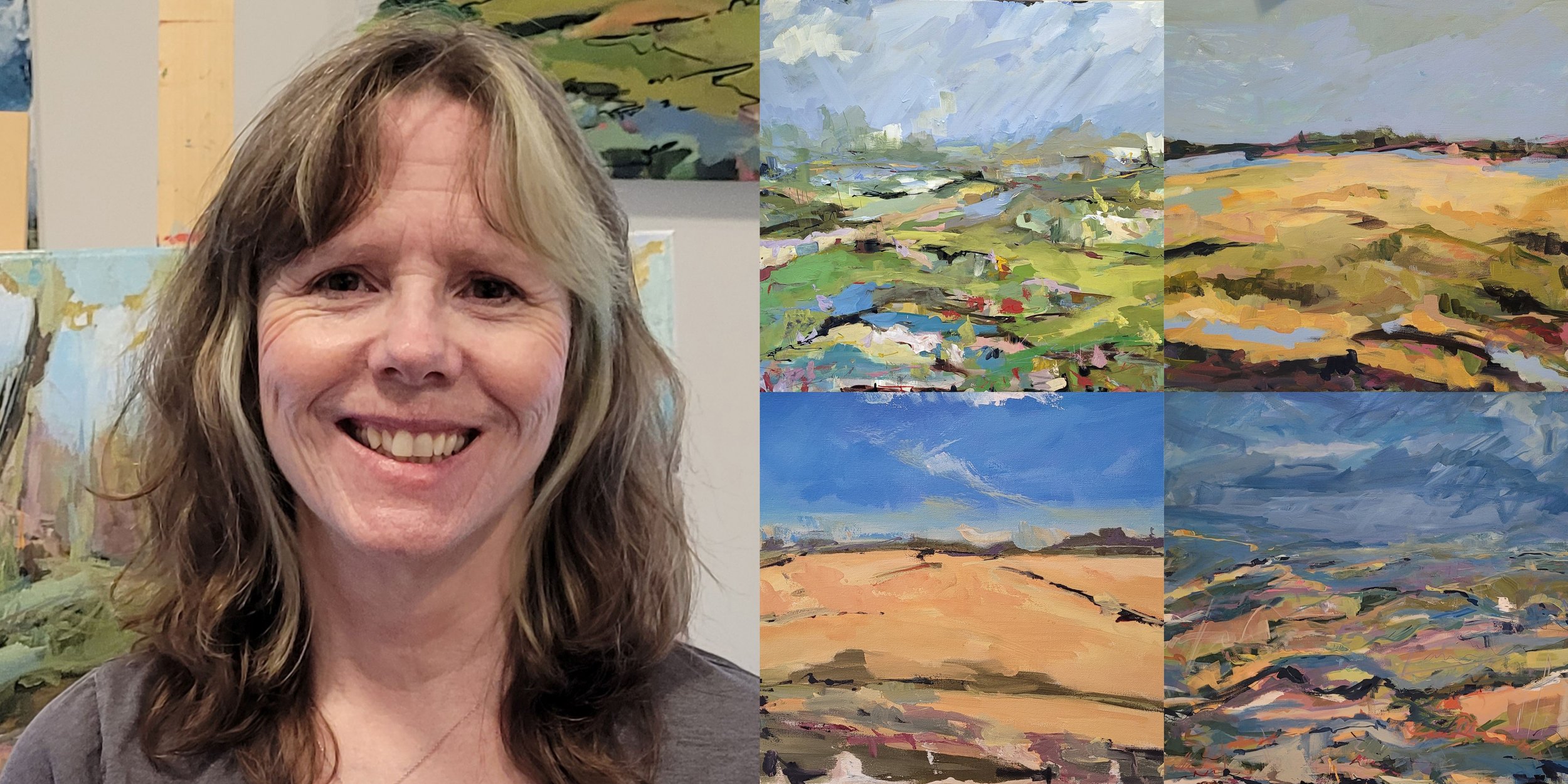
You talk about evoking sensory experiences within viewers instead of just simply moments in time. What drew you to this particular desire compared to simply imitating the landscapes you see on a canvas?
“As an artist I like my paintings to be about the moment. The viewer of my work may experience a moment as I did, perhaps not the same but their own. I create my paintings to be more than what is seen but a moment for the viewer to enjoy and visually wander around the canvas . My paintings stand on their own, not a reproduction but a new experience for the viewer. I want my work to allow the viewer to look at all the areas and create their own story.”
You’ve described your practice as intuitive and process-driven. Could you elaborate on what this process looks like for you, from the initial stages of developing an idea to the completion of a work?
“When I paint my abstract landscapes I begin with large areas of colour then slowly add colours, mixing and creating new colours as I work into the painting. I add shapes, lines, and textures creating conversations with what is already on the canvas. There is no initial planning, I just paint and work through how the colours blend and react to each other. I love how a colour looks in one area of the painting yet the same colour is completely different when placed against other colours in different areas of the canvas. A lot of my time is spent looking and deciding what is needed to create a painting that becomes something of its own and not a duplicate of its source. I recreate from my memories changing out recognizable forms into patterns, shapes and blurred spaces.”
Your work is inspired by landscapes in motion compared to static viewpoints. How has consistently observing the world while traveling through Southern Ontario altered the way you view and interpret colour, light, and atmosphere in your everyday life?
“I’ve always been intrigued by motion in paintings. Gerhard Richter’s paintings are some of my favorite as he blurs his subject matter. Much of my work involves motion and blur such as my spin series that blur the landscape in a circular formation. Light is an important aspect of painting and I am always watching when hiking or traveling in a car for the exciting moments when light highlights a perfect subject or creates patterns across a field. Just as the same colour can change in different parts of a painting, I love how light can also create new excitement in the same areas. Sometimes, it is hard for an artist to know when the painting is complete. With this series, after adding all the colours, lines, shapes, and playing with light and shadows, I can tell I’m finished when there is just no other place to put a drop of paint that will still dance. Music is important when I paint as often I will sing and dance as I work to really feel the moment. I enjoy painting and perhaps that is seen in what a create.”
Annette McArthur
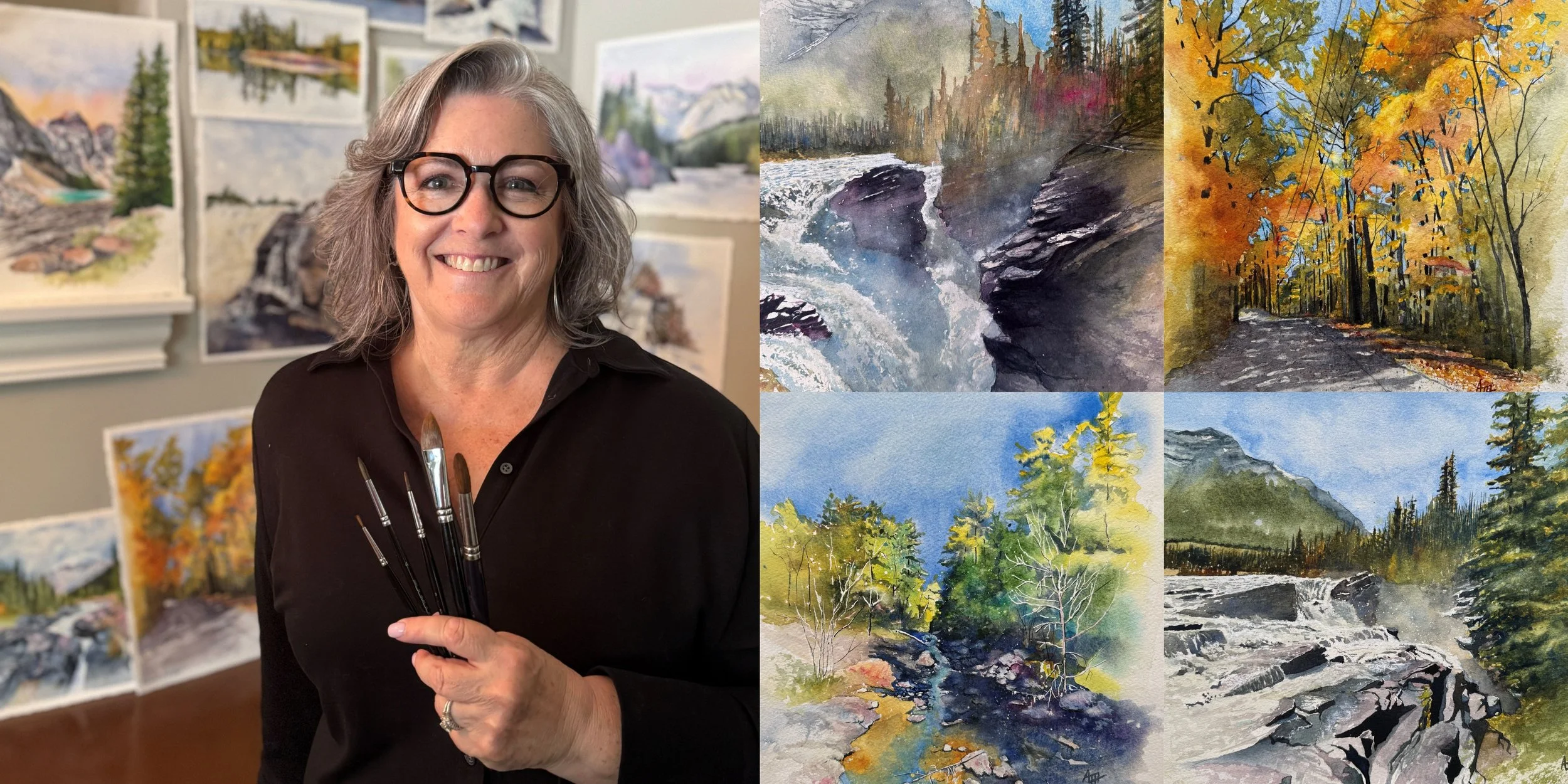
You mentioned that this is your first gallery exhibition. What inspired you to present your work at Contour, and what drew you to the gallery as a space to introduce your practice to a wider audience?
“I love the idea of an event space where the art is exposed to a wider audience. Potentially someone new who never thought of purchasing an original piece of artwork before but finds a piece that really speaks to them.”
You’ve spoken about being inspired by the understated beauty of Canada's scenic landscapes. When you encounter landscapes that influence your work, do you intentionally seek out particular places and scenes, or do these moments tend to emerge spontaneously through your everyday experiences?
“Definitely there are times that I seek out places and scenes but for the most part the moments tend to emerge through everyday experiences.”
Your artistic process is highly detailed and methodical, beginning with photography and culminating in a carefully executed watercolour. Has this structured approach always been central to your practice, or has your process evolved over time? If so, what has influenced that evolution?
“My approach has typically remained the same as my main method of artistic expression, however, my eye for potential paintings has grown and matured with my experience as an artist.”
Yangyang Pan
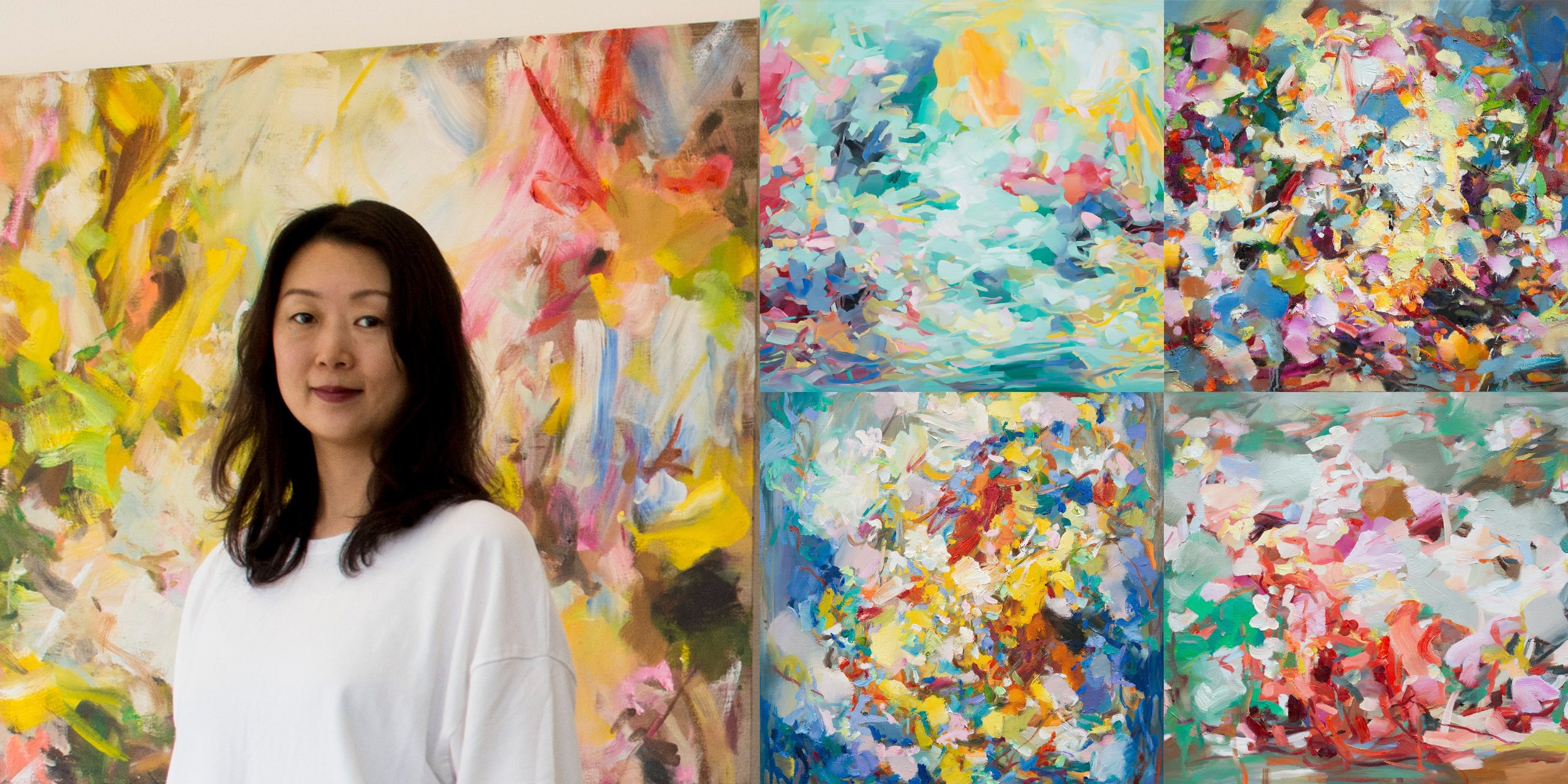
You have described your work as a combination of Eastern aesthetics and Western abstraction. How do you navigate the intersection of these two artistic perspectives while preserving and expressing the distinct qualities of each?
For me, the relationship between Eastern aesthetics and Western abstraction is not a deliberate fusion, but something that has developed naturally through my experience. Growing up in China, Eastern ways of thinking, particularly a reverence for nature, a sense of harmony, and the expressive spirit of Qi within Xie Yi, became deeply embedded in my visual language. At the same time, the freedom of colour and mark-making, as well as the physical intensity of Western Abstract Expressionism, offer me a way to express these ideas in a more contemporary and expansive language. Rather than defining a boundary between the two, I am interested in what can emerge in the space between them, and how seemingly ordinary and traditional Eastern ideas might open up new possibilities through contemporary abstraction.
You have stated that, rather than working from a fixed plan, you allow emotion to guide your creative process. How does your emotional state influence the way you approach a painting, and in what ways do you see those emotions reflected in the finished work?
Each painting for me is both an exploration and a process of confronting myself honestly. Most of the time, I begin with a general idea or subject in mind, but without a fixed outcome. I allow the painting to unfold through the movement of the body, intuition, and emotion. What keeps me engaged in the process is the openness it allows and the freedom to express my inner voice instinctively across the canvas. I enjoy remaining open to whatever may emerge, allowing the desire to express something to flow through every element of the painting. The finished work carries traces of that emotional process, even when the original emotion is no longer visible in any literal sense.
Do you find yourself returning to particular memories, experiences, or emotions throughout your artistic practice, or do you intentionally seek to explore different moments and emotional experiences with each new work?
I definitely find certain memories returning while I am working, but I do not consciously direct my attention toward them. Instead, I respond to what is happening on the canvas in the present moment, to the lines, colours, and the way these elements begin to interact with one another. The memories are there, but they become part of the intuitive process rather than something I try to depict. I tend to hold on to positive emotions and a sense of passion, allowing them to push the painting toward something unexpected. Sometimes this leads me to a point on the canvas that I could not have anticipated when I began. Those unexpected moments are often where the painting becomes most interesting to me.
Steve Wilson
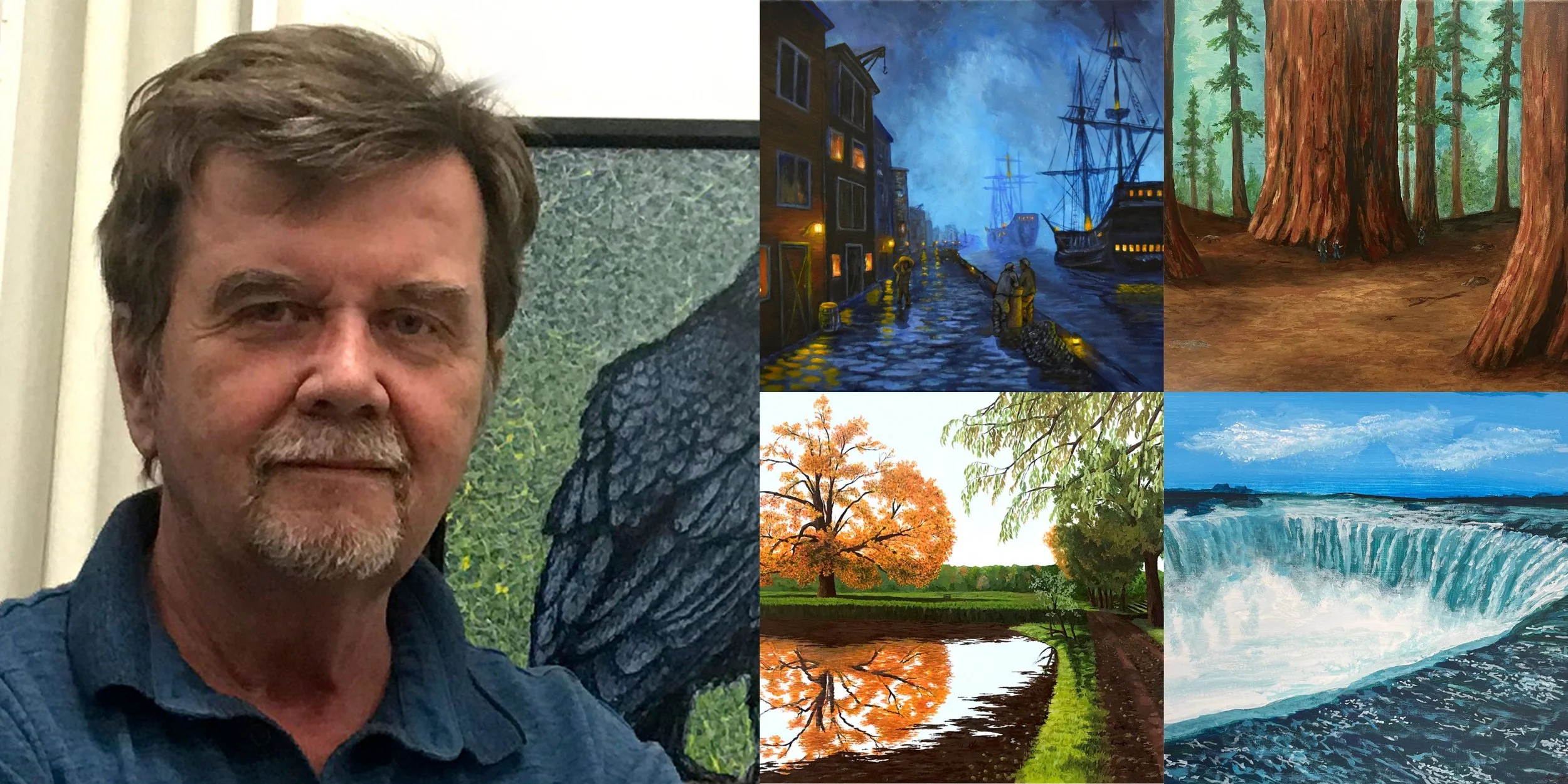
What initially drew you to approach your work through a more satirical lens, rather than focusing solely on realistic representation?
“In a lot of my work, I like to create a conversation with the viewer, present a view point that I want to portray In some instances, I use a satiric angle to allow the viewer to see my point or to drive their own conclusions. I do produce work that is solely realistic and pretty, but most of my larger pieces have a message with them that engage the viewer and challenge their view, allowing them also to challenge mine. I enjoy capturing light and shadow creating a mood as in one of the pieces in the Contour show at Twist Gallery - namely “The Docks”.”
Your work often seeks to evoke emotion while encouraging viewers to look beyond the immediate image and discover hidden details or messages. How do you approach balancing the story you intend to communicate with the individual interpretations that viewers may bring to the work?
“I feel the most important work evokes an emotion or feeling from the viewer, allowing the viewer to take something away with them, something that lives in their head and imagination. I like to hide little strings throughout some of my pieces, giving that little something extra to the viewer that allows them to take the time to explore my work. I try very hard to have these little gems not be at the forefront and not in your face, but rather hidden for the person that takes their time.”
You have worked extensively as an artist, educator, juror, and arts advocate throughout your career. How have these different roles influenced your own artistic practice, particularly the way you evaluate, develop, and communicate your work?
“In my 25 years producing work and putting my work out there for the public to look at, purchase, and enjoy, the experiences along the way have been invaluable to me. I have volunteered in many organizations and served on four different art boards which have all offered something very valuable to my career. I remember one of the first shows, I volunteered as a runner removing work as jurors go through and discuss the value of the work. One of the jurors was very disrespectful on a lot of work, and that I’ve carried forward throughout my life. As a juror myself now, I approach each job and artwork as an honour from the artist to allow me to jury their work. I offer respect to each piece, knowing that each artist puts their heart and soul in their piece. It’s only been in the last few years that I’ve started teaching and offering my knowledge to new artists so they may understand how to capture a feeling in the easiest way. Again, another situation that sits in the back of my mind was talking to an artist that was teaching probably 10 years ago. He chose not to teach how to paint. He told them how to do it because he wanted them to be reliant on him to keep coming back. I choose to share the knowledge and try to convey why and how you’re doing it so that they can make their choices themselves when I’m not there.”
Come visit Twist Gallery’s Contour exhibit on now until October, 29th 2026.