"CAPTURE" GET TO KNOW THE ARTISTS
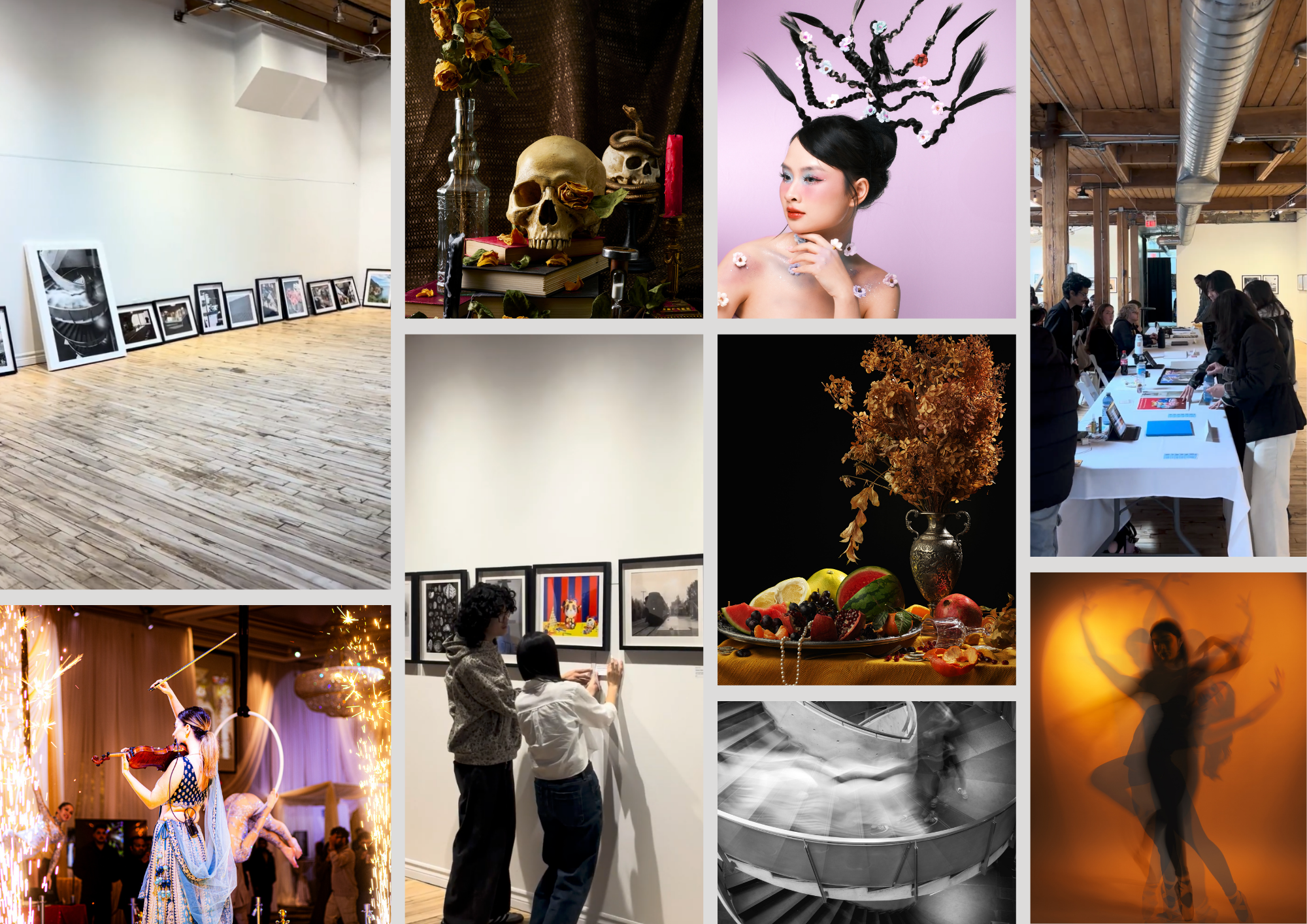
Step into a world of diverse landscapes at CAPTURE, a photography exhibition featuring the work of 8 talented local artists of the GTA.
This compelling showcase delves into a range of themes, from the peaceful serenity of nature to the vibrant energy of urban life, highlighting the beauty often hidden in everyday scenes. With striking stills of cityscapes, rural vistas, and even the vastness of outer space, CAPTURE offers a unique perspective on both our earthly surroundings and the cosmos beyond.
Step into a world of diverse landscapes at CAPTURE, a photography exhibition featuring the work of 8 talented local artists of the GTA.
This compelling showcase delves into a range of themes, from the peaceful serenity of nature to the vibrant energy of urban life, highlighting the beauty often hidden in everyday scenes. With striking stills of cityscapes, rural vistas, and even the vastness of outer space, CAPTURE offers a unique perspective on both our earthly surroundings and the cosmos beyond.
Raju Alexis


1.How did you land on Photography as a medium, how did your journey as an artist begin?
I bought my first point-and-shoot digital camera in 2003, marking the beginning of my journey into photography. Growing up, I used to indulge in drawing and painting, which perhaps played a role in shaping my understanding of composition, light, and colour. Photography, however, offered a unique advantage—the results were immediate unlike the long process of creating art on a canvas, and this instant gratification sparked a deep enthusiasm for the medium. Over the years, traveling and taking pictures became a way for me to connect with the world, and continue exploring my artistic vision.
2. Are there any challenges in capturing a sense of stillness in a world full of constant motion? How do you overcome them?
Capturing a sense of stillness in a world full of constant motion is one of the defining challenges of long exposure photography, but it’s also what makes the results so rewarding. Scouting the ideal location and a vantage point for the perfect composition is my primary goal. Using neutral density (ND) filters also helps to further extend exposure times, allowing the camera to smooth out chaotic elements. Tripod stability is critical, so I ensure it’s secured to prevent vibrations, even in windy conditions. Patience and flexibility is key and there is a lot of trial and error that goes into creating long exposure images. Post-processing also plays a role in enhancing the desired mood, where distractions are minimized to preserve the serenity I seek to capture.
3. What role does light and atmosphere play in shaping the mood of your photographs?
I shoot only during the blue and golden hours around sunset because they can transform nature into breathtaking compositions with soft, diffused light. The interplay of these natural light conditions not only enhances the textures and colours in my photographs but also allows me to experiment with mood and storytelling.
4. What was your process in choosing these particular pieces for the capture exhibit?
I wanted to choose images that truly reflected my style of photography. Over time, I have found immense joy and fulfillment in creating long exposure waterscapes, where resulting images exude a sense of calmness and peacefulness. There's something almost meditative about the process - slowing down, and observing the subtle play of light and movement.
Leanne Hay
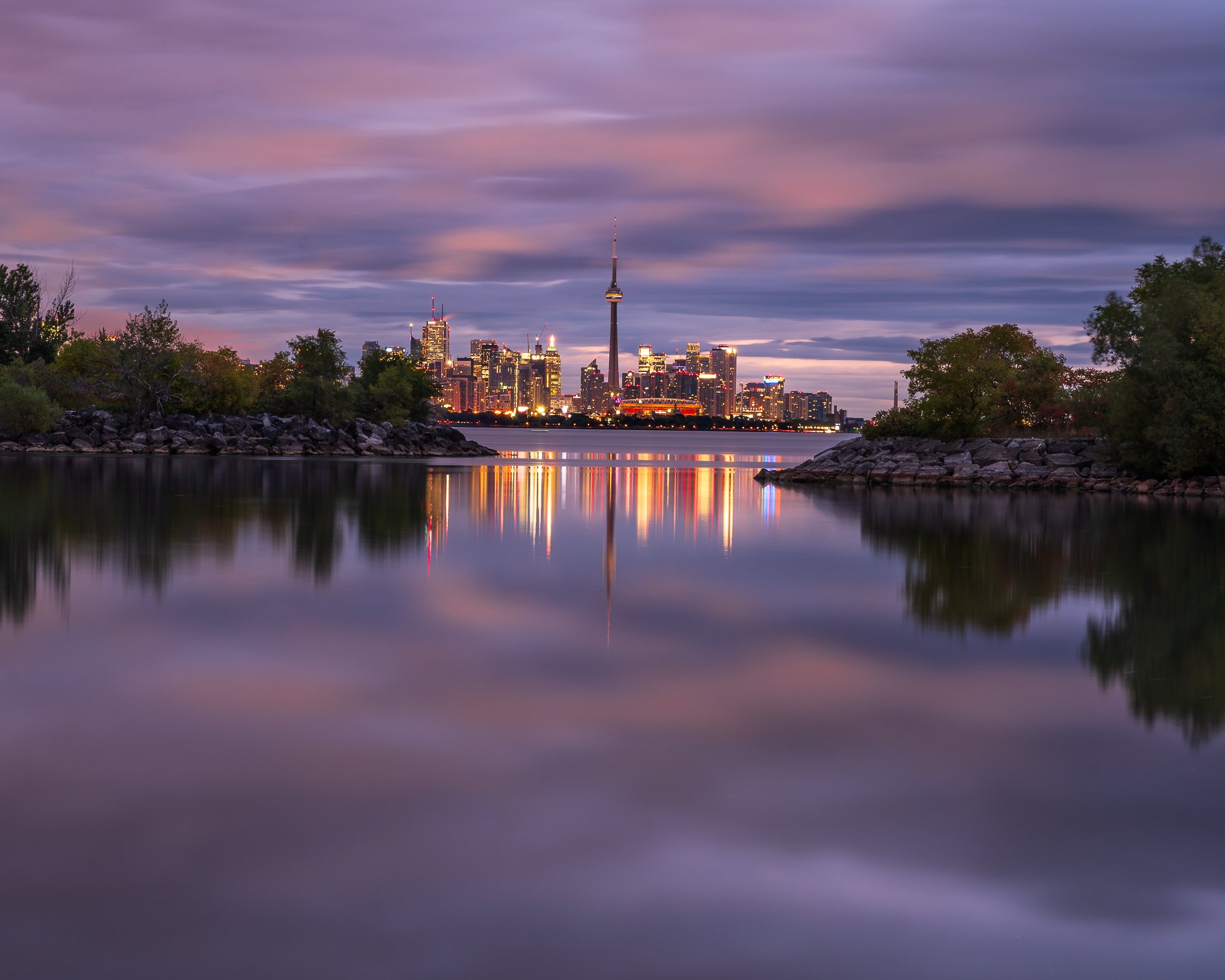


1.Some of your work, like “The Sweet Spot” and “The Morning After,” explores unique lighting conditions. What draws you to blue hour and golden hour, and how do you use these moments to convey emotion?
My favourite thing about this time of day is the anticipation and the surprise of not knowing what you’re greeted with when you get up early and head out in the dark. It can often be the calmest part of the day before the wind whips up and the birds and wildlife are more vocal. With the blues, pinks and mauves that are often present reflecting off the clouds, I like to slow it down and take a longer exposure which smooths out the clouds and water, enhances reflections and intensifies the colours creating a dreamy, serene surprise. I have always liked vibrant colours;from the turquoise of the ocean, to the colour of my car and the clothes I wear.
2. What's the most challenging part of taking photos in a time sensitive window?
The most challenging part of working in a time sensitive manner for me is to calm down and take in the scene. For example, during the various phases of a morning (nautical twilight, blue hour, golden hour, and sunrise) each phase only lasts about 15 minutes. When I see amazing colour starting in blue hour, I get too excited and want to be everywhere at once. I don’t do my best photography when I am running from one place to another. I like to be in the moment and peruse the scene and look for different compositions and perspectives. Are there awesome cloud formations and reflections that would benefit from a longer exposure or is it a pretty golden hour devoid of any clouds with wildlife action requiring a faster shutter speed. I was recently in Botswana during dusk shooting the full moon when a giraffe walked into the scene. I got so overwhelmed with what I was seeing. Before I realized my camera settings were off, he strode out. Most often you have another opportunity to try for the shot, not so with the giraffe.
3. What do you hope viewers experience when they see your work, particularly the pieces featured in CAPTURE?
I hope viewers will experience the awe and joy that I feel when I’m out in nature and be inspired to get out and explore the world for themselves; whether it’s in their own city or travelling further afield. There is so much beauty around us. Going for a walk, taking a weekend drive, or CAPTURING your own sunrise; be present in the moment as you never know what the future
Benjamin Gibson


1.What does the word capture mean to you personally? Is it about freezing a moment, telling a story, or something else entirely?
Thinking about the word “capture” it’s only the first step in the process. The most important, but the first. To capture something is to secure it in place – a moment in time perhaps. To keep something is an entirely different scenario. Good hunters don’t just shoot to kill. They gather it, skin it, butcher it and treat the meat, they give it attention and make it into a part of their life. With photography the same can be said, there is a moment of capture, but then a time comes for choice, and care in the processing of the photo, which photo to print, what format and what size? How to frame it? There is a whole life around works of art as there is a wild animal in the woods. Instead of nourishing the body, the images nurture the soul. I’m a vegetarian for the record.
2. Your work explores the intersection of grit and beauty. What draws you to this duality, and how do you bring it to life in your urban landscapes and portraits?
The more I ventured into commercial photography and filmmaking the more I tried to fight the grit of reality. That’s a lot of what advertising does. The deeper you go into beauty the more you realize perfection is only an illusion that’s very shortly broken by reality. In this series in particular series authenticity of the photos was very important, so processing was kept to a minimal and no retouching was done. I like to keep the grit in the work because it makes it more real, more believable, and maybe not more palatable, but more closely aligned with our shared reality. Through this series of work I embraced the grit of real work, unfinished roads, large industrial ships, dirt and imperfections that despite being pre-conceived as unattractive are actually central to our world and a necessary and inevitable factor to life. And to Canada, the overall subject of the greater series.
3. Are there specific pieces in this exhibit that you feel best represent your artistic philosophy or style? Can you share their backstories?
Light & Lines (Photo taken in Calgary) does a pretty good job of representing the way I look at the world. It’s momentary. Often because moments pass so quickly. I’m often surprised I had the wherewithal to take a photo at all when life moves so fast. Maybe that’s part of why the concept of Capture is interesting Somethings are not looked at as beautiful until you see them in a new way. In this moment, the sun hitting the concrete was beautiful. A minimal and simple abstract painting happening in nature. This photo was part of a short timelapse, trying to capture the suns movements, but the single image represented what the moment was, more than the video in this case.
4. If there’s one takeaway you want people to have after experiencing your work, what would it be?
If people take anything away from my work, I’m grateful. If I could choose, I would want people to step outside of themselves for a moment when they look at my work. Get lost in a moment that looks at something in a unique perspective. They are now experiencing a thing it in a different way. I would like the viewer to take away the understanding that many perspectives exist and are valid. Be it through the eyes of someone else’s moment or a share moment in time. Moments that will never really exist again. I’d be more interested to learn more about any given viewer, their life, and their loves, than they might realize, for instance. And I of course would love it if they visited my website and followed me on Instagram to keep up with new work.
Anastasiia Khvostyk


1.Your work beautifully showcases bustling urban life and serene natural landscapes. What draws you to explore this duality, and how do you balance these contrasting worlds in your photography?
The duality of urban life and natural landscapes fascinates me because it reflects the diverse experiences that shape our world. Urban scenes offer vibrant energy and dynamic stories, while nature provides a sense of calm and timeless beauty. Balancing the two in my photography lets me explore both sides of life, highlighting the unique character of each—whether it’s the hustle and movement of city life or the tranquility of a quiet forest.
2. How do you adapt your techniques and style when transitioning between photographing urban environments and natural landscapes?
Photographing urban environments often means focusing on compelling angles, creative framing, and capturing fleeting human moments. Nature, on the other hand, is unpredictable—it’s shaped by shifting weather, light changes, and unique moods, like the drama of a sunrise or the softness of a cloudy day. This unpredictability makes every nature shot distinct and pushes me to be patient and adaptable, creating imagery that feels truly connected to the moment.
3. How has living in Toronto influenced your artistic perspective, and what unique opportunities has the city provided for your photography?
Living in Toronto has profoundly shaped my artistic vision, offering a vibrant mix of cultures, architecture, and green spaces to explore. The city has given me incredible opportunities, such as showcasing my work at exhibitions like “Capture” at Twist Gallery. These events not only allow me to share my art but also connect me with like-minded individuals who inspire and support my creative journey, helping me set and achieve new artistic goals.
Alex Christoforou

Image via Alex Chistoforou
1. Can you share more about the transition from your abstract work to architectural photography? How has that evolution influenced your artistic vision?
My past abstract work was largely made up of mirrored objects creating an abstract form. Soon after I began applying this to architecture, I was inspired to focus solely on the buildings in their original form. While I have largely moved away from abstract, the mirrored technique can still be found in my recent work including “escalate” which is part of this exhibition. This gradual change has influenced the way I perceive architecture. Abstract principles have always encouraged me to look beyond the surface and not take things at face value.
2. How do you decide which architectural details to highlight in your work, and what draws you to a particular structure?
One of the many aspects I like to focus on is the directionality of lines and light. I use these two variables in tandem to draw the viewers eye. This influences my decisions as to what details to highlight. I’m usually drawn to various forms of architecture including brutalism, neo-futurism, Georgian revival and gothic. I usually am drawn to a subject for their architecture as well as their surroundings. Since simplicity is the hallmark of my style, empty skies and buildings standing alone typically catch my attention.
3. What guided your decision in selecting these specific pieces for the Capture exhibit?
I wanted to display my signature style as well as some new concepts I’ve been working on. As an artist I’m always trying to find new ways to expand my approach, adding more uniformed images to separate from my black collection. All of the selected works fit my minimalistic style, while still highlighting the immense detail. I also choose to use metallic paper for all my black images, bringing out more of the silver and gold, while also affecting how light interacts with the physical image.
4. How do you hope viewers connect with your body of work?
The balance and simplicity in my work creates an immersive experience, while also offering viewers the space to focus on smaller details in each structure. There tends to be more scrutiny with minimalist works as the details tend to be emphasized. My hope is that each person who views these works are able to pick up on how the isolation in each piece affects not only the buildings themselves but the entire composition.
adam cohen
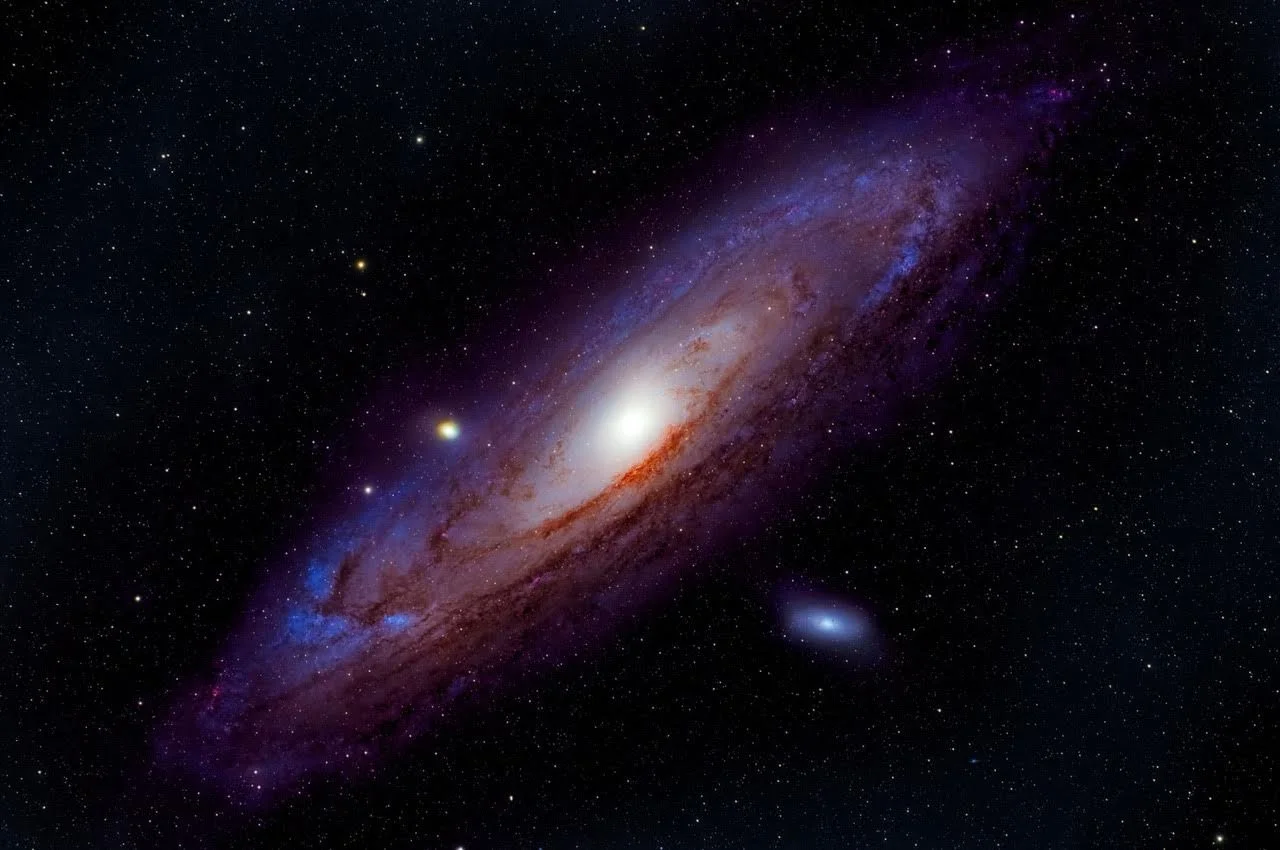
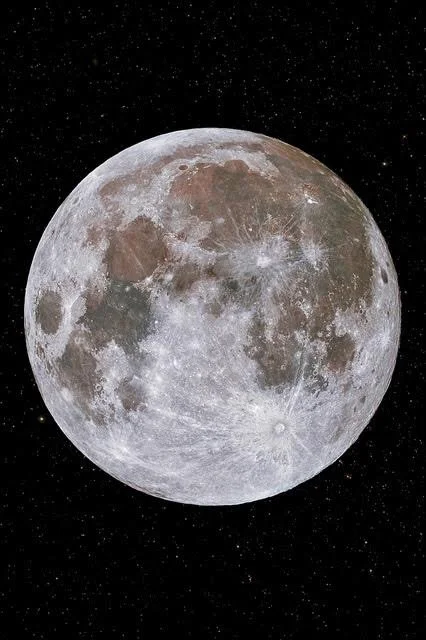
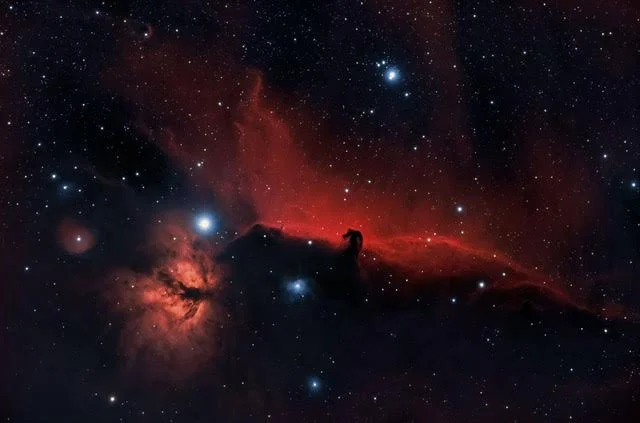
1. How do you decide which celestial subjects to focus on for your projects?
I decide which celestial subjects to focus on for my projects based on a combination of personal interest and current astronomical events. I keep an eye on planetary alignments, meteor showers, and significant space missions. I also consider the accessibility of certain celestial events from my location and the equipment I have available. Sometimes, inspiration comes from the stories and myths surrounding different celestial bodies, making them intriguing subjects to capture and explore.
2. Can you elaborate on how working with your mentee, an astrophysics graduate, has influenced your creative process?
Working with my mentee, an astrophysics graduate, has greatly influenced my creative process by introducing me to new scientific concepts and perspectives. Their deep understanding of astrophysics challenges me to think beyond the visual aspects and consider the scientific significance of what I am capturing. This collaboration enriches my projects, allowing me to create images that are not only visually striking but also scientifically informative. It's a dynamic exchange of ideas where science meets art, leading to a more comprehensive narrative in my work.
3. How do you think astrophotography contributes to a greater public appreciation for science and the universe?
Astrophotography plays a significant role in fostering public appreciation for science and the universe by making the cosmos more accessible and relatable. Through the lens of a camera, distant galaxies and nebulae become tangible, sparking curiosity and wonder. These images bridge the gap between complex scientific discoveries and the general public, inspiring a sense of connection to the universe. By showcasing the beauty and vastness of space, astrophotography encourages people to explore and learn more about the cosmos, ultimately enhancing public understanding and appreciation of science.
Varad Thalnerkar


1. What drew you to photography as a way to express yourself and connect with others?
As I ventured out to practice and experiment, photography became more than a hobby—it became a way to connect with others. Meeting people who shared my passion was inspiring, and the love and support from this creative community have kept me motivated to grow and bring my best to the table. Photography, for me, isn’t just about capturing images; it’s about building relationships, sharing stories, and expressing emotions that words often can’t convey.
2. How has exploring various types of photography enhanced your creativity and approach to storytelling?
Each genre has taught me something unique. Portraits taught me to capture the essence of a person; street photography honed my ability to find beauty in the everyday; and astrophotography deepened my patience and appreciation for the vastness of the universe. These experiences have not only expanded my creative horizons but also allowed me to use my camera gear to its fullest potential. By embracing diversity in my work, I’ve become a better storyteller, able to weave emotions, light, and perspective into a narrative that resonates with viewers.
3. What advice would you give to aspiring photographers who are exploring different genres of photography?
Consistency is key. Keep capturing moments, experimenting, and learning from your mistakes. Remember, every photograph tells a story, so take the time to understand what you want to say through your work. And most importantly, enjoy the journey. Photography is as much about personal growth as it is about creating art.
Colin Shillingford
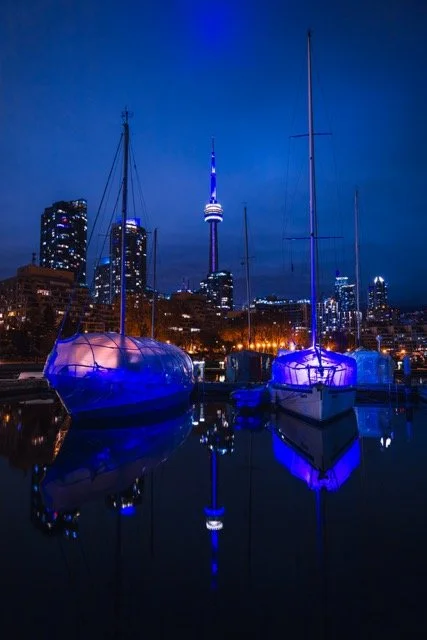
Image via Colin Shillingford
1. How did you select the pieces featured in the Capture exhibit, and what themes guided your choices?
I chose images that were all shot at locations along the Toronto waterfront, featuring picturesque views of the skyline. Each piece I’ve chosen communicates a sense of stillness and serenity which I experienced while capturing all of these unique moments in my daily life.
The collection as a whole is vibrant and full of colours that are deeply saturated and harmonious with each other, or complementary with the other selections. All of the compositions combine to create a snapshot of Toronto’s beauty and essence.
2. What kind of response do you hope to evoke in viewers through your body of work?
I hope that viewers feel compelled to meditate on the peaceful energy that exists within the images I create. The feedback I receive about my art often refers to the emotions and moods that are contained in my photographs.
Blue is the colour that appears most in my photos and I love the way it resonates with others. I try to combine different tones and shades of blue in order to evoke an energy that people associate with tranquility, spirituality, nature, depression, love, sadness and other other similar meanings.
My overall wish is that those who observe my work are left feeling soothed and stimulated to contemplate whatever range of thoughts or feelings that are sparked by their own imaginations.
3. What is your favourite part of the creative process when it comes to capturing photographs, and what aspect of it brings you the most fulfillment?
I typically begin the process of creating my images by taking a camera with me outdoors in search of locations that offer me a combination of picturesque views as well as an opportunity to shoot in solitude. This is why my shots generally do not have crowds of people in them.
Capturing photos of Toronto that communicate a feeling of ‘loneliness’ (even at times when there are people out and about in the places where I’m shooting) is something I have become more and more drawn to along my journey as a photographer. There’s an aura of mystery and enchantment that I feel when I look back at my images that fuels me to continue further down that path.
Considering that millions of people live in the city and the downtown area is so densely populated, I feel like the work I do is a testament to the fact that peace and moments of seclusion can be found in urban environments if you make the effort to search for them.
My favourite activity apart from documenting beautiful sunsets (and sunrises) and learning different shooting techniques with my camera has to be the editing process. I get to relive each moment in front of my computer screen and breathe life back into the moment so that the moment can be experienced for an eternity by myself and others. It’s at this stage where I really get to pour my artistic instincts and sensibilities into each picture. Tweaking the colours and lighting, and finding the right balance of saturation and contrast until everything feels right is the most rewarding part of it for me.
To fully immerse yourself into the exhibit, visit Twist Gallery in person at 1100 Queen Street West, Toronto. The exhibit will run from Jan. 3rd to Jan. 27th, 2025. All artwork sizing and pricing is available on Twist’s art for sale page.
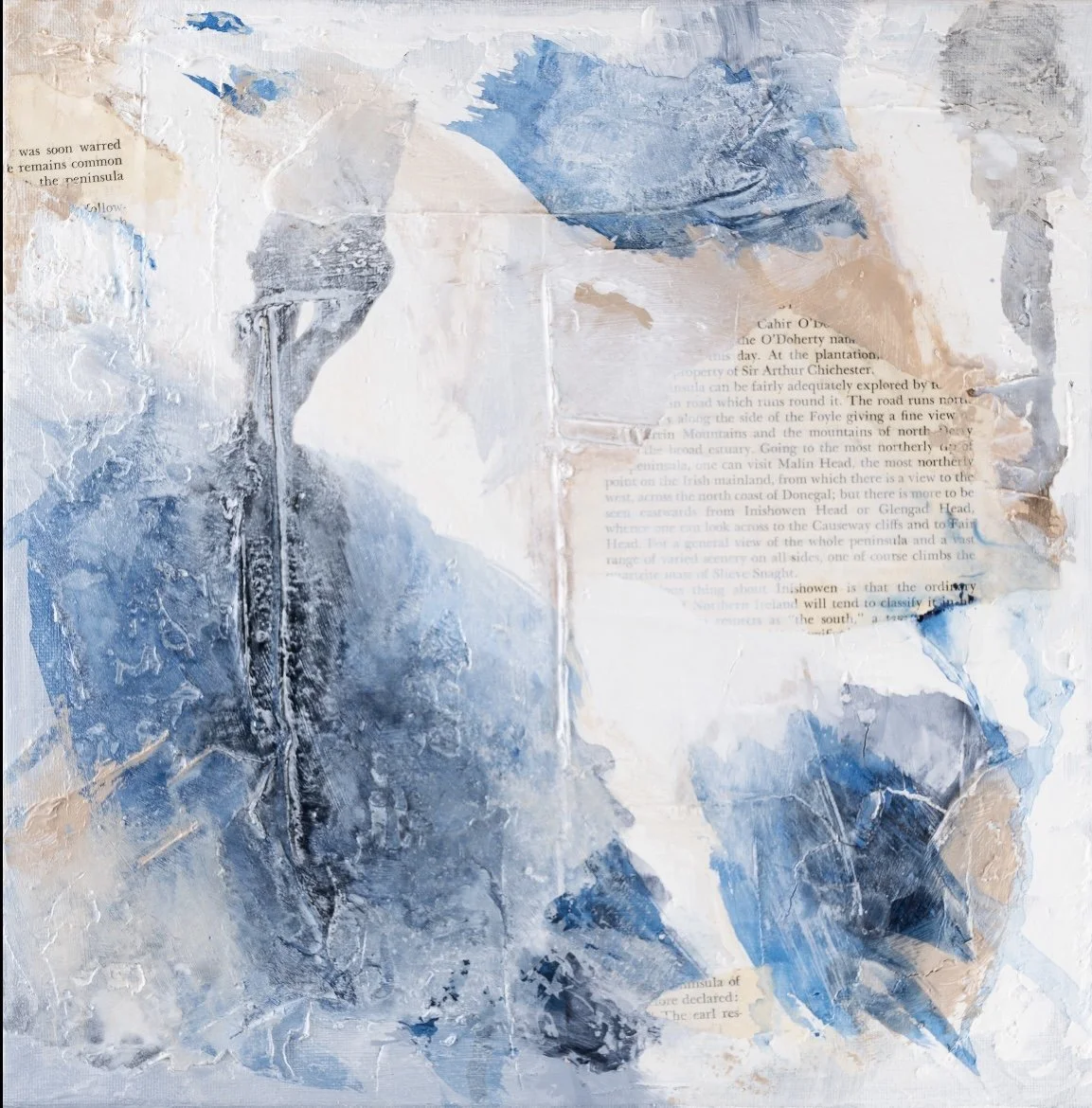
"FORM & FREEDOM" GET TO KNOW THE ARTISTS!
Form & Freedom will be Twist Gallery’s first 3-month long exhibit running from Oct. 3 to Dec. 16, 2024. Featuring bold abstract works, this collection celebrates the tension between form and fluidity, inviting viewers to experience the beauty of artistic freedom and the power of creative exploration. Twist invites readers to meet the artists and dive into their unique creative processes.
In honour of the theme, Form & Freedom, Twist Gallery is scrapping our usual form of only month long exhibits. Form & Freedom will be Twist’s first 3-month long exhibit running from Oct. 3 to Dec. 16, 2024. This theme explores the dynamic relationship between structure and expression. Featuring bold abstract works, this collection celebrates the tension between form and fluidity, inviting viewers to experience the beauty of artistic freedom and the power of creative exploration.
The vibrant, abstract art exhibit features the dynamic works of eight local artists, showcasing a kaleidoscope of colours, textures, and forms. Each artist brings an unique perspective, blending bold hues and imaginative techniques to create captivating visual experiences. The exhibit celebrates diversity and creativity, offering visitors an immersive journey through contemporary abstract expression, reflecting the rich talent and innovation within the local Toronto art community.
Twist Gallery will be holding the opening reception for the Form & Freedom exhibit on October 24th, 2024 from 6-9pm. Each artist involved in the exhibit has unique perspectives, techniques, and creative processes. Although, they all experience artist intuition in their own ways.
ellee sy lee


As a Korean-Canadian, Ellee SY Lee is influenced by Eastern and Western cultures which helps her to create art shaped by the dual influences. She’s fascinated by how post-impressionists used colour emotionally and expressively, employing basic shapes and distinct brushstrokes.
“I’m intrigued by the philosophical and spiritual notions rooted in Eastern traditional landscapes, which emphasize simplicity, spontaneity, and naturalness, often expressed through simple lines and shapes,” said Lee.
Lee combines these influences in her work to experiment with new visuality through the interplay of bold colours and simplified shapes and lines. After returning from a decade-long break, Lee aimed to create paintings that evoke positive feelings, offering a “temporary respite from a fatiguing and monotonous world.”
“I had realized art is powerful enough to console frail souls and enrich our lives after spending time away from my artistic practice,” Lee said.
In the past, Lee created abstract painting influenced by abstract expressionism and non-representational art, without reference to anything outside of artwork. Now that she has grown an appreciation for nature and its significance, Lee creates semi-abstract paintings where natural motifs recur, and referential images are often used.
“I see the interplay of colours, lines, shapes, and perspectives as a metaphor for mutual interactions occurring in nature and life, making the world interconnected,” said Lee.
Lee hopes viewers feel a sense of connectivity while experiencing positive energy and expanding their imagination through her art.
colleen todd


Each of Colleen Todd’s paintings has a “one of a kind” identity. Ironically, she doesn’t set out to make each of her paintings unique and one of a kind. It simply happens organically.
According to Todd, each piece is influenced by the mood she’s in the day she starts her painting. From the colours and tools she chooses to use, to the mixed media pieces she decides to incorporate, the end result is always unexpected.
Todd says it’s an amazing feeling when one of her pieces creates a connection with someone. When looking at abstract art, it isn’t a recognizable object or scene and yet it can tap into feelings and emotions that are unexplainable, helping create emotions, intrigue and mood.
Todd believes in art “speaking to you” and hopes her pieces evoke that feeling in others. Her pieces decide when they are finished. Sometimes it happens quickly, sometimes months but it happens when it feels like there’s nothing more to add.
douglas robinson


Before Douglas Robinson returned to painting full-time, he had a successful career in advertising. His desire to get back to his creative roots helped him decide to leave the advertising space.
“As a creative person, I believe painting is one of the purest expressions of creation,” said Robinson. “The creation of art is an individual pursuit, a quest for freedom and self-discovery.”
Robinson has always felt he was meant to paint, draw and design. His paintings are visual stories formed by his life experiences, his journey, and his connections.
“These stories through design, colour, texture, mark making, and sheer abandonment create a connection, evoke emotions and reactions,” said Robinson. “Colours help to connect with moods and desires while contrast is used to convey energy and reactions.”
Robinson uses form to create a journey through each piece. Form helps to create a flow, guiding you through each painting. He uses form in his work like a visual beginning and end through a novel.
“My journey is a creative path with no limitations and the courage to follow my heart,” said Robinson.
Freedom is a concept that Robinson uses in his work to express the type of energy he wants. He uses large spontaneous strokes to create more energy and voice, whereas smaller strokes and mark making create quieter conversations. Robinson sees painting as a journey of self-discovery.
“I’m at a point in my return to painting that I’m beginning to follow the spontaneity within me and the more I do that, the freer I paint,” said Robinson.
His work is constantly evolving everyday that he paints. He is pursuing imperfection and not perfection.
Tina ding


Tina Ding often draws inspiration from the countries she has travelled to, transforming real scenery and objective facts into lyrical and contextual images. Her journeys help allow her to see the world not just as it is, but how it feels, “a synthesis of reality and imagination.”
The experience of immersing herself in such places around the world transforms her artistic perspective. This led Ding to focus on the flow of colours and shapes that reflect her emotional connection to the scene.
One of Ding’s goals is to paint the “joy of living” and bring happiness, peace, and delight to her audience. To convey this she focuses on vibrant colours, dynamic movement, and organic shapes that radiate life and energy.
“Colour is a central element for me,” said Ding. “I use bright, bold hues that can uplift and energize, evoking emotions of happiness and warmth.”
Ding also pays close attention to the flow and rhythm of the composition.
“By creating movement through brushstrokes and abstract shapes, I aim to capture a sense of vitality, a pulse that mirrors the experience of being in the moment and feeling connected to life,” said Ding.
Her goal is to offer her audience a moment of peace, joy, and reflection by immersing viewers in an environment where light, colour, and form come together in harmony, drawing them into a space of serenity and delight.
Balancing the lyrical and contextual elements in her art comes from emerging the emotional impact of a scene with its physical presence. While she begins with real-world inspiration — a landscape, a moment in nature — her focus shifts towards translating the feeling the place evokes, rather than reproducing it.
“The contextual aspect grounds the work, often providing recognizable forms or details, while the lyrical dimension emerges through my use of colour, abstraction, and expressive brush work,” said Ding.
Over the years her painting style has evolved from a more representational approach to one that embraces abstraction and emotional expression. She has increasingly become more focused on how to convey the essence of a scene through colour, movement, and composition rather than depicting it exactly as it appears.
“Ultimately it’s about capturing the essence of a moment, not just its appearance,” said Ding. “By blending the concrete with the poetic, I invite viewers to experience both the beauty of the physical and the deeper emotions it stirs with them.”
Recently, Ding has been experimenting with more vibrant, contrasting colours and looser brushstrokes to capture the energy of nature. Her materials have also shifted towards a mix of thicker acrylics and layered textures to achieve a sense of depth and fluidity. This allows Ding to explore how abstract forms can evoke both visual and emotional qualities of the natural world.
Amy Armstrong


Amy Armstrong uses texture to tell a story with her art. Each layer she paints adds depth and intrigue, each layer building on the one before. Armstrong compares this to life — every year, every lesson, every adventure building off the one before. Each experience, whether bad or good, is important for making a fulfilling life.
“Each layer matters and without the layers that make up the texture in art, it wouldn't be the same or have the depth that I long for — in my art and in life,” said Armstrong.
When viewers look at her artwork in person, the various layers and how each builds on the next is clear. There are pops of colour shining through along with markings, patterns and expressive brush strokes.
Acrylics are her favourite medium for achieving depth, and building on each layer. How thick each layer is depends on what she is trying to achieve. Much of Armstrong’s process is an intuitive response.
“There’s part of me that knows when a certain colour or marking should show through the layers or when much of it should be concealed,” said Armstrong. “This is the part that I love about creating abstract art and letting things truly flow when I’m painting without having too many rules and restrictions.”
The first thing Armstrong thinks of when she hears “Form & Freedom” is organized chaos. The collection that’s currently at Twist Gallery represents having a plan but allowing spontaneity to be included too. The first few layers of her collection represent the freedom part of the exhibit with markings, whimsical and expressive brush strokes, unusual patterns, and various layers.
Form comes in when Armstrong uses unique techniques to create lines that cover the layers but still allow certain parts of the underlayer to be visible in different ways. The lines she uses are vertical and horizontal which adhere to the form part of the exhibit.
“More layers, colours, and markings were all needed to create more depth and tell the full story,” said Armstrong.
Some of the pieces in this collection have so many layers because she felt like the pieces weren’t finished yet. It is an intuitive decision for Armstrong, and she knew some of the piece’s stories weren’t done yet.
helena krolak


Helena Krolak was inspired to transition from a long career in the tech industry to becoming a full-time artist after reaching a tipping point. She says she kept receiving signs that she should return to the art industry but would continuously ignore them. This went on until one day she had enough. Krolak decided that she would invest in herself wholeheartedly and try a different path. She took a chance, and started painting again.
She decided she would commit to three months and go from there. After the first three months, she decided to give herself another three months, and so on.
“It wasn’t easy, but by making that initial choice, I gave myself permission to try regardless of the outcome and that was the pivotal factor,” said Krolak.
Krolak often uses themes of healing, harmony, and authenticity in her work. To her, freedom is achieved when people are most themselves.
“It’s not a place you reach, but a state that you embody; to freely express your truth and authenticity,” said Krolak.
Krolak’s journey then became about reaching that embodiment. In order for her to feel truly free, her journey included healing her limiting beliefs and past trauma. Her journey also included radical acceptance, a deeper understanding of herself, and a willingness to be open to larger internal shifts.
As Krolak worked on healing, she evolved and found more harmony and balance within herself. WIth that inner understanding, she could clearly see the balancing and harmonizing outside of herself which led to freely expressing what was previously unexpressed.
“The fluidity and flow of my work in this exhibit captures the feelings of that healing, evolution, and that ultimate expression of that embodiment of freedom,” said Krolak.
Krolak feels like her creative process continues to evolve. This evolution includes more exploration of various levels of play and doing away with any perceived boundaries. Each evolution, Krolak focuses on various elements and combinations. Whether it’s remembering past skills or trying completely new misting or splatter techniques. As Krolak evolves, by extension, her work evolves too.
“Not only do I feel the shifts internally, but I get to experience them through my art and see them in my finished pieces,” said Krolak.
maylin morales


Maylin Morales spent over a decade in the technology field as a programmer and data scientist. She uses painting to escape from her analytical mind and enter a state where she allows herself to be playful and free.
“The ego needs to be removed to allow creativity to flow; stepping away from perfectionism and trusting the process,” said Morales.
She also loves the physicality and movement involved in working on a big canvas for hours. Morales’s Cuban heritage is very present in her artistic process. She loves to listen to Cuban music and dance while she is painting a piece.
“It’s a great ingredient that reflects in the vibrancy of my work and I hope others can feel it too,” said Morales. “I am very proud of my Cuban heritage.”
Although the subject of Morales’ work is not directly related to the broader Latina experience, it’s a big part of who she is. Morales sees the theme of Form & Freedom as a paradox. Her experience managing software development projects has been helpful in managing her own art projects and setting goals as an artist.
“I believe being an artist is a balancing act between both [form and freedom],” said Morales. “Experiencing artistic freedom and the structured aspects and discipline required to maintain an art practice in general.”
In the past, Morales has mentioned her process as a journey “from sounds to emotion, from emotion to colours.” Music is essential to her creative process as it has the power to evoke deep emotions in her.
“I intuitively translate those emotions and sounds into colours, so they can also be experienced visually,” said Morales.
When Morales hears drum beats, they make her feel grounded and connected to the earth. She then associates that feeling with red hues and the element of fire. These personal associations allow Morales to create her own language.
kristen stephen


Kristen Stephen’s use of India inks on canvas is central to her creative process. They offer a fluidity that aligns with Stephen’s desire to create paintings where the canvas itself becomes an integral part of the work, not just a passive surface. She was inspired by Helen Frankenthaler’s technique of allowing pigments to soak into the canvas. Stephen embraces the idea that the material should interact with the medium.
“By dyeing the canvas, I create a base that feels organic, as if the painting is growing from within rather than being applied on top,” said Stephen.
This unique approach allows for harmony and spontaneity as she layers inks in a way that feels instinctual, constantly responding to how the inks absorb and flow. When approaching a blank canvas, Stephen relies entirely on her feelings or experiences, letting her instinct guide her. This process is deeply subconscious for Stephen. There’s no predetermined image or structure for her pieces.
“I allow the painting to unfold naturally through many layers of ink, with each mark feeling like an expression of something deeper,” said Stephen.
Her work embraces Carl Jungian’s ideals and explores the subconscious by using her spontaneous actions to reveal the inner truth of the piece. Blue frequently dominates Stephen’s palette, as it feels most aligned with her emotional state. Love, sadness, and the human spirit are all recurring themes in her work. These themes emerge organically, echoing her emotional landscape.
“Despite differing opinions of my use of glitter and diamond dust, I find them irresistible,” said Stephen. “They add a touch of seduction and allure to the depth of the work.”
While Stephen’s work often reflects her personal insights and emotions, she finds it difficult to openly explain the specific stories behind them. The process of painting allows her to express these feelings without the need for words, creating an emotional connection between the piece and the viewer. Attending art gallery openings is still an important part of Stephen’s practice, as it helps her stay connected to the broader art community and inspires new directions in her own work.
Growing up in her mother’s gallery was a formative experience that profoundly shaped Stephen’s relationship with art. From an early age, she was exposed to a wide variety of artistic techniques and styles, which fueled her curiosity and passion for painting. Being immersed in that environment nurtured her understanding of how artists express themselves and how art connects with people emotionally. This early exposure instilled in Stephen a sense of dedication and discipline towards the craft.
To fully immerse yourself into the exhibit, visit Twist Gallery in person at 1100 Queen Street West, Toronto. The exhibit will run from Oct. 3 to Dec. 16, 2024. All artwork sizing and pricing is available on Twist’s art for sale page.
Twist Gallery will be holding the free opening reception for the Form & Freedom exhibit on Oct. 24, 2024 from 6-9pm. This is where viewers can engage with the artists and fellow art lovers to further explore the stories behind the artwork.

"PONDER" Get to Know the Artists!
As we open our doors to our new Ponder Exhibit, we are thrilled to introduce you to the creative minds behind the art that will be showcased. In this blog, you will get a deep dive into the artistic visions of the participants, bringing exclusive insight straight from the source.
As we open our doors to our new Ponder Exhibit, we are thrilled to introduce you to the creative minds behind the art that will be showcased. In this blog, you will get a deep dive into the artistic visions of the participants, bringing exclusive insight straight from the source.
Join us as we explore their unique perspectives and passion for their work. Each question and answer reveals not just their technique but also the core to their creativity.
Whether you are an art connoisseur or a curious reader, there's something here for everyone to appreciate and ponder.

SUSAN ROSS
You mention being inspired by the shapes and patterns found in nature. Can you elaborate on how you translate these natural abstractions into your artwork, particularly for this exhibition?
Working intuitively allows me to tap into the inherent abstraction of the natural world. I intensify and enhance those abstract elements. When painting more abstractly, I grapple with finding the right balance between recognizable forms and personal interpretation. Colour is a powerful tool in this process—I love creating bold contrasts. The shapes and patterns I draw from the landscape, reflections in water, and the interplay of light and colour become focal points in my work. Ultimately, this exhibition is all about connection. Through my art, I aspire to transport viewers to those meaningful places and evoke their own memories and experiences.
What drew you to focus on impressionistic landscapes, and how has your style evolved over the years?
I have always been drawn to the natural world, it has been a vital part of my life. Throughout my painting life, my work has weaved in and out of pure abstraction to impressionistic landscapes. I find the natural world to be inherently abstract.
I really loved the idea of combining the two. This body of work in particular came out of years of abstract painting.
You've received several awards for your work, including The Sun Times People’s Choice Award. How has this recognition influenced your artistic journey so far?
It really helps to sustain the work when you get recognition for it. Not that I would stop if I didn’t have it, but it helps. I think it's very important for the work to have a connection with the viewer. Painting is such a solo experience so to share it and have it appreciated is very rewarding.
Can you elaborate on what you feel is uniquely "Susan Ross" about your Canadian landscapes?
I think growing up in northern Ontario, with its rugged and intense terrain, has left an indelible mark on my artistic sensibilities. That raw beauty serves as a constant wellspring of inspiration for my paintings. My love for nature is deeply embedded in my work. The landscapes I create draw from personal experiences—whether it’s kayaking, hiking, or leisurely walks. When I capture reference photos, they freeze moments from these special locations. To me, it’s all about forging a dialogue with nature through my art.
How do you hope viewers will engage with and interpret your works in the "PONDER" exhibition?
I would hope there is a connection or an experience that can occur between the viewer and the painting. It’s incredibly rewarding when someone tells me that a particular painting evokes memories of a special place or a moment from their past, transporting them back to that time. If my painting can transform into a real place for the viewer—one where they’ve had a meaningful experience—that would be the ultimate achievement for me.

TREVOR CLARE
How do you balance traditional techniques like acrylic and gouache with digital art in your creative process?
I've been painting with traditional mediums since I was around 10 years old, grounding my artistic background in the physical nature of painting. In the past five years, I've started exploring digital art and discovering compelling ways to combine my knowledge of both worlds. My experience with traditional mediums has profoundly influenced my digital work, as many of the same principles seamlessly transfer to the digital realm. I continue to work with gouache and practice plein air painting whenever possible, as it's an excellent way to sharpen and refine my skills. Drawing inspiration directly from the real world adds immense value to my artistic journey.
Can you explain the concept of "neo-nostalgia" and how it manifests in your work?
I've always been drawn to nostalgia, naturally gravitating toward themes that evoke a sense of place and its significance. This deep connection to the past informs much of my work today. I’ve coined the term 'neo-nostalgia' to describe my approach—where the digital, contemporary medium of technology intersects with traditional, timeless subject matter.
How do you choose which urban landmarks to feature in your paintings?
Much of my work draws inspiration from the local landmarks and hidden gems within my own community. Some of these places are well-known, while others are more unexpected—small mom-and-pop shops, diners, bookstores, and convenience stores where I would spend time with friends or grab last-minute groceries. These seemingly ordinary places hold deep meaning for me, shaping my daily life in subtle yet significant ways. As I began sharing my art, I discovered that many others shared similar connections to these spaces. I strive to capture places and experiences that resonate with people in nostalgic and sometimes surprising ways. I also welcome requests and recommendations from the community, always keeping an open mind.
What advice would you give to aspiring artists who want to capture the spirit of their local communities in their work?
Over the years, I've learned the importance of keeping an open mind. It's essential to observe and pay attention to even the most mundane or unexpected places, as they often hold the most rewarding surprises. These seemingly ordinary spots can sometimes inspire the best work. My approach involves finding ways to tell a story and capture the essence of a place’s spirit. This often means using vibrant, neon color combinations, playing with light to evoke a mood, and incorporating subtle signs of life. Storytelling transforms a piece of art from something merely visually appealing into an immersive experience that invites viewers to connect on a deeper level.

CHRISTIE BAKER
As a self-taught artist with a diverse professional background, how have your past experiences in figure skating, advertising, and music management influenced your artistic voice in your artworks?
I have always been a creative person. I believe it is that sense of creativity that connects each phase of my life, and serves as the through-line on the long and winding path that led me to where I am today. As an ice dancer, I was drawn to the artistic side of figure-skating; advertising is innately creative; and my work in music management was highly focussed on the branding and PR side of the industry. My artistic voice comes from me being authentically me, and I wouldn’t be the person I am today if not for all of the things that came before.
How do you ensure the emotional depth of each piece is conveyed to the viewer?
Creating a sense of emotional depth is a moving target. What connects emotionally for one person will not necessarily connect for another. My litmus test when I am nearing the end of a piece, the question I ask myself that is the only guide I can rely on, is “Does it speak to me? Do I feel something when I look at it?”. If I can honestly answer, “Yes”, then I am satisfied.
How has your studio mentorship impacted the works you've created for "PONDER"?
The studio mentorship I completed was a few years ago, before my first art show. I was thrilled to be selected, having no experience in the art world at the time. My mentor was a well-known landscape artist from the west coast who had a beautiful way of capturing small moments with such simplicity, I couldn’t help but be inspired. I have tried to find my own way of doing that, of distilling moments and places and memories into simple gestural marks and brush strokes. When the mentorship began I was new to painting, still very insecure and feeling my way through mediums and techniques. I didn’t even know how oil paints work! I cried a lot during that mentorship, but I also celebrated some major triumphs. That was the beginning for me. It gave me the confidence to press forward and lead to the type of work I create today, including the pieces in PONDER.
What techniques help you maintain a consistent artistic voice?
Like many artists, I struggle to maintain a consistent artistic voice, while still allowing myself to explore and push beyond the work I am currently creating. When I really need to produce something consistent, I focus on three things: my mark-making, my colour palette and my subject matter. If I can keep at least two of these three things consistent, the work will be cohesive.
What inspired your latest series of pieces?
My landscape work is inspired by memories, and the pieces I am showing in PONDER are no exception. When I start a painting I have no vision in my mind. I don’t typically paint from images. However, as I lay down colours and move paint around, I begin to see shapes, shadow and light. By about half-way through a painting I know that I am painting something from my past, a distant memory of something meaningful, impactful, and important to me. It is like each painting lives somewhere in my subconscious, and then reveals itself to me in its own time. I don’t strive for realistic re-creation, but let the haziness of the past, as seen through the veil of emotions, take centre stage.

DAVID MOIR
Can you share how your experiences in the northern Ontario environment have shaped your artistic identity?
My experiences in the Northern Ontario environment has helped shape my artistic identity. The natural beauty of Lake Matinenda and the surrounding region inspired a deep appreciation for the rugged wilderness that defines Algoma. In addition to my experiences in Northern Ontario, my travels across Canada have exposed me to a diverse array of scenery. This connection to the North was further influenced by the work of the Group of Seven, whose ability to capture the essence of Canada’s landscapes has always inspired me. Their dedication to portraying the raw beauty of the North resonates with my own artistic vision.
What emotions do you aim to evoke in viewers through your depictions of northern landscapes?
Through my depictions of northern landscapes, I aim to evoke a love of nature in viewers. The beauty of the wild, mostly untouched wilderness is something that has always resonated with me, and I want to share that connection through my art. Through my art, I hope to share with others the sense of awe and reverence I experience in these natural environments.
By capturing a scene, I strive to inspire an admiration for nature, reinforcing the importance of preserving these landscapes for future generations. My hope is that, in experiencing my work, people will feel a connection to nature and an appreciation of the tranquillity and inspiration that the northern wilderness offers.
How has your artistic practice evolved as you continue to explore the landscapes of northern Ontario?
As I continue to explore the landscapes of Northern Ontario, each new experience in these remote places teaches me more about the subtleties of the natural world, allowing me to fine-tune my skills and deepen my understanding of the environment I seek to capture.
I've also developed recurring themes in my work, particularly my focus on painting lighthouses. These structures, often found in isolated and lonely places, have become a symbol of resilience and solitude in my art. They serve as a bridge between the human presence and the wilderness that often surrounds them. Additionally, my exploration of themes like isolation has extended to other elements, such as sunsets and secluded spots in the wilderness, where I aim to convey the beauty and tranquillity of these moments.
In essence, my artistic practice is continually shaped by the unique character and emotions of these extraordinary environments.
What do you hope audiences will reflect on when they view your paintings in the context of the "PONDER" exhibition?
In the context of the "PONDER" exhibition, I hope that audiences will reflect on the beauty of nature that my paintings seek to capture. I want them to feel a connection to the landscapes I depict, encouraging the importance of preserving these environments.
What advice would you give to emerging artists who are also inspired by their natural surroundings?
For emerging artists who are inspired by their natural surroundings, my advice is to make the effort to immerse yourself in nature as often as possible. There's no substitute for the firsthand experience of being in the environment you're trying to capture. Whether it’s sitting quietly by a lake, or hiking to a remote lookout, these experiences will influence your work and deepen your connection to the natural world.

DIVYANI CHANDORKAR
How do you balance the personal, introspective nature of your "wonder-filled thoughts" with the public presentation of your art in this exhibition?
Balancing the introspective nature of my "wonder-filled thoughts" with public presentation is about creating a bridge between my inner reflections and the viewer's experience. My pastel-themed landscapes—featuring dreamy skies, calm seas, flower fields, and a subtle sailing ship—capture my personal sense of tranquillity. By focusing on universal themes of nature and serenity, I invite viewers into a shared moment of peace and contemplation. The art remains deeply personal, yet it offers a space for others to find their own meaning and connection within the work.
What unexpected connections have you discovered between your cultural background and painting expressions?
The unexpected connections between my cultural background and painting expressions often reveal themselves in subtle ways. Growing up in India, I was surrounded by vibrant colors, intricate patterns, and a deep appreciation for nature and symbolism. These influences naturally seep into my work, even when I'm not consciously aware of them.
For example, the use of color in my pastel-themed landscapes often reflects the bright and warm hues found in traditional Indian art and textiles. There's a certain fluidity in how I approach composition, which I realize echoes the flowing, rhythmic patterns seen in Indian designs. Additionally, the themes of tranquillity and connection with nature in my paintings are deeply rooted in cultural values that emphasize harmony and balance.
These cultural influences enrich my art, adding layers of meaning that might not be immediately obvious but are felt on a deeper level. It’s a continuous journey of discovery, where I see how my heritage subtly shapes my creative expressions, blending the personal with the universal.
What aspect of your artistic voice do you feel is most prominently showcased in your artwork for this exhibition?
In this exhibition, my artistic voice is most prominently showcased through the serene and contemplative quality of my pastel-themed landscapes. The use of soft colors, dreamy skies, and tranquil scenes reflects my focus on evoking a sense of peace and introspection. This approach captures the essence of my inner world while inviting viewers to find their own moments of calm and reflection.
What role does color play in conveying emotion in your artwork for this show?
In this show, color plays a crucial role in conveying emotion by setting the mood and enhancing the overall atmosphere of my artwork. The soft, pastel hues create a calming and soothing effect, helping to evoke feelings of serenity and introspection. By carefully choosing and blending colors, I aim to guide viewers through a gentle emotional journey, allowing them to connect deeply with the tranquillity and subtle beauty of the scenes.
What has been the most profound personal revelation you've experienced while creating your abstract works for this exhibition?
The most profound personal revelation I’ve experienced while creating my abstract works for this exhibition is how deeply my emotions and inner thoughts can be translated into visual language. Working abstractly has shown me the power of non-representational forms to express complex feelings and states of mind. This process has been especially meaningful as immigrating to a new country and starting from scratch has adversely affected my mental health. However, starting to paint here in Canada has been like a ray of hope, allowing me to explore and understand my emotional landscape in new and meaningful ways.
What new artistic territories or techniques do you hope to explore in your future artworks?
In my future artworks, I hope to explore new artistic territories and techniques such as mixed media, incorporating textured materials, digital enhancements, and palette knife techniques. I’m also interested in experimenting with dynamic color palettes, unconventional compositions, and interactive or immersive art forms to expand my expressive range and engage viewers in new ways.

TAMARA THOMPSON
Can you describe your process of layering glazes to create a new reality from old images?
The process of layering glazes enhances and enables me to tell a story of my travels through local parks and beaches, as the layered patterns found in the image references emerge. Sometimes the old images are short video clips looped that illustrate the contrasting patterns of light and shadows emitted from the motion. The mix of flora and fauna within the images are deconstructed through observation and repetitive motions. The layering of paint glazes allows the process of observation to show through, and show myself navigating through the feeling the memory of the space evokes. From this process of layering, a new image emerges that is a closer representation of the intrigue and vibrancy of the landscape, that surpasses the exact likeness of the place but instead illustrates the emotional significance of it through small intersections of memory.
How has your residency at the Living Arts Centre influenced the pieces you've created so far?
The artist residency at the Living Arts Centre was a great opportunity to uncover new ways of working after completing my final year at OCAD University. The collaborative space allowed for conversations and peer reviewed critiques and enabled me to build a body of work. I was able to work at and explore my layering techniques of paint mediums, playing with different pigment strengths and paint opacities. I also had space to create larger and smaller works, to explore how the brushstrokes changed over time in conjunction with the various sizes and glaze strengths.
In what ways does your work reflect the interplay between anxiety and calm reflection?
My work reflects the interplay between anxiety and calm, as the completed image of the landscape emits a peaceful energy, but the physicality of the layering and capturing motion through a slow medium like paint, is an anxious act. The motion captured through the layering of glazes of color and light completes a final imaginative piece that allows the viewer to feel a sense of calm and positive exploration of each brushmark and section of the painting. The universal experience of memory of places being in fragments and not complete final pictures, is demonstrated through this interplay of anxiously trying to capture emotion and patterns from observation, and the calm reflection of the finalized work. Overall, the viewer may react to certain areas of abstraction more vividly than others, as they recall a memory of place through a previous experience.
How does the layering process enhance the emotional impact of your paintings?
The layering process enhances the emotional impact of my paintings, as each layer is a reflection of the remnants of texture, color and natural patterns of the landscape that was experienced. Sometimes it is multiple images of the landscape that I reference in motion, and the layering process allows me to build on each texture and pattern to form a new perspective of the landscape. By doing so, the elevated emotions from the memory of the place is evoked through the exploration of the visual layers.
What role does memory play in the creation of your abstract pieces?
Memory is a key ingredient in my creation process and practice, as it is an integral part of the emotions that are evoked in the final imagery of the piece. Memory is not linear, and often we think of places once travelled in small bite size pieces and fragments. Other times we remember how the places made us feel, or vividly remember details such as the contrast of shadows in the water, the sound of wind in the leaves or how hot the sun rays felt in the moment. Through the layered abstraction of my work, the viewer may find pieces they remember or relate to.

BARBARA CHAPMAN
What inspires you to explore the skies and atmosphere in your pieces
I grew up on the eastern edge of Canada where the sky has always told a story about what was to come and often the atmosphere near the ocean had a presence that could be felt before it was seen. My deepest memories are that of fog and mist and the smell and sound of the ocean.
Do you think you see the world differently than non-artists? If so, how?
I often wonder about this, and yes, I believe maybe, but perhaps it is not a seeing but a noticing and a feeling. I notice colours and shapes that sometimes others don’t and I often see light and shadow as a colour and a temperature.
Your statement mentions the "network of natural communication" in forests. How do you represent this interconnectedness in your paintings?
The connection of trees and their surrounding infrastructure is often represented through their root systems and the places where trees become joined with the earth and the underground. Roots are also indicative of the incredible network of fungi that live and support ecosystems and of course, parallel our human and familial connectedness.
Are there any particular environmental issues that you aim to highlight through your art?
I worry mostly about climate change and the deforestation that continues to take place in this country and beyond. Trees are one way that the planet stays cooler, our air cleaner and precious soil stays in place.
Can you describe your process for choosing colours to represent the mood and atmosphere of old growth forests?
I have studied colour theory in depth and prefer to work from a colour palette that reflects the natural world. Umbers, siennas and ochres are staples for me as well as the colours of the impressionists. Mostly modern colours do not find their way into my language of colour.

JESSICA. E. TURNER
You focus on vulnerable feminine subjects. What draws you to these themes, and what do you hope people feel when they see your work?
My focus on feminine subjects arises from a profound interest in exploring the complexities of my own femininity—how societal expectations, cultural narratives, and personal experiences shape my identity. We are all intricate beings, and our subconscious often remains hidden due to fear, leading us to protect ourselves.
Femininity can be suppressed out of fear of the vulnerability associated with it. In my paintings, however, there is no fear of vulnerability; instead, it is portrayed as a form of protection and a divine experience. While these moments may be fleeting in real life, they find permanence in my art. My paintings serve as a personal reminder of the deeper parts of myself that yearn to be expressed.
I hope that when people view my work, they connect with their own inner depths and recognize the beauty in vulnerability, longing, and yearning. My art aims to gently inspire viewers to explore and express their subconscious selves in a healthy and meaningful way.
Do you have any funny or interesting stories from your time in art school?
My first year in undergraduate school at OCAD University, it was mandatory to take a drawing class. We had an unexpected life drawing of a nude male model, and after we were all finished, we had to walk around the classroom to look at everyone’s drawing. When people got to my drawing, they burst out laughing. That one stayed with me because although funny to look back at, I was actually horrified in that moment.
Have you ever had a "happy accident" while painting that turned out great?
Yes, "happy accidents" can be a delightful part of the creative process! Sometimes, an unexpected brushstroke or colour blending in an unplanned way can lead to a surprising and beautiful result. These moments often add a unique character to the piece, making it more dynamic and layered. It’s like the artwork takes on a life of its own, guiding the process in a direction you hadn’t anticipated but that enhances the overall composition.
You mentioned that painting helps you find peace. Can you share a time when creating art helped you through a tough moment?
When I returned to Belleville from Toronto at the beginning of the pandemic in 2020, I faced a challenging adjustment period. The pressure of completing my final year of school online, coupled with the difficulty of leaving behind a supportive community, left me feeling isolated. The experience was so overwhelming that I needed significant help from doctors to cope. Being an artist can be inherently isolating, so having a network of peers is essential. Finding a new art community in Belleville was a turning point—it encouraged me to continue creating and sharing my work. This connection not only supported my artistic practice but also helped me work through the residual emotions from the pandemic.
What advice would you give to someone who wants to start making art but feels unsure about it?
Don’t overthink it—just start. I learned about a technique called “automatic writing” during a writing class at OCAD. The idea is to let go of your thoughts and just write without judgement. I believe this approach applies to all art forms as well. Dive in, think about it later, and keep practising. Over time, you’ll see improvement. Sometimes, thinking too much can hinder your progress in learning something new. Remember, courage is often underestimated. And it takes courage to do anything new.

As we’ve gotten a deeper understanding into the artistic vision, we hope you have gained an appreciation for the stories and inspirations behind our talented artists. Their answers have given a glimpse into their artistic world.
Thank you for joining us and we hope you enjoyed getting to know our artists.To truly immerse yourself in their incredible work, we invite you to visit Twist Gallery in person at 1100 Queen Street West, Toronto.
See the art up close, feel the creative energy, and be inspired by the stories behind each piece. Don't miss out—plan your visit today and experience the magic of our gallery firsthand!

Interviewing Our 8 Vibrance Artists
Twist Gallery is very excited to showcase our new exhibit Vibrance, and give you a chance to get to know the 8 talented artists on a deeper level to better understand their artistic process. Vibrance is centred around life’s moments, both in the mundane and the exciting, encouraging our intertwined connectivity of the human experience. We asked our artists some questions about the ‘vibrancy’ of their work. To find out more, keep reading!
Twist Gallery is very excited to showcase our new exhibit Vibrance, and give you a chance to get to know the 8 talented artists on a deeper level to better understand their artistic process. Vibrance is centred around life’s moments, both in the mundane and the exciting, encouraging our intertwined connectivity of the human experience. We asked our artists some questions about the ‘vibrancy’ of their work. To find out more, keep reading!
Amanda Pistillo
Amanda is a self-taught artist whose work is centred around the feeling of joy, the tranquility of being happy, and extending that to others. She hopes to entice a feeling of inspiration and motivation in others to create their own unique art work.
How does the title ‘Vibrance’ connect to you and your art?
"Vibrance" to me and in terms of my art is about the light that radiates within your heart and soul. It is that powerful energy that brings forth happiness and love! Each piece that I create is a one-of-a-kind creation always made with lots of love and with the hope that they bring happiness to others!

All of your paintings are centred around John Lennon. What aspects of his life inspired your work?
John Lennon's empowering mission for a world with peace and love coupled with his never-ending call for inner courage and strength are very inspirational to me. I wanted to try and capture the light and radiance of his heart and soul within my artwork.
How have you cultivated such a unique style of painting?
I love to create art, it helps to centre me and brings me so much peace. Over time I have learned to exercise a sense of courage when creating my art, just being totally free. I enjoy using a rainbow of colours within my work, along with an edgy/sweet kind of look. I never have an exact plan of how the piece will turn out, I just go with the flow and try to be fearless. I've found that the best process for me when I'm creating my art is to just listen to my heart and let go of any control.

Do you have any advice for beginner artists who are nervous to explore new mediums and areas of art?
I think it's really important to be yourself and to have a sense of fearlessness when creating your art. There are going to be people who will have opinions about what you have created and want to change your style of art, but always remember how unique you are and to never conform to other people's expectations. Always believe in your art and in who you are. Your art is a reflection of you, and all of your divine creativity and your beautiful soul! Always remember to keep persevering, try new techniques, and always always stay true to yourself!
Daniella Williams
Daniella is keen on expression, keen on capturing the moments that truly make us human. Whether it be alone, with a partner, in a public setting with strangers… she makes sure to grasp deep emotion in a way that makes the viewer feel comfortable and understanding. Daniella focuses on all of the little details that are incredibly important in the final composition of her piece, and will make sure to capture every angle and shadow.
How does the title ‘Vibrance’ connect to you and your art?
I wanted to be a part of Vibrance because I felt that the concept and title of the show was one that reflected the overall essence of my work. My paintings emphasize colour and dynamic imagery of people in mundane scenes. Therefore, when I begin a painting my end vision is a scene where I have pushed the colours and skin tones of the subjects in unexpected ways. I want my paintings to be vibrant and energetic as well as probe the viewer to ask questions about the narratives I develop.

Why have you explored the themes of intimacy, self-reflection and voyeurism with your Domesticity collection?
My work touches on themes of intimacy, self-reflection and voyeurism because I’ve always been concerned with the idea of being perceived. I want to explore the tension and discomfort that exists in this as an individual but then paint it in a way that feels intimate to the viewer. As curious humans we love to get a look into the psyche and inner experiences of people around us; hence our fixation on social media and consuming images. Similarly, I have struggled with my own body image, and self-perception as a young bi-racial woman in an age of internet and image consumption, so it's always felt important to create paintings about these ideas.
What is the narrative behind the Domesticity paintings?
The Domesticity series paintings are meant to follow the domestic lives of four young adults who share a home. Their relationship to one another is ambiguous and highlighted by their inherent separateness in each scene. The setting of each painting is clearly a home yet none of the inhabitants ever meet the others gaze or interact. Domesticity was meant to be a look inside a troubled home life, one that looks bright and beautiful at first glance but harbours tension and restlessness at a second glance.

How do you choose your muse for your paintings? (Are they friends of yours? Models? Strangers?)
The subjects of my paintings really depend on where I am and what I’m feeling inspired by at the time. A lot of my most recent pieces were of friends who I had sit and act out different scenarios and narratives for me. Whereas many of my other paintings are of strangers I capture in passing. For instance, my newest painting “In A Sea Full of Women’ was a collage of several people I observed on different beaches in Italy and Greece. Mainly what I look for in my subject is a sense of mundanity, I want them to look like everyday people and to tell some kind of story in their expressions or body language.
Sandra Lambert
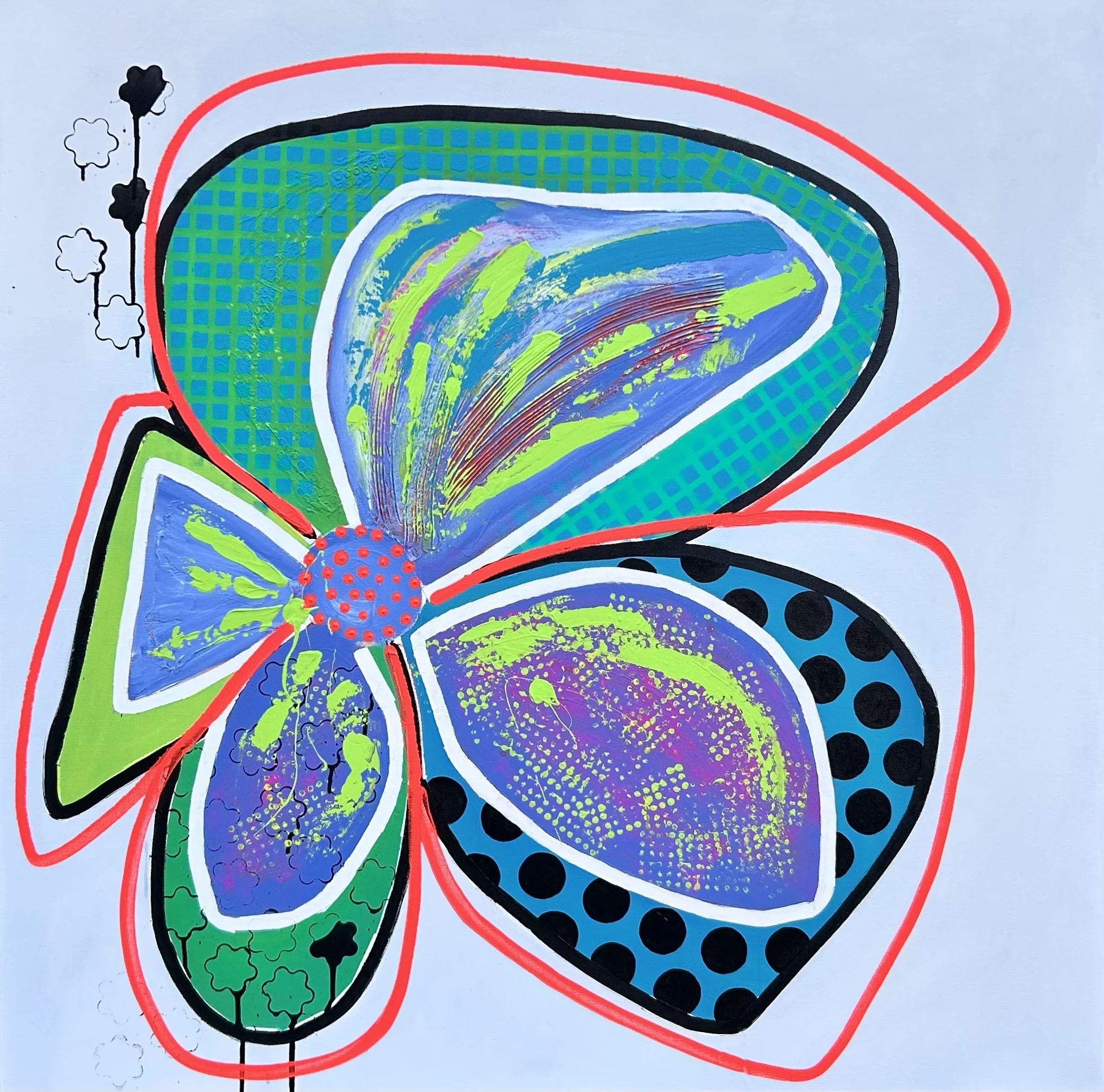
Sandra has a spirit that can be seen directly through her paintings. She focuses on the things that make her happy and takes inspiration from the little parts of life that may be overlooked otherwise. High saturation and crisp lines in her art convey an intense wave of emotion and expression.
How does the title ‘Vibrance’ connect to you and your art?
My first love in painting is colour. I’ve always been attracted to fresh, bright colours - colours that remind me of summer gardens or brightly coloured insects and birds. Loving the colours in nature, I’ve wanted to capture that feeling of freshness and aliveness without limiting myself to representation. So, it’s more of a desire to express the essence of an experience of nature - fields, sunset, fruit, flowers, insects, birds - the vitality that, at our core, we share with the natural world.

What attracted you to painting utilizing such rich saturated hues?
When I discovered acrylic gouaches- especially the Japanese colours- I fell in love with them. I rarely mix them, instead using them straight from the tube. They convey the intensity of my emotions and my experience of being saturated with the beauty of the world around me - an intensity that is difficult to convey in words, other than poetry, but seems to come more easily in the language of paint.
What would you say your biggest inspiration has been during your art journey?
I am like a sponge, soaking up visual stimuli- natural and urban landscapes and the work of other artists. I think it was John Berger who talked about the importance of receptivity in the act of painting. That resonates for me- what you take in then moves through you and into the paintings. It’s not that you don’t need to learn techniques and practice a hell of a lot, but I think it’s good to stay open and receptive to the world around you and the impulses of your own soul.
What drives you to create? How does it impact your personal growth?
I don’t really know what drives me to paint, other than I’m not happy if I’m not making something. And there’s nothing like the feeling of being completely absorbed in making a piece of art; it’s that loss of self-consciousness, that sense of rightness, of doing what I’m supposed to be doing. Also I never get bored- there’s always a new idea and something new to learn and try, and you can never get complacent because you can never really capture what you set out to capture so it’s always in front of you like a breathtaking view that is never reached because it’s always just around the next bend in the road.

How do you know when to stop, when do you really know when a piece is finished?
I used to overpaint more than I do now. I didn’t trust what I was doing and was trying too hard and worrying about the end product. I do that less now and trust more in the process. It helps to work on 2 or 3 pieces at a time so you don’t get hung up on getting one perfect. Maybe that is something I’m learning from painting- perfection is not where it’s at in art or in life- instead it’s trying, experimenting, failing sometimes and succeeding sometimes, but keeping on working with an open mind and a playful spirit. Also there are happy accidents - ‘mistakes’ that turn out to be wonderful surprises. I’m trying to keep that attitude in regards to other parts of my life - what we hope and expect often do not occur but sometimes what seems ‘wrong’ can turn out to be a gift.
Allen Ford
Allen, a man well versed in our society’s natural fast pace and how our minds can interpret the advertising all around us, excels in collage style art that encourages the viewer to expand their horizons across many places. He uses second-hand bright and colourful advertising materials to create a whole new piece of art, enticing a sense of unusual inspiration from many different things at once.
How does the title ‘Vibrance’ connect to you and your art?
Excellent question! I feel vibrancy in my art is found in creating new meaning with the posters. Originally all these posters have a clear meaning and intent. Take the huge panel with the Andy Warhol poster from the AGO exhibit. Originally that poster had a very clear purpose. But rip it, tear it, and mash it up with other posters, and something new and unexpected is created with its own energy and meaning. To me that is vibrant.

Your collages reinterpreted old advertising posters from across the city. How do you see advertisements subconsciously affecting our decisions making as consumers?
Advertisements affect our decisions just as all other forms of inspiration do. We are first triggered not by the entirety of something but by one single element of it. It's like being at a club...or an opening night of an art show! You see somebody across the way, you don't know them but the way they wear their hair, or stand, or hold their glass connects with you. Advertising is no different. We see or hear a word, see an image or a colour, and it sticks. And you then want to know more.
What does your artist process look like?
It looks like a mess! When I am in full creating mode, my apartment...err...studio is literally strewn with posters and panels. I then proceed to mimic a squirrel in a park digging for nuts. I know a specific poster is buried somewhere, I just need to find it! There is usually one core poster fragment I build around. It might feature a word or sentence, or perhaps an image or colour. With that foundation, I simply look to then build around it as I add, shuffle, rotate, and rip other poster fragments in. I rarely have a defined image I am looking to create though. It is very much a process that is about finding the finished image. And when do I know something is finished? When I get a tingle on my arms, a smile on my face, and start nodding. Then I know I have created something!

What do you hope the viewer draws from engaging with your work?
I like to imagine viewers of my work as a kind of urban archaeologist. This art requires viewers to reconstruct what they see, but also imagine and parse what they can't. I feel viewing my art also asks people to be creative themselves. These posters, once all ripped and torn, all fragmented words and images, ask every viewer to create their own meaning, find their own inspiration.
Eleanor Lowden
Eleanor’s art will take the viewer to a universal happy place - a beautiful garden, which holds the power to be exactly what we need as humans. She makes sure to share her beautiful imaginations in a way that is inviting while also exciting.
How does the title ‘Vibrance’ connect to you and your art?
It’s such a pleasure to be part of the Vibrance Show at Twist Gallery. I think my work often reflects a certain vibrance, the colours and the mood and the settings that inspire me. I’m thrilled to be showcasing my work with this group of artists whose work I admire.

What inspired you to create your Joyful Garden Series during the pandemic?
I began my Joyful Garden series during the pandemic in the summer of 2020. I was living in a condo with no garden of my own. During lockdown we were all limited and my outings were mostly to walk my dog. I started noticing gardens and outdoor spaces and gained a new appreciation for them. I began creating my garden series around this time, I felt like I finally had a garden of my own. It was my own form of abstract art that also felt very liberating and fun.
Do you have a favourite place to create?
I create in my home studio, I love the early morning hours the most. I’m up at 5:30 am and I paint until 7:30 am. when I walk my dog. I then come back and grab a coffee and paint for another few hours. But the early morning hours are still the best.

Do you ever hit a creative block? How do you overcome it as an artist?
I rarely have a creative block. I am always looking for more time to paint. If I have a day I don’t feel like painting, I always have administrative work to do. My website or my books or my Instagram…..All things that need to be done!
Phero
Phero’s lust for life and appreciation for all shines through his digital and painted art pieces. His idols, exuberant and talented, bring a sense of inspiration to the viewer for this kind of vibrancy in their own life. He combines mediums to fully grasp expression and emotion in his subjects.
How does the title ‘Vibrance’ connect to you and your art?
Vibrance, to me, means full of life and energy, vibrating at the highest possible power or potential. I feel like my pieces are exactly that they are full of energy, they show movement in their stillness because they are vibrant.

What inspired you to paint these POC pop culture icons?
I draw my inspiration or choose my “subjects” based on things I believe in or I enjoy. I love hip hop culture which is why a lot of my pieces are so deeply linked to hip hop and the surrounding elements.
What does your artist process look like?
I usually start it with a mood board or a reference board where I gather pictures of the subject and try to figure out how I can capture them. Then, I start to pencil things in lightly (or outline things digitally), and then I start to drop colour in places and see how the composition comes together, making alterations where I need to.
What attracted you to painting with and utilizing such rich, saturated hues?
Early on my artist journey when I was trying to develop my unique style, I wanted something where people would be able to easily identify my work immediately. I found the easiest way to do that was to use vibrant colours. It is easy to unify an exhibit when the colours are the same across all pieces.

Rahul Ohja
Rahul’s abstract mind encourages the viewer to step out of their comfort zone and feel the emotions of life that may be previously unexplored. He uses colours and shapes in a way that has an other-worldly effect, a way that will inspire creativity in a vibrant and fun manner. Read for further tips for beginners that Rahul was nice enough to share with us.
How does the title ‘Vibrance’ connect to you and your art?
I believe vibrance is a state of being full of energy and life. My thoughts and variant emotions represent my belief in colours being a central part of all living beings and non-living objects.
I love working with bright sparkling colours & textures in creating bold, vibrant, and colourful abstract art. I try to reinvent myself through my artwork and observe the world with extreme detail — from colour to line, and light to shadow. I do this because it fulfills me, helps liberate me, enriches me.
How have the events in your life influenced your creative process?
As beings, I believe we are all creators – some masterful with their words, others captivating through their actions and outliers, like myself, through our ability to enthrall with colours on canvas. I have trotted the globe, living and serving in three continents and hence, it is safe to say that my creations transcend cultural and geographic contexts to offer any beholder a sight worth more than what meets the eye. Predominantly through abstract work, I use colours, brushes and strokes as media to explore parts of my own subconscious that have been shaped, ostensibly, by experiences I do not vividly remember.
What attracted you to painting in the style you have come to adopt?
I do abstract art! I believe every colour has a meaning, it speaks of something, when many colours blend it has a language, a language that has nothing to do with realism or perfectionism... it’s just so powerful… and that is where abstract is born. I direct these colourful, bold, and boundless abstract language onto canvas and try to connect to people with an aim to sooth, to heal, to energize and help them search for inner peace and tranquility and give life a real meaning!

Do you have any advice for beginner artists who are nervous to explore new mediums and areas of art?
Abstract art can be a challenge. Beginners may believe that it is very easy, and anyone can do it. For those who have created abstract artworks or have taken a course, know that things can get a little complex. Creating an abstract piece requires certain skill sets. Don’t let the challenge turn you away. If you are a beginner , there are some tips you can keep in mind to start your journey as an abstract artist. You have to keep the following three main components of abstract artwork in mind:
1. Composition: While composition plays an important role in all types of artworks, it is especially essential in abstract art. Since abstract art is generally vague, it is important to have a focal point in your painting to capture the viewers’ attention. The shape, size, and placement of the objects on the canvas help create a good composition.
2. Colour: Since there aren’t any objective rules when it comes to abstract art, it can be easy to get carried away with the colour. However, it is advised to not throw all the colours on your palette onto the canvas before calling it a day. In fact, think about your colour palette before you even pick up the brush. Ideally, choose a limited number of colours and try to get creative with them. Mix these colours on the canvas to create an endless stream of changing shades and colours instead of picking a different tube every two minutes.
3. Texture: While using the right colors and composition, to ensure that you create an attractive piece of artwork, the texture makes the abstract painting really stand out. You can use various techniques and materials to add texture to your painting. In fact, you can just apply the paint more thickly in places. However, make sure that the texture is consistent throughout the artwork. Even if you have multiple different ideas on how to add texture, leave the rest for your next projects and only use one or two techniques per painting.
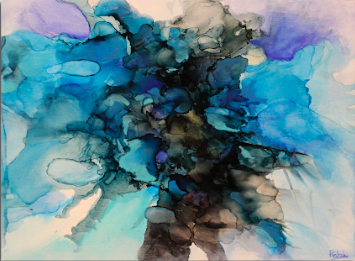
Nicole Dimt
Nicole guides you to the future through vivid colours and unique shapes with impeccable attention to detail and design. Her art is limitless, combining a magical imagination with real-world vibrancy that will leave the viewer craving more.
How does the title ‘Vibrance’ connect to you and your art?
Vibrance is the perfect word to describe my art. Every piece I make incorporates multitudes of every colour, which is the main goal of everything I create. In my work, I use the most saturated version of every colour I can, as I want my art to be eye-catching, as well as remind myself, and viewers, of the fascination and the joy that being a child once brought. I use vibrant colours so that my art feels lighthearted, fun, and just a little chaotic.

The subject in your artwork varies from nature and cityscapes to self-portraits. How do you decide on what subject to focus on?
My undergrad and the assignments it gave me are what opened me up to exploring many different subject matters within my art. I like to keep a very open-ended and diverse portfolio, and like to play with as many styles as I can. Anything can inspire me. Whenever I see a picture, or another artwork that I like, I get inspired to make something just like it, no matter what it is.
Do you prefer an abstract or realism style? Why?
It's hard to choose between the two - I often refer to my art as "abstracted reality," because that's exactly what it is. I always start my artworks with a reference of something from real life, such as nature, architecture, or fabric, and edit it digitally to create new wonderlands and worlds, which I then replicate. I would say this is my natural style. Granted, I do love to play with pure realism, and have a few pieces that showcase that in this exhibition. I like to create realism pieces when I find a reference that catches my eye, and I want to test my skill and
What would you say your biggest inspiration has been during your art journey?
My biggest inspiration throughout my art journey has definitely been all the amazing artists, and friends I met during university. My professors, peers, and mentors are who pushed me to be the artist I am now, and showed me new worlds and possibilities within painting. Many of these people helped me come up with themes and motifs, and really helped me connect with my art and understand it for what it is - something that did not come easily to me. It has been amazing to be around such creative people in my life, and this has continued post-grad into my workplace where I work as a concept artist, surrounded by brilliant minds who are fluent in the digital arts.
We hope you enjoyed getting to know a little more about the talented artists behind Vibrance! Don’t forget to come check out the exhibit, on from October 4th - 29th.
Also Read: Event Space Toronto, wedding venue Toronto, Wedding Reception Toronto
Introducing our #Vibrance Artists
Twist Gallery’s October 2022 exhibit #Vibrance, on from October 4th to 30th, is a dynamic, joyful, and effervescent interpretation of what it means to live, to feel, and to dream. Spotlighting eight exceptional artists from Toronto, this exhibit garners the unrestrained power of light, hue, and texture, inviting the viewer on a journey into colour itself. Through a fearless employment of colour and bold brush strokes, these artists open the door of creativity for the public. Don’t miss #Vibrance’s Opening Reception, taking place on October 6th from 6-9pm. Click here to RSVP.
Twist Gallery’s October 2022 exhibit #Vibrance, on from October 4th to 30th, is a dynamic, joyful, and effervescent interpretation of what it means to live, to feel, and to dream. Spotlighting eight exceptional artists from Toronto, this exhibit garners the unrestrained power of light, hue, and texture, inviting the viewer on a journey into colour itself. Through a fearless employment of colour and bold brush strokes, these artists open the door of creativity for the public. Don’t miss #Vibrance’s Opening Reception, taking place on October 6th from 6-9pm. Click here to RSVP.

Daniella Williams

Daniella is a local Toronto painter that is centralised around community and relationships, everywhere from friends and the neighbourhood beyond. She prioritizes creating narratives that are expressive in their use of colour, paint handling and subject matter. Daniella strives to push the colour palette of the atmosphere and skin tone of her subjects towards one that comes off as vibrant and imaginative; giving the figures life and vitality. Her paintings are marked by themes of intimacy, self-reflection and voyeurism, but they are most importantly defined by the juxtaposition of the bright vibrant manner which they are painted in. Expressive brush strokes and an imaginative colour palette provides the lens for her work and aligns her paintings with the #Vibrance of life as a human being in this world.


Allen Ford

Allen has chosen collage as a medium because it so beautifully reflects how we experience and remember the things we see, and how advertisements have become such a large part of what we take in. created these collages from advertising posters ripped down, torn from, and peeled off of hoardings and walls in Toronto, Montreal and Ottawa. In their original form, each poster was the result of an intentional creative process directed by marketing and design teams. Decisions were dictated by business goals, creative briefs, target audiences, and budgets. Every element was considered and directed towards a specific outcome. Once these advertisements have been pasted and posted on the streets of cities, their makers have ceded absolute control of their work. Instead, he transforms the specific images, taking them in new directions based on his own experiences and perspectives, inviting the viewer to do the same.


Eleanor Lowden

Toronto native Eleanor has been painting professionally for about 35 years. Her work is an interpretation of life from a happy point of view. Her style plays with patterns and repetition of forms, it is both illustrative and impressionistic too. She is inspired by many things: country roads, umbrellas, trees, polka dots, mass cultural objects, people, dogs, and most recently, spring flowers. Through these differing subjects, She is continually exploring unique compositions while creating bright, luminous paintings with her own unique colour palette.


Nicole Dimt

Nicole, a 23-year-old painter from Toronto, got very inspired by futurist architecture and landscape while roaming Downtown Toronto at the start of her third year of university, and integrated these themes into her artwork very quickly. In her art, Nicole reflects on her childhood, projecting feelings of joy, innocence, and wonder. Nicole’s art relies heavily on the use of highly saturated and vibrant colour, as well as line, and shape. Nicole’s artwork, with themes of architecture, nature, and technology, depicts futurist, dystopian, and psychedelic wonderlands full of overwhelming detail, pattern, and fascination. Nicole’s art can be described as “organized chaos.” Nicole’s art also works hand-in-hand with the digital world, collaborating with heavy photo manipulation, colour inversion, and total distortion, adding an unnatural or synthetic quality to her paintings. This added quality to her works speaks upon the narrative of the grasp that the digital world has had on us, and how it has warped our perception of reality.


Amanda Pistillo
Amanda is a self-taught artist with a passion for designing mixed media artwork, exploring the freedom and wonder of art. Her artwork is always created with the sincere hope that they provide happiness to others, as one of the goals in designing her artwork is to encourage others to create in their own unique artistic style. Amanda's heart is at the centre of her design process, always guiding her to create with love. She presents her John Lennon Collection, as she was inspired by his passion to bring love and peace into the world.


Rahul Ojha

Rahul, as a creative by nature, his mind wanders the depths of his innermost self and the ideas and experiences that make up his core. With time, his art has evolved with his personality. While up for interpretation, his work is, in a way, a depiction of his journey through the rollercoaster of life. You can consider Rahul’s work as his life as told on canvas through acrylics and mixed media. Viewers and patrons can find meaning and the rawness of human emotion that stirs the soul. Each piece exudes sensitivity and connection, creating a visual and emotional experience that goes beyond what is in sight.


Phero

Ahmed, artistically Phero from Cairo, Egypt, is a classic 3rd generation kid; exploring a unique balance of the arts, culture & lifestyle of his ancestral origins and his surroundings. Drawing was (and still is) his form of creative expression, it is what grounds him and what helps him move through life. Phero loves all mediums of art and his own style evolved many times throughout the years. He takes great inspiration from superheroes, music, and sports - which is very evident in his works. He combines digital and traditional media in ways that are exuberant and vibrant, inviting the viewer to feel as strongly as he does when he sees his passions come to life.


Sandra Lambert

For Sandra, painting is both a playful and intense experience. Her paintings are containers of emotion. Within their boundaries she feels free to play; to lose (or find!) herself in the pleasure of sensory exploration. She enjoys exploring the use of various techniques and media to express the essence of experience. Her #Vibrance paintings represent three different approaches; three small panels on the left shock the senses with pure, intense colours in flat organic shapes. The two small panels on the right are more spontaneous, loose and lyrical. The two larger panels are dense, layered and lightly textured through the technique of scratching back. All the paintings are pulsing with colour and a sense of power, though contained exuberance.


#Vibrance ties together the excitement and exhilaration of life and its passions and love. The combination of expression and vibrancy in this exhibit will ensure viewers have a new appreciation for livelihood and the possibilities of exploring your mind. Remember, don’t miss out on #Vibrance’s Opening Reception on Thursday, October 6th, from 6-9pm!
Useful Links: Unique Wedding Venues Toronto, Wedding Venue Downtown Toronto
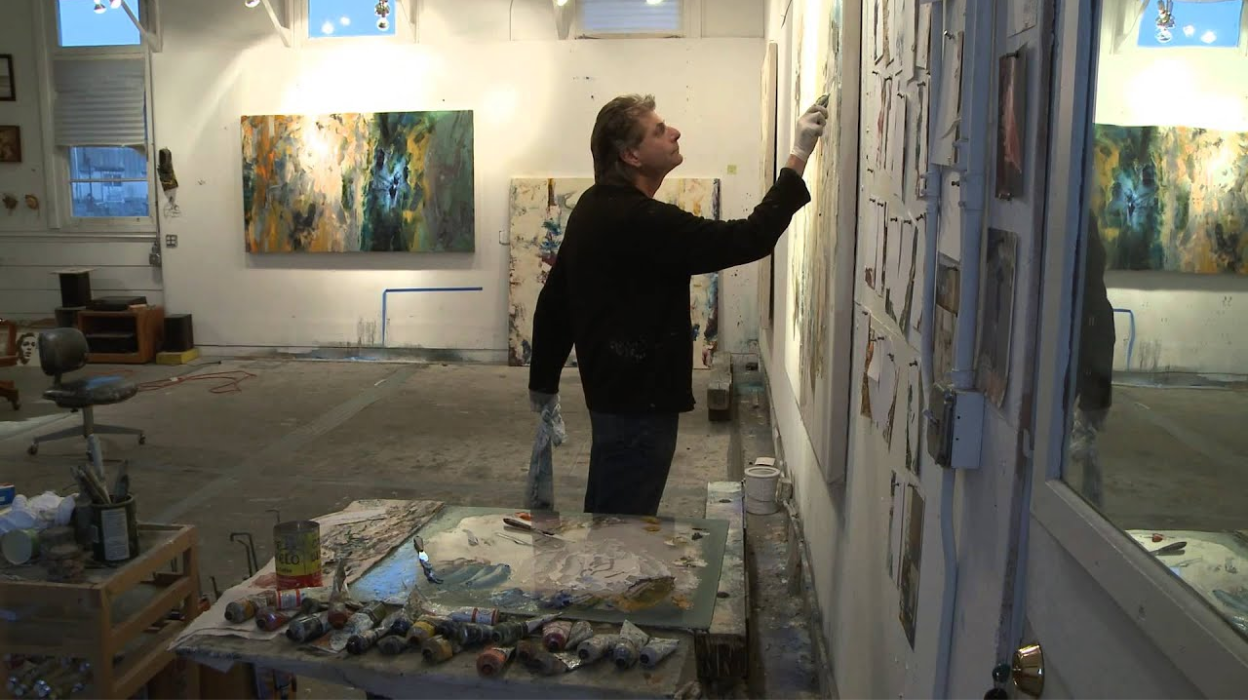
A ‘WiP (Work In Progress)’ FOR SEPTEMBER
The field of art is one with a heavy burden of expectation; perfectionism can often be the death of great creativity. Fears of failure and rejection are ultimately at the centre of this weight, and it is this very crux we wish to subvert through this exhibit WiP {Work in Progress.}
The field of art is one with a heavy burden of expectation; perfectionism can often be the death of great creativity. Fears of failure and rejection are ultimately at the centre of this weight, and it is this very crux we wish to subvert through this exhibit WiP {Work in Progress.}

Retrieved from: https://clyffordstillmuseum.org/blog/clyfford-still-as-a-teacher/
The act of painting is an ongoing exploration of light, texture, materiality, patience and skill abounding in trials, errors and happy accidents. Studies lead to different compositions of shapes, colours and techniques without fear.
“Within those moments of uninhibited freedom, magic happens.” (Project Art Toronto, 2022)
WiP (Work in Progress) shares the work of 5 artists from Project Art Toronto’s studio. A glimpse into their painting process and the artists' dialogue between subject matter and media.
Each artist brings their approach to the creative process and unique artistic style and identity. Through the works of these artists, we will be able to experience the joy of exploration and self-discovery.
In the spirit of free-flowing creativity, here are 5 strategies to help capture inspiration:
1. Let go of your fear
It’s important to approach all our endeavors equipped with a sense of self-assurance and confidence! Embark on every new project with a sense of wonder and discovery, and the knowledge that your creative process is part of your art. Fear should be parted with to achieve creative flow. It was Claude Monet when asked to give advice on painting who said to not be afraid of making mistakes. This is crucial for creativity, to let go of the things holding us back so we may let our creative spirit flow. A Harvard Business Review article by Tom Kelley and David Kelley, explains that there are four common hangups that block our creativity. They include fear of the first step, fear of being judged, fear of the messy unknown, and fear of losing control.
These fears can be the kryptonite to our creativity, but with courage and confidence, we can overcome them.
2. Practice, Practice, Practice
It’s said that to become a master of any skill, one must be prepared to dedicate over 1,000 hours. Practicing the techniques that we have learned can make inspiration more readily available. In a similar way to how one must learn to run before they can play basketball, or to play the violin before being able to play in a symphony, mastering the physical techniques and mediums we wish to work with will make it much easier to use them in our creations.
3. Iteration is the mother of creation
It is easy to fall into the trap of wanting our first attempt to be the best and only one, but more often than not having multiple attempts and versions is what is most likely to lead to dissatisfaction. The progress made with each iteration is where the magic of creativity lives.

Retrieved From: https://www.pinterest.ca/pin/113153009366238711/
4. Reboot your brain
Often the best way to rekindle our focus and inspiration is to step back from our project altogether. Psychologist Robert Epstein, PhD, a Harvard graduate, says stress and time constraints can squash your creative process.
Here are a few ways to give your mind a reset:
Snack break: Sometimes we focus best when we satisfy our stomachs. Find a snack to munch on while you think!
Shake it out: If you are having trouble focusing or finding your inspiration, physical movement can be a great energizer. Get up, stretch, take a walk, or do a little dance, give your limbs and joints a shake, just move!
Shift gears: Diverting your focus to another project or subject can help get the creative juices flowing when the well is running dry. Consider switching to an old project, watching a video about a different type of art, or even reading a book to give your brain a different influx of ideas.
Siesta time: Sometimes the best way to reset our mind is to shut it off completely for a moment and rest. Set a timer for 15 minutes and find a cool and comfortable spot to catch a few Z’s, it can be just what your creative brain needs.
Space out: There can be times when we can benefit the most from just disengaging our minds. Why not lie on some grass and watch the clouds pass by?
5. Take a second look
Take a moment to pause your mind, and look around you at all of the things you usually encounter, but this time, try to look beyond what you normally see. Find in its countenance the beauty or interest you might have missed. How would you describe this object, colour, or texture to someone who could not see it?
Find the grace in the curves of a vase or cup on your table, and take in the rhythm and movement of the branches and leaves of a tree you are familiar with. Be sure to take notes of your observations and thoughts, these are just for you, so don’t worry about editing, write any thoughts that arise, or take a picture to refer back to at a later time.
When we take a second look we can be surprised by the inspiration we find. Approaching our day-to-day surroundings with curiosity and wonder can bring about great ideas.
6. Relish where you are at

Every masterpiece has been a Work in Progress until the creator decides it is completed. Unfinished projects possess a special quality of possibility and transition, which is beautiful in and of itself. Take a moment to appreciate your progress and the stage your project is in, without judgment or criticism, and let yourself love every aspect and minute that is a part of its journey.
Twist Gallery is thrilled to announce that we will be hosting WiP (Work in Progress) for September with Project Art Toronto. An anticipated exhibit to be featured at our space. Stay tuned for more on WiP and how the process came to life with an amazing group of artists from Project Art Toronto.
Retrieved from:
*Harvard Business Review, Reclaim Your Creative Confidence in August 2022
**American Psychological Association, The Science of Creativity in August 2022
***Greater Good Magazine, How Mind-Wandering May Be Good For You in August 2022
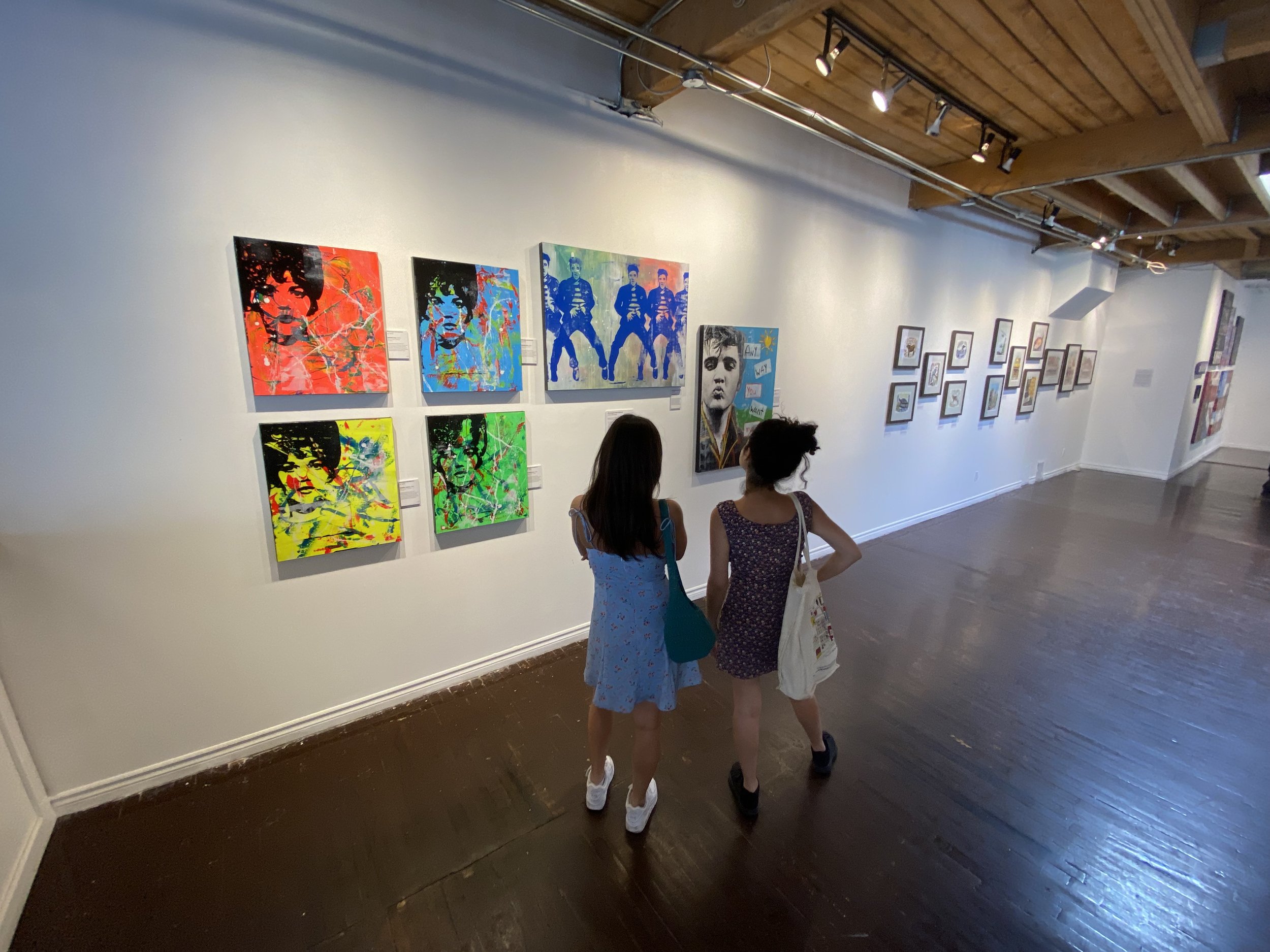
Our New Perceptions Exhibit
Perceptions is an exhibit that showcases various ways of looking at the world around us. For some, it is through our culture, and for others, it is capturing the feeling of a moment, or just simply what is in front of them. Regardless of the direction, one perceives the theme, the malleability of your perception is ever evolving and unique to you.
Perceptions is an exhibit that showcases various ways of looking at the world around us. For some, it is through our culture, and for others, it is capturing the feeling of a moment, or just simply what is in front of them. Regardless of the direction, one perceives the theme, the malleability of your perception is ever evolving and unique to you.
This exhibit displays 8 talented artists that have varying understandings of the world around them. Giuseppe Mandarino and Mark Viola both gravitate towards cultural influencers such as Elvis Presley, Bruce Springsteen, The Beatles etc. and consider these icons as people who have shaped who they are. While Emily Lightstone, Tina Nazarali and Patricia Nolan find beauty in soft details of everyday life. Their inspiration draws from what they feel around them, bodies of water, architecture, animals or the humans around them. They base their art on serene atmospheres which contrasts with our final three artists: Dinesh Subramanian, Rishi, and Kiyungi Fundikira. These three artists focus heavily on cityscapes and find charm in their hometown Toronto. While the subject remains the same, their technique and focus differs in each collection. Each artist has a unique style and their perception is heavily influenced by our very own concrete jungle.
Giuseppe Mandarino
Giuseppe Mandarino’s work represents the zeitgeist of old Hollywood and the inspiration drawn from the 60s-70s. Like many other Canadians, Mandarino grew up consuming American content. After being introduced to The Beatles and Elvis at a young age, music continues to shape who he is and still uses it as the backbone of his creativity (Mandarino, 2022). In his display, he showcases a series of Natalie Wood paintings and two paintings of Elvis Presely. With both surfacing fame in similar time frames, Mandarino thought it would be a good combination of artists to exhibit. Their marks left behind in the entertainment industry is especially fascinating to Manderino as success was achieved and taken away so quickly for them. “I think that because they died so young is why people are so enamoured by them still today. I think people feel like they both had much longer careers ahead of them had they not died, but perhaps we wouldn't feel the same about them if they hadn't died.” (Mandarino, 2022) While he and the rest of the world piece together their tragic deaths, their creativity left behind continues to enhance Mandarino’s creative process (one of his favourite things about his art).
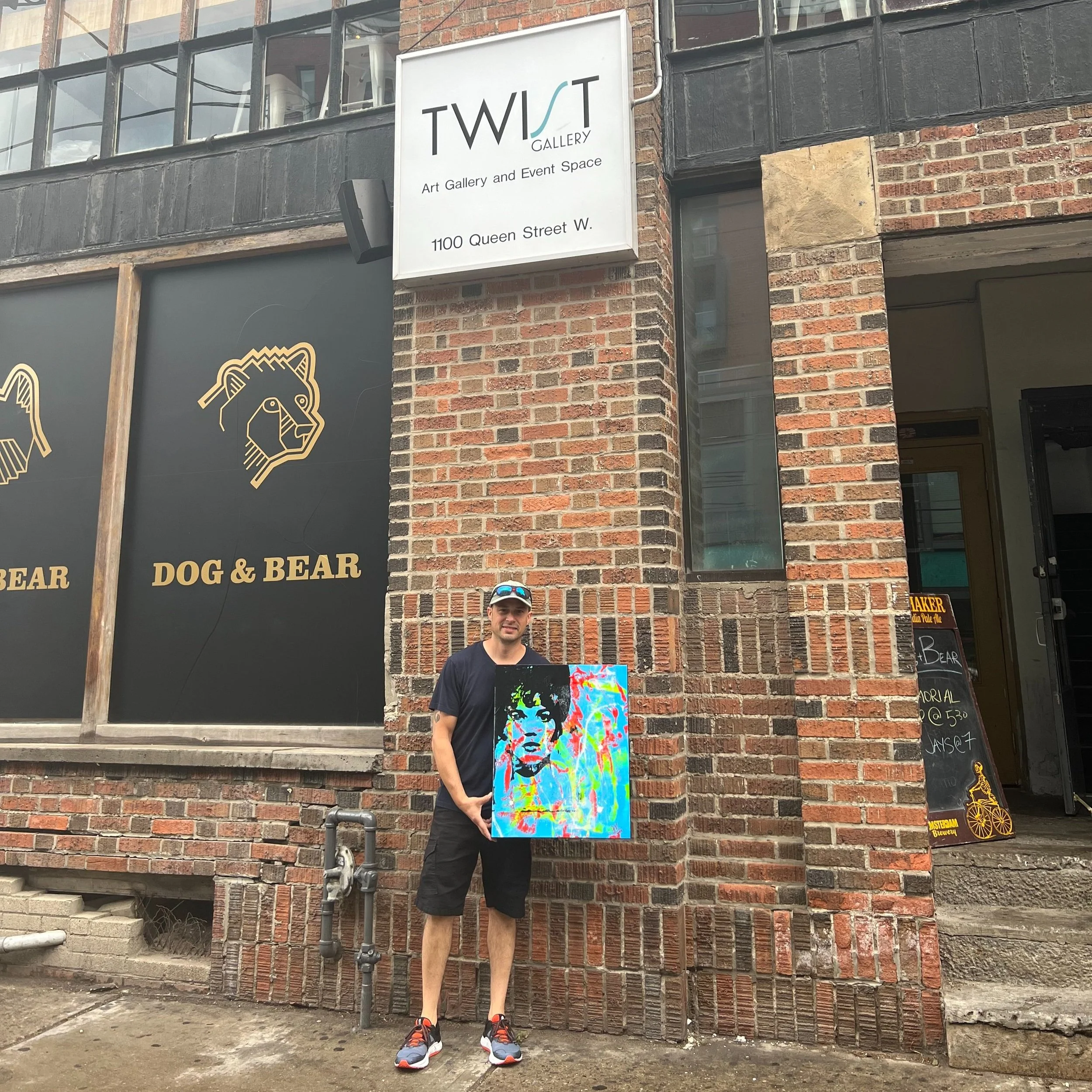
Mark Viola
Similar to Giuseppe Mandarino, Mark Viola finds inspiration in music when discovering his creative voice. He uses music as a tool to let go and tune into his mindset. The surrounding world around Viola is what shapes his art into what it is and what he allows on the canvas. Whatever is going on in his life, Mark reflects that in his work and claims his art “becomes my reaction to the world” (Viola, 2022). He hopes that his art is something people can find meaning behind and look beyond what is blatantly there.
Mark showcases 6 paintings in our Perceptions exhibit. While primarily focusing on the colours red, blue, white and black. Viola produces a particular style which includes text and contrasting elements. However, typography remains to be one of Viola's signature styles within his work as it allows him to build on the existing visual aspect and convey the mood more clearly. His fascination with the use of typography stems from the actual meaning behind the words as well as the style of text. In his Piece ‘Show a Little Faith’, Viola quotes Bruce Springteen, and paints “show a little faith, there's magic in the night”. There is clearly a connection between the two artists. Viola speaks about how he was not always a fan of Springsteen's work, and how his biography has since shifted his perspective on his storytelling ability. This particular line resonates with Mark due to the faith he has in himself because of his wife. “She has been my faith and magic” (Viola, 2022).

Emily Lightstone
Our busy world around us sometimes allows for silent and still moments that can be captured by those who find beauty in it, Emily Lightstone does just that. Her exhibit focuses on how her surroundings (especially water) appear in the moment rather than how they always seem. She loves capturing nature due to its ever changing state. She utilizes her art as a way to focus on the new beauty the earth provides her and the small joys in everyday life. “I love that you could be having the worst day ever, and you can still look up at the sky and say ‘wow those clouds are beautiful” (Lightstone, 2022).
What truly allows Lightstone to observe water the way she does is her position as a stormwater engineer. This sets her apart from others that simply admire water, but allows her to think about the motion of water in a more indepth perspective. During her daily walks by Lake Ontario and the Credit River, Lightstone observes changes in the state of water and how it differs from the day before. This is her sole artistic inspiration and can be applied in a variety of ways. The message Lightstone sends to her audience is “to think about the places in their daily life that might fade into the background of their routine” (Lightstone, 2022). The very essence of her paintings is inspired by the calm joy you feel when looking at a sunset, Lightstone conveys this emotion very clearly through her pieces.

Tina Nazarali
Tina Nazarali draws inspiration from the places she has traveled to and the experiences she gathered throughout her life. She likes to think of the world as her home rather than one individual place. For her, the diversity that surrounds her improves her overall health and helps encourage her to work hard for the life she aspires to live. In her collection of art, Nazarali displays various examples of classic architecture and symmetry. The unique attributes of these specific landmarks represent intellect and boldness for her, something that is hard to come by in the modern world. In her painting ‘Magnificent Tuscany’ , the limestone and terracotta roof tiles stand out and give an ‘old world Europe feeling.’ says Nazarali. Through her travels she documents her surroundings through oil and acrylic. Using this medium allows her to convey the essence of her environment in a more controlled way, rather than using a camera.

Patricia Nolan
Partricia Nolan’s wall includes two series of paintings. While both very similar in style, she captures our very own Kensington Market up close and personal and a series of ‘cottage style’ animals. Patricia captures her still images of Toronto en plein air. This special space is one where many come to relax, but in a slightly different manner than anywhere else in the city. People converse easily and spontaneously (Nolan, 2022). One of her treasured activities is people watching and this area is easily a favourite for her. As she sits there, she captures each small detail with the stroke of a brush, her devotion to detail is undoubtedly one of the most distinguishing features of her work. This remains constant even as she has evolved as an artist. Nolan currently focuses on wet-on-wet techniques before attending to the finer details, while she used to paint the details synchronously, she has since progressed into a different style.
In her Kensington Market series, Nolan captures life in the simplest form, exactly how it was in the moment. “Kensington Market is an ever-evolving place of course, but it is continuously under threat from developers who perhaps don’t best understand the spirit of the place, and it was important to me to capture the essence of this very special place in our city before it is irreversibly transformed” (Nolan, 2022). This small corner of Toronto is held near and dear to many Torontonians, and capturing the essence of it is a difficult task, however Nolan attempts and succeeds in such a creative way.

Dinesh Subramanian
Through Dinesh Subramanian’s realistic rendering of Toronto, we can clearly see the details and stillness of the city. While the city is filled with many buildings and lights, most of Subramanian’s work captures a hollow environment. His attention to detail is placed in contrast to the various elements often forgotten by city folk. The constant need to rush and get to the destination is an indoctrinated idea many inhabit. Subramanian likes to include as many details as he possibly can to make an accurate representation of the city. This allows his painting to fully exhibit what Toronto has to offer, even the forgotten details by many.
Half of Dinesh Subramanian’s display is inspired by rain and the cozy feeling he craves from it. All it takes is the smell of the first drop to change the atmosphere, the reflection of greys and reds appear more clearly, and lights become a new exciting subject. “reflections are also very interesting to me, like opening a portal to another world” (Subramanian, 2022). The calming emotions of the rain provoke a different story and experience of the world around you, claims Dinesh.
Since the pandemic, Subramanian’s experimental use of watercolour has become life changing. Prior to his use of this medium, it has always been a daunting method, one he did not intend to explore. After seeing one of his favourite artists utilize watercolour, it inspired Dinesh to practice with the runny texture. As he understood the medium more, the unpredictable quality of this paint became favoured. A medium in which helped him complete his paintings, one that completed his initial thought. His practice with watercolour persists, and enhances with every stroke.

Rishi
As one of our artists who focus mainly on cityscapes, Rishi utilizes contrast in colour to allow his work to stand out. Each colour used is purposely done to convey a tone set by the bustling city of Toronto. For Rishi, pink is an indication of lust or comfort, as used in his work, ‘Pink CNset’ as a city he considers home, and also used in ‘Metro’ for the apartment windows. Colour is a significant communication tool for Rishi and the work he creates. One consistent contrast he uses is yellow against black, this is used as an indication for uncertainty and warning. This combination is repeated throughout his paintings as a common emotion that takes place in the city. The use of Yellow is used in ‘Metro’ most effectively, as it sheds light on social interactions and driving and the dangers that can come with it.
Two pieces that naturally stand out from the rest, is ‘Bora Bora’, and ‘Abbey Road’. While both under the theme Perceptions, they differ from the site Toronto. Rishi chose to capture ‘Bora Bora’ during the pandemic due to its picturesque essence. This was during a time where many were unable to travel and leave their homes. Social media was an escape for many, and became our only perception of the outside world. ‘Abbey Road’ is sentimental to him as it is a location which Rishi has traveled to and references his accuracy through the photos taken by himself. However, no matter what, Toronto stands as his favourite location due to the proximity to bodies of water and the endless amounts of things to do.

Kiyungi Fundikira
While Toronto can often look gray and concrete, Kiyungi Fundikira has never thought of it that way. His encapsulation of Toronto includes colour and life; this is why his favourite season is fall. Fundikira gravitates towards this season due to its texture, colour and variety. His artwork is based around the colour you find in the city, even at night. He plans on exploring black and white mediums such as: sketches with pens, Inks and pencils, later on in his art journey, however, for now he is quite content with searching for colour.
Toronto is a special place for Fundikira as it includes so many cultures, forms of architecture and settings. The endless opportunities you receive from living in a city like Toronto is astounding, the contemporary and vintage stores and ways of life truly make it the most cosmopolitan cities he has ever traveled to.

Through each artist, a different perspective of life shines through. The contrast between positive and negative, what is worth capturing and not, or what is inspirational or unmoving differs between all eight artists. This drives sentiment, it drives passion, and it shapes who each person is. Perhaps there are some similarities and common points of interest, however the way each piece is portrayed has something no one else can add, more. The painting is exactly how it looks by the person who decided to make it look that way. One can have perspective and feelings based on the art. But no one can change the initial form.
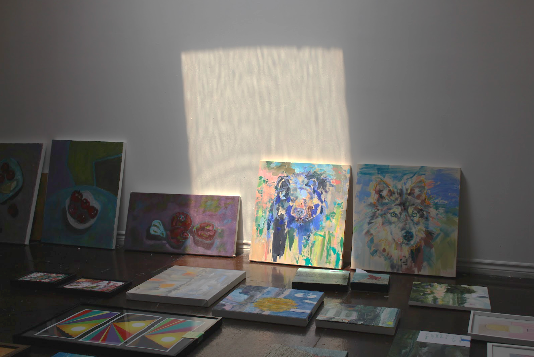
Surfacing Opening Reception: A Huge Success!
Our opening reception was a huge success on Thursday, June 2nd! We curated a space that encapsulates the spirit of PROJECT ART TORONTO and it turned out looking amazing..
Our opening reception was a huge success on Thursday, June 2nd! We curated a space that encapsulates the spirit of PROJECT ART TORONTO and it turned out looking amazing. The Surfacing Exhibit displays passion, hard work, collaboration, and creativity. Ewa Stryjnik is the director of PROJECT ART TORONTO, an art studio where artists can rent the space, attend art classes, or workshops.
The turn out was amazing and we just wanted to thank everyone for coming! This event brought together many people around the Queen West community to acknowledge the result of expression and skill. We were pleased to host such a meaningful experience for our amazing guests and artists.

The Surfacing Exhibit is showing 21 studio artists’ supportive and passionate work, most of which were created during the times of Covid-19. Their pieces represent a time when the group encouraged each other to create, explore, and grow.
While the art was observed, our community was achieving something much more meaningful, a night of face to face communication and personal connection. Something many have lost within the past few years.
Our own Twist Gallery communications team showed up to the event in support of Twist Gallery because we love seeing the gallery filled with art and art lovers!

We are so pleased to be a part of PROJECT ART TORONTO’s exhibit and allow them to use our space to display their Surfacing pieces. It was an absolute pleasure working with a larger team this month. While we are not often approached by groups, this community allowed for an easy transition and cohesive selection of pieces to work with. PROJECT ART TORONTO utilized our space and gave us something to really admire: their passion and hard work. Ewa and PROJECT ART TORONTO’s studio artists truly love being artists and they inspire our audience to start a passion of their own, whether that be art or anything you are passionate about.
The artists also came together during the Opening Reception to surprise Ewa with flowers and a card to show their appreciation!

Ewa Stryjnik not only inspires artists to continue their passion for art. But guides each artist to maximize their creative potential. This was perfectly displayed during our installation day and throughout our Opening Reception. Styjnik’s energy churned our blank canvas gallery into a perfectly curated template for students to display their art and a cohesive journey for patrons to participate in. While she envisioned where each piece thrived, she communicated that to her students and worked with them to find a balance between visual satisfaction and the space as a whole.

We would just like to say thank you again for coming to the Surfacing Opening Reception! We had a great time, and we hope you had a great time as well! The Surfacing Exhibit is open until June 25th, so if you missed the Opening Reception don’t worry, come experience Surfacing at Twist Gallery all month long at 1100 Queen Street West. We are open every Tuesday-Friday from 11:00am-6:00pm and Saturday from 11:00am-4:00pm.
Looking forward to seeing you again and hearing your thoughts on the Surfacing Exhibit!
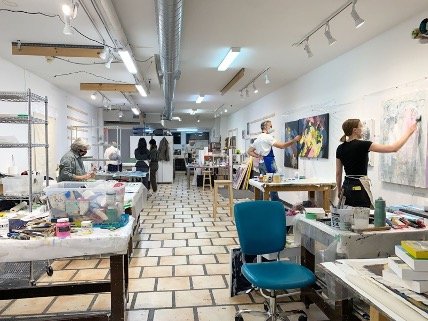
June ‘Surfacing’ Group Exhibit with PROJECT ART TORONTO
This June, Twist Gallery is excited to partner with PROJECT ART TORONTO to showcase the ‘Surfacing’ Group Exhibit. ‘Surfacing’ will showcase art from 21 studio artists, created during the two years of Covid-19. ‘Surfacing’ is about strength, hard work and supportive camaraderie..
This June, Twist Gallery is excited to partner with PROJECT ART TORONTO to showcase the ‘Surfacing’ Group Exhibit. ‘Surfacing’ will showcase art from 21 studio artists, created during the two years of Covid-19. ‘Surfacing’ is about strength, hard work and supportive camaraderie. The exhibit will run from June 2nd- 25th, 2022. ‘Surfacing’ will be having an Opening Reception at Twist Gallery on June 2nd, at 6pm- 9pm. Meet the artists and supporters of PROJECT ART TORONTO and Twist Gallery. The Opening Reception and exhibit are both free to attend.
Ewa Stryjnik is PROJECT ART TORONTO’s director since the studio opened in May 2010. PROJECT ART TORONTO is an art studio that offers classes, workshops and studio spaces for artists to work on their own. “The studio is alive 24/7. PROJECT ART is an unfolding art pursuit,” Ewa says.
Photo by PROJECT ART TORONTO.
We had a conversation with Ewa and she shared a little more about PROJECT ART TORONTO and what ‘Surfacing’ means to her.
Twist Gallery: Why was PROJECT ART TORONTO started?
Ewa: For about 10 years, I was an art instructor at the Art Gallery of Ontario School of Art.
In 2010, AGO School of Art received funding to renovate the school and all instructors, including myself, were laid off. My students encouraged me to find a new space where they could continue painting. In May 2010, PROJECT ART TORONTO was born.
Twist Gallery: Can you explain what PROJECT ART TORONTO is?
Ewa: PROJECT ART TORONTO is an art studio where students and artists can develop their paintings independently with guidance and suggestions from instructor Ewa Stryjnik. For years we offered structured classes but since most of the artists continued attending classes, it naturally evolved into an Open Studio practice where artists can experiment with different techniques and develop their own styles. There are scheduled Open Studio classes as well as the option to rent a studio space on a daily, weekly or on monthly basis.
PROJECT ART TORONTO occasionally invites artist instructors to teach workshops. Instructors can rent our studio by the hour to teach workshops and/or classes. It’s a great way to share our space and for students to learn new perspectives and approaches. Our studio welcomes students and artists of all ages and we greatly value the camaraderie and support of our studio artists.
Twist Gallery: What does art mean to you as the director of PROJECT ART TORONTO?
Ewa: My biggest passion is to discover and point out the natural, creative talent in every person. Everyone is unique and should be proud of their own style and ideas. Secondly, I like to motivate all my artists to work hard and have a disciplined routine to master their technique and style. As I often say: “Passion to start, work to achieve.”

Photo by PROJECT ART TORONTO.
Twist Gallery: What does Project Art mean to you as the director?
Ewa: It means an Artist Studio! I’m happy that we have the space where we can paint, gather, chat, have classes, workshops and studio spaces for artists to work on their own. The studio is alive 24/7. Project art is an unfolding art pursuit. Also, I’m very grateful for all the friendships that developed throughout the years. In a way, our studio is our life and time capsule. A safe place where we can escape to and find a supportive camaraderie.
Twist Gallery: When did the artists paint the ‘Surfacing’ exhibit artwork?
Ewa: Most of the paintings were created during the Covid times. The lockdowns allowed the artists to paint more. Our group encouraged each other to create, explore and grow.

Photo by PROJECT ART TORONTO.
Twist Gallery: Can you explain how the ‘Surfacing’ artwork represents irrepressible creativity, undeterred spirit and a commonality of strength?
Ewa: During the uncertain times of Covid, we pulled ourselves together. In our commonality of strength, we focused on painting and improving our techniques. Painting became a positive outlet, a haven from the anxieties of the outside world. We realized that the beauty of art is very much needed these days. I hope that the paintings in our group exhibition ‘Surfacing,’ will showcase and celebrate that beauty and positivity of life and humanity.
Twist Gallery: How do you feel about Twist Gallery partnering with PROJECT ART TORONTO?
Ewa: It’s so great that venues like Twist Gallery exist. It is a beautiful, very cool gallery-event space that is large enough to host our group exhibition. We’re very grateful that Twist Gallery rents their space to the local artists allowing us to share our art with a new audience. I hope that our paintings will brighten up many lives and that we’ll be able to exhibit at Twist Gallery in the future. It is a pleasure to work with Twist Gallery art director Nadia Kakridonis and her team.
Photo by PROJECT ART TORONTO.
The 21 featuring ‘Surfacing’ artists are: Peggy Bell, Zora Bily, Maureen Bradshaw, Jeff Briggs, Geoffrey Cheung, Donna Chudnow, Marlene Etherington, Vian Ewart, Liz Haney, Andrea Higgins, Lisa Litowitz, Katharine Lochnan, Larissa Mattwich, Diana Menzies, Wendy Robertson, Janna Robins-Walters, Lisa Rose, Javier Silva, Linda Snowden, Ewa Stryjnik, and Selina Waxman.
We are so excited to be partnering with PROJECT ART TORONTO for the ‘Surfacing’ group exhibit. ‘Surfacing’ is about 21 studio artist’s passion and hard work. Even in difficult times, the artists encouraged each other to create, explore and grow. Experience ‘Surfacing’ in person, opening June 2nd- 25th, 2022 at Twist Gallery. Don’t miss your chance to meet the artists, attend the Opening Reception June 2nd, at 6pm- 9pm. Twist Gallery is open Tuesday- Friday, 11am- 6pm, and Saturdays 11am- 4pm.

Meet the Gestures Artists
With work so breathtaking, words are necessary to describe the beauty of Gestures. Twist Gallery’s two-month-long exhibition displays 8 local Toronto artists’ brush strokes, showing just how intentional and deliberate each stroke is.
With work so breathtaking, words are necessary to describe the beauty of Gestures. Twist Gallery’s two-month-long exhibition displays 8 local Toronto artists’ brush strokes, showing just how intentional and deliberate each stroke is. Experience the feelings illustrated in this exhibition, it is sure to leave a mark
→ Join us at 1100 Queen Street West, Tuesday to Saturday from 11 AM to 6 PM ←
Gestures Opening Reception
Join us for light appetizers, refreshments, music, and a chance to meet the artists.
Thursday, April 7th, 2022 | 6 pm to 9 pm
1100 Queen Street W
Along with the incredible works done by our various artists it is important to us that we get to know each artist more personally. We asked each artist to send in a short paragraph explaining a bit about who they are in order for us, and you to feel more connected to them outside of their work! All of the artists from this exhibit have such incredible stories and explanations for why they love their craft, and we invite you to learn more about how they came to be who they are, and why they decided to create. Keep reading to get the full story!
MEET THE GESTURES ARTISTS
Alice Kelso
Alice Kelso is a Canadian artist, teacher, and social advocate. Though based mainly out of Hamilton and Toronto, she has also shown her work at pop-up exhibitions in the UK. As a graduate of OCAD University's painting program (BFA) and Sheridan College's social services program (SSW), she teaches (and learns) through an anti-oppressive and holistic framework. Alice's work is abstract but representational and her process is expressive and cathartic. It showcases the patterns created by natural growth through texture, mark-making and colour harmonies; conceptual interconnectivity between art and science, people and the world around them.
Andrea Higgins
Andrea is a contemporary self-taught artist with a background in music, film and dance.
Her work is physical and improvisational, driven by emotion captured through an abstract lens. She describes her works as a dance with one's self, spontaneous and free, releasing energy and emotions in a limitless direction.
Similar to the way music creates a soundtrack to our lives, colours play a role in the background of our everyday moments yet carry meanings that vary from person to person.
Andrea lives and works in Toronto, Canada.

Andrea Rosara
Andrea Rosara is an interdisciplinary artist from Venice, Italy. He works primarily in the media of painting and drawing and has an interest in printmaking. He holds a Bachelor’s of Fine Art and a Master’s of Fine Art/Visual Studies in Painting, Drawing and Printmaking from the Accademia di Belle Arti di Venezia. Andrea has exhibited his work in a wide variety of solo and group exhibitions in Venetian galleries and art festivals including Atelier 3+10, the Festival of Contemporary Art Giudecca, La Fenice Gallery, Techwood Venezia, and Accademia di Belle Arti di Venezia. He is now based in Toronto, Canada.
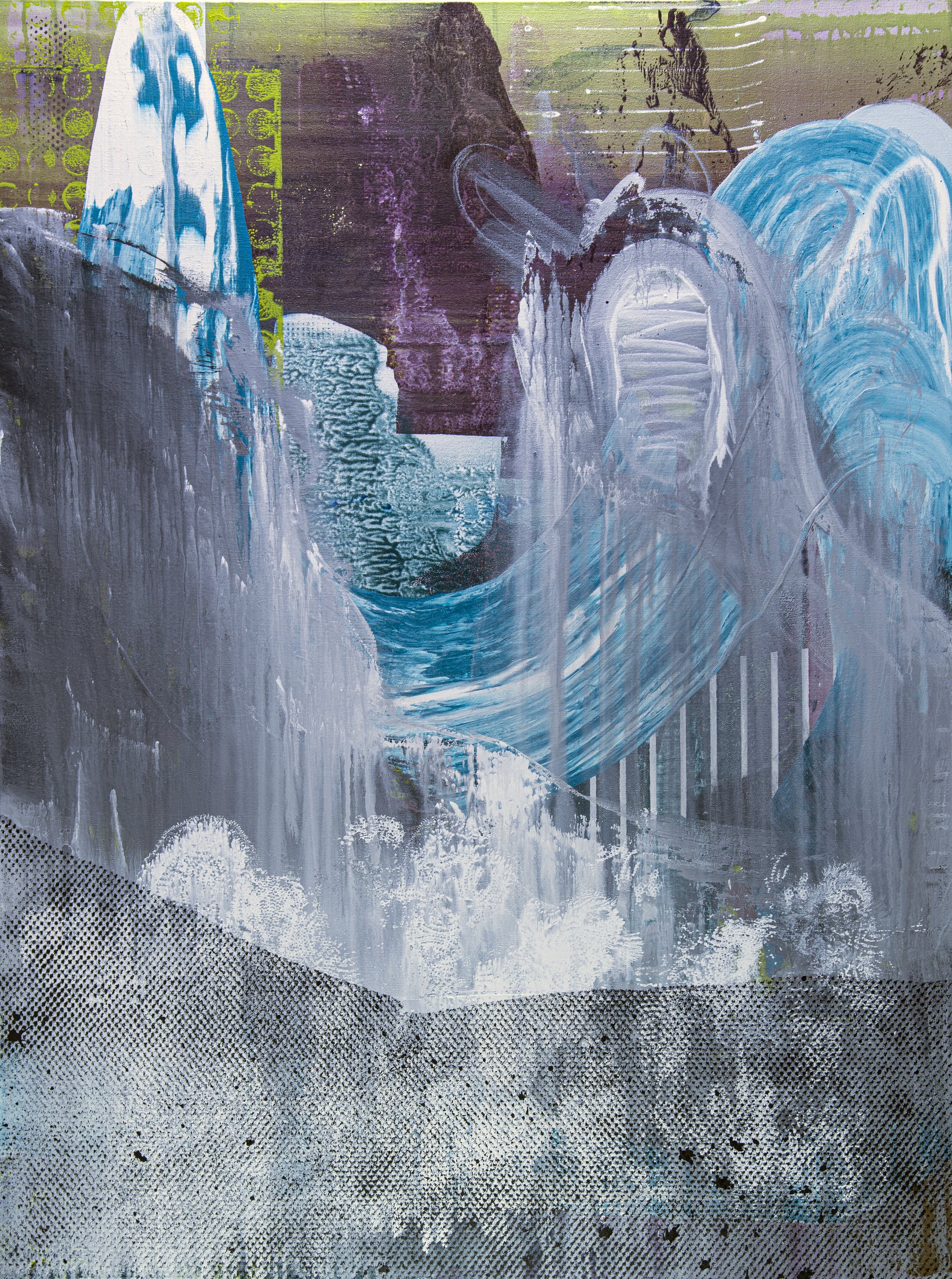
Caroline Chorazy
Caroline Chorazy is a self-taught, Toronto-based abstract artist specializing in acrylics and gold leaf. She draws her inspiration from natural elements in an attempt to capture organic movement and flow in all of her artwork. Her use of gold leaf and pigment gives each piece a unique gesture and ability to change appearance or shape in cohesion with the room and light.

Moses Salihou
Moses is a contemporary artist whose artwork reads like visual poetry; subjective & limitless in its interpretation. His inspiration and creativity are sourced from his surroundings, the environment and his imagination. Moses’ creative process is guided by a desire to establish a dialogue through his work without setting any limits.
As a versatile artist, Moses uses various supports (canvas, paper, reclaimed materials) and mediums (oil, acrylic, watercolour, pigment and charcoal). Originally from Cameroon, Moses now calls Toronto home and his artwork is proudly featured in private collections in Canada and abroad.

Seokhoon Jun
Seokhoon Jun loves family, friends, and nature. Currently studying art therapy at Toronto Art Therapy Institute with an interest in how art and spirituality come together in life. Glad and grateful for the opportunity to connect through art.
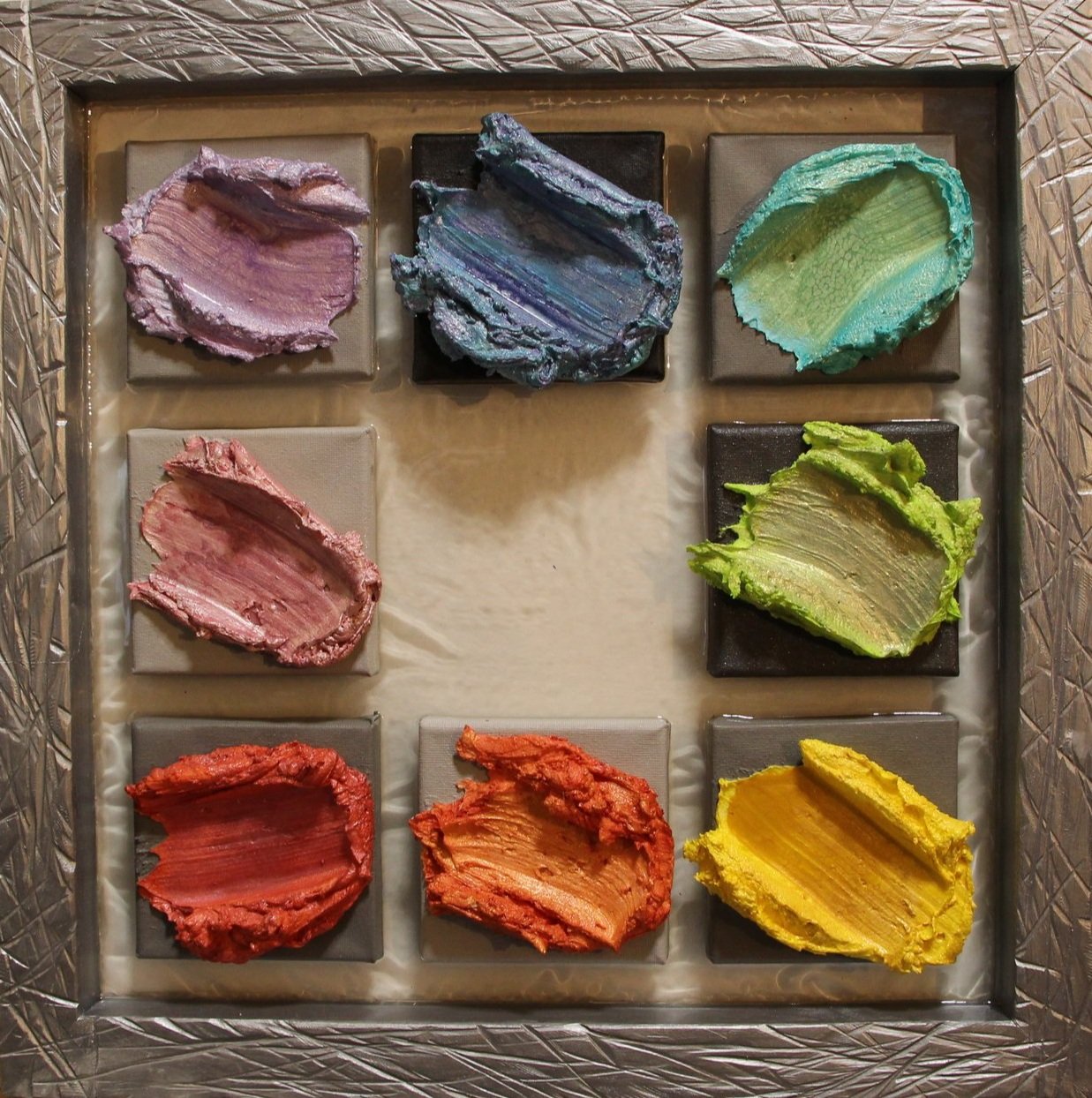
Valentina Youkhanna
Valentina Youkhanna is a self-taught artist who has always had a creative side since childhood. She spent a lot of her time as a kid drawing, colouring, and painting. In her early 20s, she began painting with acrylics and it’s been love ever since. She is not only passionate about the arts and creativity but also had a career as a mental health worker and facilitated art groups for those facing mental health and addiction challenges. In her late 20s, Valentina decided creativity would take the main seat in her life and pursued an education in hairstyling which ultimately led her to work in both professions. By 2019 she would dedicate and commit more time to her creative outlets and left the mental health sector to solely focus on her hairstylist career and art.
Valentina is passionate about healing through art and believes everyone is creative. She believes everyone has gifts and talents in the arts but as time goes on and people “grow up” they forget what it means to play, to have fun, and let your mind be creative. She hopes to see more people tune into their intuition and create from the heart and soul to express or heal. She values community, supporting one another and believes there is abundance for all in the art world and no need to compete because as she states, “no two people can draw the same line.”

Vian Ewart
Vian’s early career was in the graphic side of journalism. About 15 years ago Vian had the opportunity to go to the Gallery School at the AGO, and then the Toronto School of Art, and then the three-year adult art course at Central Tech Art School. For several years since, Vian has been part of the ProjectArt studio group in Toronto. He has also been involved with a number of group exhibitions from the Praxis Gallery to Lennox Contemporary to Don Valley/Forest Hill and most recently Gallery 1313. Last year he completed a couple of commissions in Canada and the U.S.
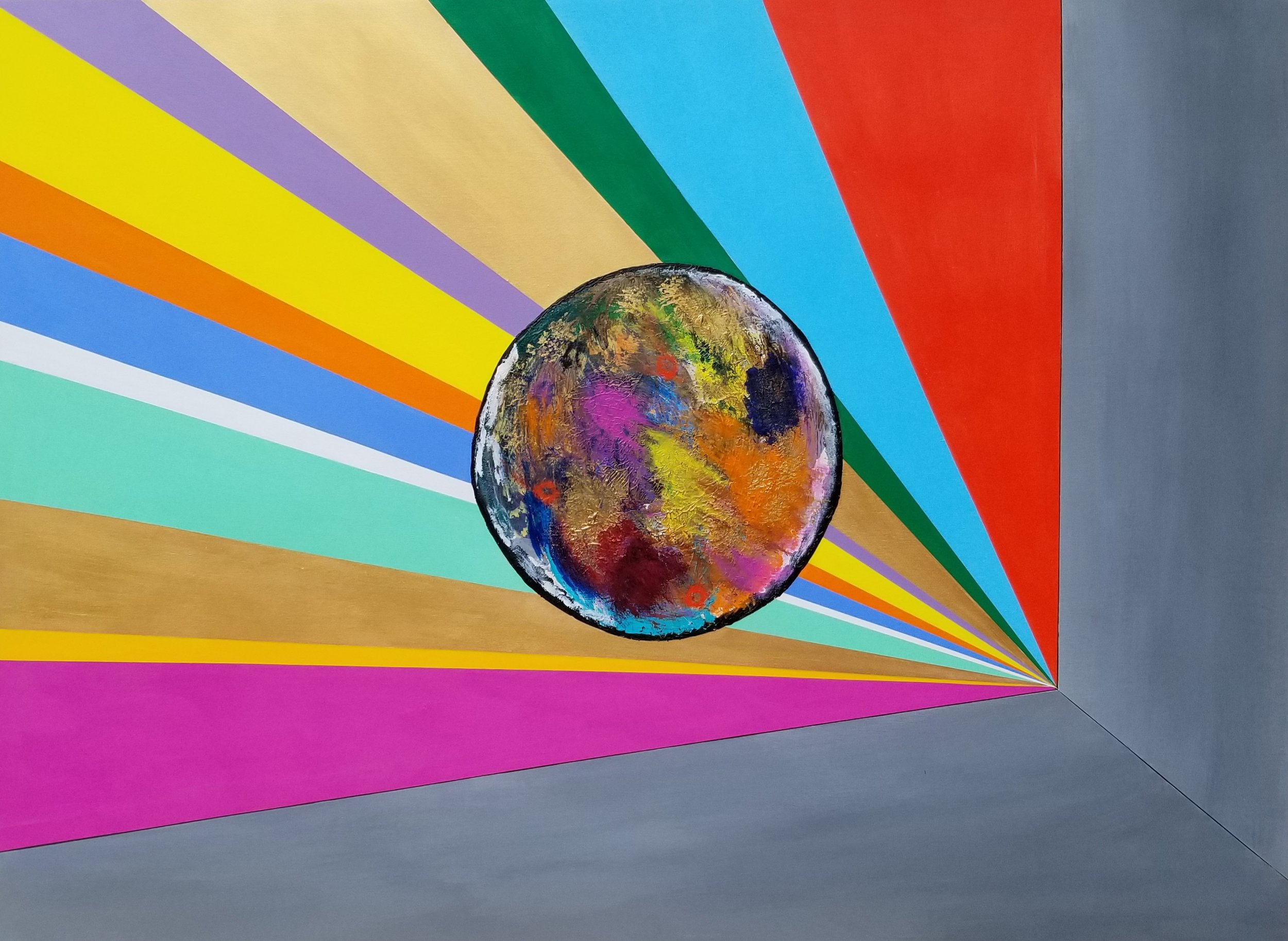
We hope to see you there!
This exhibit is one of the longer ones, and we felt that this was necessary due to the complexity and emotional depth inherent in a lot of the artists pieces. We hope that this blog post gave you some insight into why each artist decided to express themselves through this medium, and how their art has helped shaped their life. We are excited to see you at the new exhibit Gestures and hope this work will inspire you in the way it was meant too.
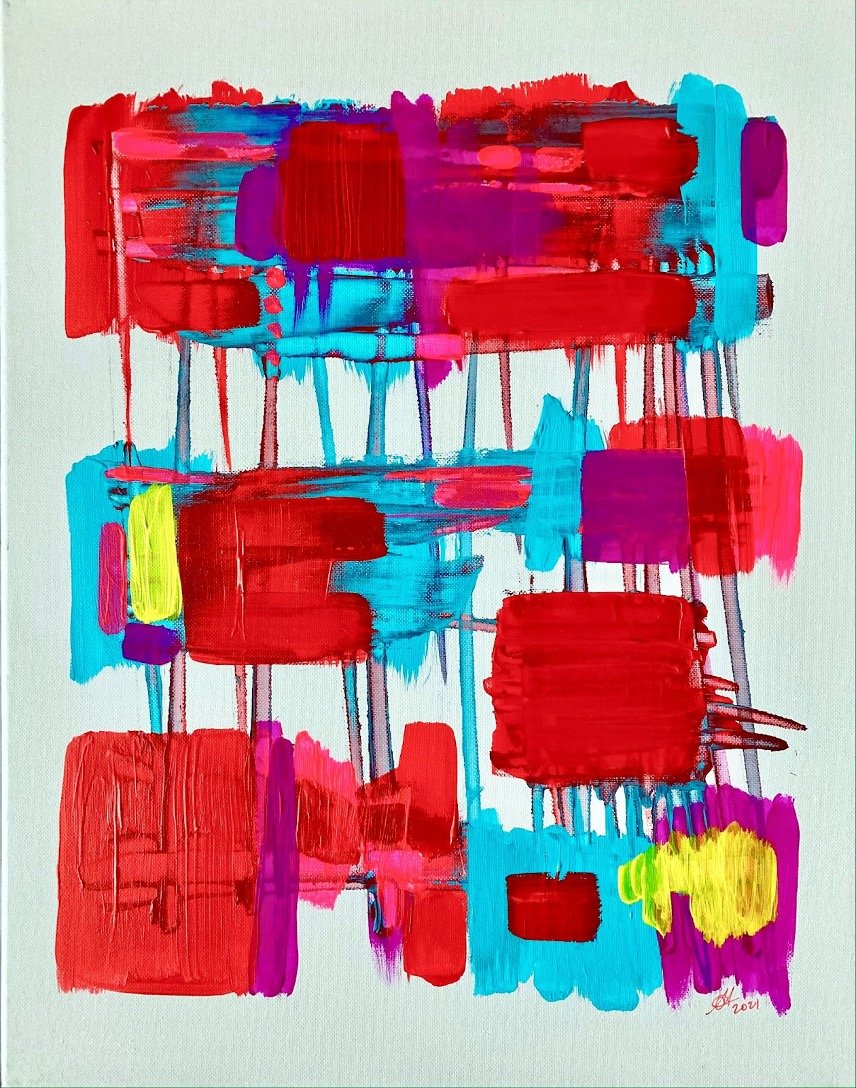
Get to Know the Artists From Chromatics! March 2nd-26th
This month Twist Gallery has chosen 7 local Toronto artists to be a part of our Chromatics Exhibit. Each of these artists has their very own unique inspirations, creative processes and messages they display in their art.
This month Twist Gallery has chosen 7 local Toronto artists to be a part of our Chromatics Exhibit. Each of these artists has their very own unique inspirations, creative processes and messages they display in their art. Their artwork communicates the same theme of expressing themselves through the use of bold and vibrant colours. How they use and express these colours is entirely unique.
→ Join us at 1100 Queen Street West, Tuesday to Saturday from 11 AM to 6 PM ←
Liz Szymczak
Liz Szymczak’s painting journey started in 2018 as therapy for anxiety, post-heart attack. She initially started painting rocks that she gathered from her walks at the lake. From there she jumped to small canvases, and now Liz’s largest piece to date is 36” x 48” and she hopes to go even larger! Painting opened up in her a well of creative energy that lay dormant for most of her life. Now painting is her sanctuary! All of her work is intuitive and many of her works have appeared to her in dreams. Liz’s only hope is that her art makes the viewer feel- because that is what makes life so beautiful!
Tamar Kevorkian
Tamar is an Armenian Canadian painter born in Beirut, Lebanon. Tamar grew up in Montreal, where she studied Fine Arts at Concordia University and Photography at Dawson Institute of Photography. Her infinite imagination and inspiration from her life experiences along with the influence of Pablo Picasso give life to an empty canvas.
Tamar’s preferred mediums are acrylic, oil pastel, charcoal, and ink, using brushes and palette knives of various sizes. She brings forth harmony to explore and create the visual imagery of her cubist graffiti paintings. Now living in Toronto, Canada, Tamar actively paints both on canvas and on digital media.
“Art should have no boundaries, therefore I paint freely and boldly because Art always matters.”

Judith McKay
Judith McKay is a Toronto-area abstract surrealist artist. Her intensely coloured, vibrant landscapes and portraits are influenced by magical realism and surrealistic dreams. The concept underlying her work is that of inseparable and contradictory opposites. The playful duality of abstract and representation—altering perception and reality. Interconnectedness and dissolving boundaries permeate her work—one element flows into another, merging and mixing, creating something altogether new. We think we recognize the places and people in these paintings but they are not as we remember them.
Her artworks featured at the Chromatics exhibit depict powerfully ethereal women spirits and sensual flowing skies, birds, and flowers in vivid, hopeful colours. Her mission in creating these works is to offer an alternative elsewhere, an escape from the chaotic world we find ourselves in. She uses acrylic on canvas; painting with swirling motion to give a sense of floating in ambient air.
Recent exhibitions include the Loft Gallery Group Exhibition, The Artist Project, Toronto Outdoor Art Fair, HIRAETH, a solo show at the Urban Gallery, Toronto and FUSION, a shared solo show with Moses Salihou at the Freedom Factory Gallery, Toronto. Her work can also be found in private and corporate collections across Canada, the US, and overseas.

Adeeba Aslam
Adeeba comes from a deeply artistic family of painters, potters and clothing designers with roots in Pakistan. She is a self-taught artist who derives inspiration for her work from her spirituality, lived experiences and interactions with her community.
Over the past several years Adeeba has been trained with and is currently under the mentorship of a prominent Canadian artist, Catherine Shea.
Influenced by expressionist painters, Adeeba typically doesn't have a plan before exploring the canvas. She works with acrylic paint and selected mediums using unconventional tools and techniques to create her abstract pieces. Using bold colours, spatial and organic structures, Adeeba’s paintings evoke an ethereal depth and drama in telling her stories. The process of painting is both a deeply emotional and meditative experience for Adeeba.
Adeeba’s work has been featured at various locations in Toronto, where she was born, raised and currently resides.
For more information about her work, contact adeeba.aslam@gmail.com. Check out her Instagram: @adeeba.aslam.art.

Andrea Higgins
Andrea is a contemporary self-taught artist with a background in music, film, and dance. Her work is physical and improvisational, driven by emotion captured through an abstract lens. She describes her works as a dance with one's self, spontaneous and free, releasing energy, and emotions in a limitless direction.
Similar to the way music creates a soundtrack to our lives, colours play a role in the background of our everyday moments yet carry meanings that vary from person to person.
Andrea lives and works in Toronto, Canada. Check out her Instagram: @andreahigginsart.

Giuseppe Mandarino
Rooted in Italian tradition, Giuseppe was born in November 1976 and raised in the Downsview neighbourhood of Toronto. Giuseppe has been passionate about putting paint to canvas since his childhood. Experimenting with his artistic style by fusing a combination of textures, colours, and mediums his creations are one of a kind pieces developed through emotions, surroundings and human connections. Giuseppe speaks through his work, and each paint stroke is an expression. His art is created to channel feeling, movement, and inspiration for those that view it. With a love for his hometown of Toronto, Giuseppe has created custom work for an array of local art collectors, entrepreneurs, and admirers. The world that surrounds us has inspiration everywhere if we take the time to notice it, which Giuseppe displays on his canvas.
“Do something you really enjoy and it will never feel like work. I’m grateful for my family’s support, and for the opportunities I have been given.”

Kim Benoit
Creating art is the perfect occasion for an artist to explore happiness. Experiencing art is a mindful activity which allows time and space to experience an emotion. In the paintings from Kim’s series “What Is Happiness?”, she proposes to expound on happiness. What aspects of art make someone feel good? Making a painting that aims to have someone explore their happiness or even to guide them to feel happy is no easy task. She needed to find a visual vocabulary to define happiness. All artists choose a palette to convey the mood. Dark colours can be calming or depressing, bright colours can be uplifting or overwhelming. The use of space can attract or repel. Loose brush strokes and flowing organic shapes can be freeing or disorienting. Strict movement and controlled geometric shapes can evoke safeness or confinement. All of these elements affect the experience. In Kim’s series ‘What Is Happiness?’ She selected paintings that are bright, flowing, and organic for the Chromatics exhibition. To see Kim’s other paintings which express stricter controlled geometric expressions, go to kimbenoitart.com.
The artist’s portion of the proceeds of the sale of these paintings will be donated to research and programs which support people with a mental illness.

We hope to see you there!

Valentine's Day Date Night on Queen Street West
This Monday February 14th is Valentine’s Day and whether you’re spending it with your significant other, your friends, or your family, Queen Street West provides you with a whole day of fun local places to explore.
This Monday February 14th is Valentine’s Day and whether you’re spending it with your significant other, your friends, or your family, Queen Street West provides you with a whole day of fun local places to explore. Queen Street West is known for trendy retail stores, unique coffee shops, and a large cluster of art galleries in the city. Walking along this street makes you feel like you’re in the city. Trendy cafes surrounding you, art from creative people, and the CN Tower poking out from between the skyscrapers. Below are some options of the fun things to do on Queen Street West. It’s your day, so if exploring the city is something you love to do then follow the list below, but if just going to a café is your thing, then grab a cup at the place listed to try something new.

Photo taken by Twist Gallery.
Frankie’s Diner
Located at 994 Queen Street West, start the day off right with some diner styled breakfast food. They also serve draught beers. This local diner is handmade fresh and has been open since 1977. They are open for dine-in, curb-side pickup, and delivery. There’s just something about diner food and the atmosphere with your loved ones. It’s both delicious and comforting.

Photo from Frankie’s Diner’s Facebook.
Birds
If you’re in the mood to shop come shop at Birds, located at 1114 Queen Street West. The clothes are vegan, sustainable, and made ethically in Canada. They also have a “ReNesting” section which allows you to resell the clothes you bought there as long as it is still in re-sellable condition. If it isn’t then they offer to take the item anyways to donate it to a local charity who raise money through recycled cloth.

Photo from Birdsofna’s Instagram.
Euclid Farms
Located at 913 Queen Street West, Euclid Farms is a flower shop. Spoil your loved one or spoil yourself because self-care is important too. This local flower shop is chemical free so making a purchase here you know you are getting great quality flowers. They grow their flowers in eleven yards in West Queen West and Roncesvalles.
Photo from Euclidfarm’s Instagram.
Helen and Hildegard
Located at 1174 Queen Street West, they are a cute local shop that sells beauty products, candles and essential oils, home products, and tea ware. Walking by their window their designed mugs will pop out at you. They also sell organic teas. They even have a Valentine’s Gift Guide on their website to check out this weekend.

Photo from HelenandHildegard’s Instagram.
Café Neon
Café Neon is an artsy hip café to visit to warm up on these cold winter days. Located at 1024 Queen Street West, get take-out or dine-in and admire the unique art pieces that line the walls. The café offers breakfast, lunch, a wide selection of coffee and baked goods. They also sell baked breads, wine, and beer to order from their website. This place is sure to warm you and your loved ones up.

Photo from cafe_neon’s Instagram.
Fonda Lola
Located at 942 Queen Street West, Fonda Lola is a great dinner place for your Valentine’s Day dinner. You’ll know you’re in the artsy Queen Street West scene from the decadent plates served. This restaurant offers Mexican cuisine and several Margaritas. They also have a “sassy yet classy” drink list which is perfect if that’s your vibe too.

Photo from Fonda Lola’s Instagram.
Twist Gallery
Finish your day with some art or visit during the day as you can spend some time admiring six different local Toronto artist’s pieces. Twist Gallery is located at 1100 Queen Street West. From February 2nd to February 26th the current exhibition is Crossing Boundaries. Crossing Boundaries showcases the beauties of the world that have inspired the six artists. Six different styles and many different locations you can travel to multiple places in this one gallery. Twist Gallery is open from 11am-6pm. The Gallery is a New York style loft, and the windows offer a cute aesthetic overlooking the hustle and bustle of the city decorated with fairy lights.

Photo taken by Twist Gallery.
Celebrate Valentine’s Day locally this year by browsing shops, eating at a café or diner food, or exploring some art from local Toronto artists. Especially because it’s still cold outside, walking store to store is a great way to warm up as well! We hope you come visit Twist Gallery with your loved ones and we look forward to seeing you!
Also Read: Event Space Toronto, wedding venue Toronto, Wedding Reception Toronto

Wendy Teasdale's Intuitive Style
Wendy Teasdale is a participant in the Kaleidoscope exhibit. Her paintings are intricate and eye-catching, we love her work. We asked her a couple of questions about her style and processes which you can read below!
Wendy Teasdale is a participant in the Kaleidoscope exhibit. Her paintings are intricate and eye-catching, we love her work. We asked her a couple of questions about her style and processes which you can read below!
Do you have a favourite medium? What materials and tools do you use the most and why?
I love working in acrylic inks and high flow acrylics for the background of my paintings. I enjoy the blending process and layering of colours using solid, translucent and metallic. My favourite archival ink pens are micron black and uni-ball signo white.

Do you have a process/method when painting?
My painting process is very much an intuitive one. I usually start with a colour in mind and the next one almost chooses itself! I find painting and drawing to be meditative, it’s really my therapy. I have very much relied on my art during these pandemic months for a little escape. Being creative everyday helps to stay sane!
Thank you Wendy for exhibiting you beautiful works at Twist Gallery!

Crossing Boundaries Exhibit 2021
I think we can all agree, everyone misses being able to travel! Although border restrictions remain tense amidst the pandemic, Crossing Boundaries, may remedy everyone’s desire for exploration and travel.
I think we can all agree, everyone misses being able to travel! Although border restrictions remain tense amidst the pandemic, Crossing Boundaries, may remedy everyone’s desire for exploration and travel. During March 2021, Twist Gallery will feature 8 talented and local artists, who’s works perfectly reflect the beauty of all the various places in the world.
Caroline Piette
Caroline Piette, Vaybe, is a visual artist largely inspired by the 90’s culture which surrounded her as she grew up. Early internet era, video games, and anime are all elements from her childhood which frequently pop up in her works.
Initially, she began painting to express her desire to escape the conventions of the real world. However, she now aims to consolidate expression, colour and simplicity through her canvases.
Through her art, Vaybe evokes feelings of nostalgia which she hopes resonates with her viewers as well.

Farzaneh Ali Hosseini
Farzaneh is an oil painter who uses her talents to explore the realm of fundamental interactions between forces which govern life. Through her expressive representations of landscapes, Farzaneh wishes to tell the story of life.
Nature and it’s perpetual metamorphosis as a factor of human development and expansion are only one among the many great inspirations Farzaneh has top of mind. All in all, Farzaneh wishes to inspire viewers to look at their surroundings differently.

Hayoung Jung
Hayoung Jung is a well established artist with works featured on book covers, a variety of awards and recognition, and multiple art exhibitions and fairs attended within his artistic career.
Hayoung’s work draws back from his personal experiences as he expresses his desire to escape to a place of his own. The various worlds he paints are meant to show the beauty of silence and peace, and evoke an endless sense of serene for his audience.

Katherine Muir Miller
Katherine Muir Miller is an impressionistic realism artist, born in Montreal, Quebec with a gallery in Perth, Ontario and a home studio in Ottawa.
Katherine's use of vibrant colours in her Canadian landscapes greatly accentuates her canvases, adding an element of boldness and playfulness.Ideally, she wishes her viewers to feel movement, mood and simplicity through her work. Katherine's inspirations include; life adventures of friends, family and clients. Being able to connect her work to their treasured memories is her greatest pleasure.
"It's all about the story behind the painting, that's what inspires me."

Madeline Greenwald
Madeline Greenwald, is a travel enthusiast, whose works are largely inspired by the sensations of her excursions. Through her paintings, she explores her personal perspectives of her journeys and hopes to accurately depict her feelings for both herself and her viewers.
Aside from depicting travel, movement, shapes, and light are elements which Madeline is intrigued by and heavily considers when creating.

Sarah Pais
Sarah is a visual artist based in Toronto, Canada. Her work largely consists of renderings of her favourite cities’ urban structures.
During the international lockdown, Sarah began her series, “Grounded” which utilizes new and old photographs from travels across the world of her friends, other artists, and her own. The concept behind the project was to invoke a sense of short-lived nostalgia through her paintings.

Shelly Amor
Shelly Amor is a fauvist artist who incorporates various colour combinations into her pieces. Shelly’s work is inspired by her experiences throughout her creative career, including landscape architecture, teaching art, and wearable tech design.
Much of Shelly’s work exhibiting in Crossing Boundaries was referenced by her own personal travels to Australia and New Zealand throughout February and March 2020. Initially, she had planned to travel all year long however, due to Covid, her trip was cut short. Even so, this presented Shelly with the opportunity to focus on her talents which essentially helped keep her spirits up throughout her quarantine experience.

Tahereh Tina Nazarali
Tina is a self taught modern-realism artist from Iran, who was inspired by her father to paint in elementary. After completing highschool and getting accepted into a university for electrical engineering, she ceased her creative endeavours. However, upon coming to Toronto in Oct of the late 90’s, she reinvigorated her creative passions and began to paint once more. Her favourite sources of inspiration today are both nature & cityscapes.
Though, our gallery doors remain closed, due to quarantine procedure, all artists’ works will be showcased on our site here.
Meet Aml Sultana!
“I enjoy creating abstract art because I had the opportunity to explore a new way of expression and could use so many different skills and techniques to create texture”

“Extracting the Abstract” artist Aml Sultana
What inspires you?
I am inspired by everything ranging from people, my past experiences, and especially music. Even though there are so many different people in my life, they each serve an important purpose in life and help me grow. After deciding to seriously pursue art, I realized that everybody expresses themselves through a form of art, whether they realize it or not. I am a strong believer in experiences telling the tale of your life, so my paintings are created in a way to tell stories from my past experiences. Music is an important aspect of my life so it is attached to every piece of work I have created. When looking at my past work, I can recall what music I was listening to which also reminds me of how I was feeling at that moment. Lana Del Rey, who I discovered in the 9th grade, has been the most impactful artist for me and she is a part of almost every piece of art that I have created since high school.

“Plated Guilt” by Aml Sultana
Why are you drawn to this subject?
Before creating this collection and being introduced to abstract art, I had the wrong perception that art had to be “clean” and “perfect. I used to believe that realistic paintings were the basis of creative art and that every line and detail had to be perfect. My first submission piece for this exhibit was out of my comfort zone because there was no plan and it was all emotion, which is what my past work was about. I enjoy creating abstract art because I had the opportunity to explore a new way of expression and could use so many different skills and techniques to create texture. Abstract art unlocked a different artistic skill that I did not know that I had and I will definitely will be exercising it in the future.
What is your collection about?
My collection focuses on my favourite pieces of work that I have created so far. I was finally able to step out of my comfort zone during the creative process, as I used different materials and an even bigger canvas. This collection tells my story of this past summer and all of the amazing opportunities that I had. I was able to discover new skills, such as murals, and experienced a new feeling of motivation and confidence towards my creative artwork. I am excited to be a part of an exhibition in a gallery that I have admired for a long time. It’s about being sure that this is what I want to do for the rest of my life.

“Auriferous” by Aml Sultana
Meet Maureen Doody!
“I believe that art can forge the path to one’s true self-expression and nurture a mind-body-spirit connection. I hope to engage, inspire and help others find and nurture their true purpose in life through art.”

“Never Enough” by Maureen Doody
How did you start out as an artist?
Art has always played an important part in my life. I’ve always been connected to it in one way or another as a professional athlete, photographer, writer, anthropologist, and business analyst. Painting has always been a natural outlet; a way to escape and speak to a nonverbal part of my existence. It was not until a cancer diagnosis in 2017, however, that I was ‘awakened’ to fully pursue my life-long passion for painting. Holistically, it provided me with a sense of clarity and purpose towards fulfillment of living my most authentic self.
How did you get into creating abstract artwork? What does abstract art mean to you?
I seek to express intangible thoughts and emotions that I do not quite have the words for. Abstract is a language of its own. It is a means to communicate on levels often not yet understood and to expand one’s perceptions beyond the five senses. Abstraction has allowed me to distill and better communicate my emotions and ideas about life, nature and our respective place within it. Abstract does not always have to make sense or dictate a clear narrative. In abstract, you can be anyone you want to be and express anything you want to. Abstract itself is the solution and a remedy; it’s therapeutic. It is a means of exploring subjective experiences as a gateway to broader human concerns. We see art in everything around us every day; but, how we see it is different based on our own personal experiences. To be able to capture that art and interpret it in my own way is what fascinates me. Abstract art requires you to have an open, inquiring mind; you must enter the painting and see where it takes you.

“The Other Side” by Maureen Doody
Is there something that you want to convey through your artwork?
I believe that art can forge the path to one’s true self-expression and nurture a mind-body-spirit connection. I hope to engage, inspire and help others find and nurture their true purpose in life through art. I too, believe in the power of art to heal. From our first lifeline the umbilical cord, as the root that grows in the ground, we are all interconnected to each other and the world around us. The release of love through one’s lifelines and its transformation into energy and mind-body-spirit are one with the earth. Life, bound with love turns into energy in nature, light, music and eventually other people; and, how fluid the boundaries really are. I hope my work is appreciated in emotional terms, serving as a key to within, and letting the beauty be in both the painting and the viewer’s mind.
Walk us through your journey of creating an art piece.
My artistic journey is one of the intrinsic personal explorations. Employing unconventional colours, compositions and tonal schema, my paintings are an authentic expression of ‘revelations of self’; and by virtue, seek to capture the transient nature of life and the essence of the human condition. As an anthropologist, my paintings reflect my connection to the world around me, where one can discern recurring themes of truth, unity of nature, healing, reinvention, resilience, and the power of “I am”.
My process is very intuitive and emotionally driven; with other art forms such as film, music, movement and photography lending inspiration. References in my work to the appreciation of lines, light, and expression reflect a synthesis of these style influences. For me the canvas is a mouthpiece; it comes from its intention. It allows me to speak with vibrant colours, bold strokes, and fine lines. It is a means to whisper my secrets, share my passion, express my anguish, and taunt your sensibilities. Entering the studio is a time of letting go: of expectations, of structure, of rules, and of my own ideas about what’s possible and what’s not...in life and art.

“Hold On” by Maureen Doody
Is there a particular artist who inspired you to become one? Whose techniques do you study, admire or aspire to follow?
My earliest and probably most significant influence in painting stems from my late father, renowned Newfoundland ceramicist William Doody. Under his guidance and mentorship, I developed and honed my skills as a painter in both oil and acrylic mediums. He bestowed in me the work ethic required to be an artist and the importance of precision and detail in my work.
I find beauty and inspiration in a variety of artists, artwork and art forms. For me, it is about the art in whichever form in relation to the people and the universe around us. Art is often examined through the interaction of the principles and elements of art. The principles of art include movement, unity, harmony, variety, balance, contrast, proportion and pattern. The elements include texture, form, space, shape, colour, value and line. The various interactions between the elements and principles of art help artists to organize sensorially their personal stories while also giving viewers a framework
within which to receive and interpret those stories internally. The dynamic between how these formal qualities are used to create a visual and visceral experience inspires my process and understanding.
Helma af Klint is an artist that defies and challenges the boundaries of these artistic parameters, via her use of colour, form, texture, pattern, and composition, to evoke an emotional experience in the viewer.
Meet Anna Medvedeva!
“I truly have a passion for creating art in whatever form. There’s beauty everywhere. I can interpret that and bring what I feel to the viewer and that is the most important thing for me. The amazing world of colors is my day-long joy and obsession.”

“Extracting the Abstract” artist Anna Medevedeva
What is your collection about?
My search for new forms of expression led to my Color Field painting series. My paintings are all about nature, feelings and elements of landscapes.
How did you start out as an artist?
I began painting in my early childhood. I studied in Kustodiev Art School and Academy of Fine Arts in St-Petersburg, Russia. In early 2000’s I moved from traditional realism to my current abstraction.

“Green and Blue” by Anna Medvedeva
What inspires your art?
My inspiration comes from everyday experience and extensive travels. I try to convey the mood and feelings of places and perceptions of those memories. I transform my vision into poetic abstraction, diffused with spiritual resonance and discover the hidden beauty harmony of colour.
Can you walk us through your process of creating an art piece?
My current passion is monotype printmaking. Its unique and original painting made on smooth surfaces such as silicone pad, plexiglass or gelli-plate and transferred on paper. Thanks to this technique, I create unique paintings that cannot be copied or repeated.
The medium of monotype is a form of painting favored since the 17th century by artists such as Rembrandt, Matisse, Chagall, Picasso, Gauguin, Sam Francis, and many others. I spend a lot of time coloring and re-coloring shapes and lines until the dynamics between elements come together and a definite composition arises. I had many lovely and calming feelings working with this series.
Meet Susan Weisz!
“My aim in painting is to explore the creative process. I constantly experiment with different techniques, the goal being to produce paintings that are thought provoking and visually appealing. Ultimately, I paint because it brings me great pleasure. If I can transfer some of that pleasure to viewers of my art, then I have succeeded beyond my wildest dreams.”

How do you describe your relationship with art? What does art mean to you?
Art can provide a variety of reactions: it can soothe, challenge, provoke, inspire, delight, or evoke no emotion whatsoever. Art allows me to see things differently and provides me with a creative outlet that can be either rewarding or frustrating, but always encourages me to push forward.

Same Story, New Perspective #1, 24x24, $575
How did you get into creating abstract artwork? What does abstract mean to you?
I began painting mostly landscapes, seascapes, and florals. Eventually I started to think of different ways to paint things beyond the traditional. I liked the results. Being able to explore different ideas without feeling constrained appeals to me. I find it interesting how the same painting can evoke strikingly different responses from different observers.
Walk us through your journey of creating an art piece.
There is no single path to creating one of my pieces. The concept for the artwork could be extrapolated from photographs, from which I isolate different sections and use each of them as a reference to create an abstract painting. A series may develop almost by accident, by observing how a specific paint reacts on certain papers. The exploration continues by deciding how these new designs can be made into esthetically pleasing pieces of artwork. Other times I may be preoccupied with a shape, such as a circle or something more random, like drips, and I would experiment, creating a series or paintings. Sometimes there is no plan to begin with- just a substrate, paint, (and perhaps other media), and the tools used for application. My paintings may be used to send a message or just to create an image born from my imagination.

Dollar & Sense #1, 24x24, $575
Whose techniques do you study, admire or aspire to follow?
I studied the techniques of the instructors whose art classes and workshops I attended. I enjoy the work of artists who cover a broad range of styles such as Steve Driscoll, Angela Leach, Lawren Harris, Tom Thompson, Jackson Pollock, and the black and white pieces of Paul-Émile Borduas, to name a few.
You can find Susan’s work right now at Twist Gallery until Friday, February 28th, 2020 and purchase her work under our “Artwork” section. Follow Susan Weisz’s work on her website and Instagram.
Meet Megan Tracy!
A wife and a mother of four kids, our “Colour Me Bold” artist Megan Tracy is also a full time photographer.

What inspires your art?
I think that I am most inspired by nature. The ocean, flowers, the sky would be my main, but color combinations could also come from music, fashion, interiors and other areas of design that I love.

Isleys (1 of 2), 12” by 12”, $280 for both
What medium and technique do you use?
I use resin with acrylic and alcohol inks.
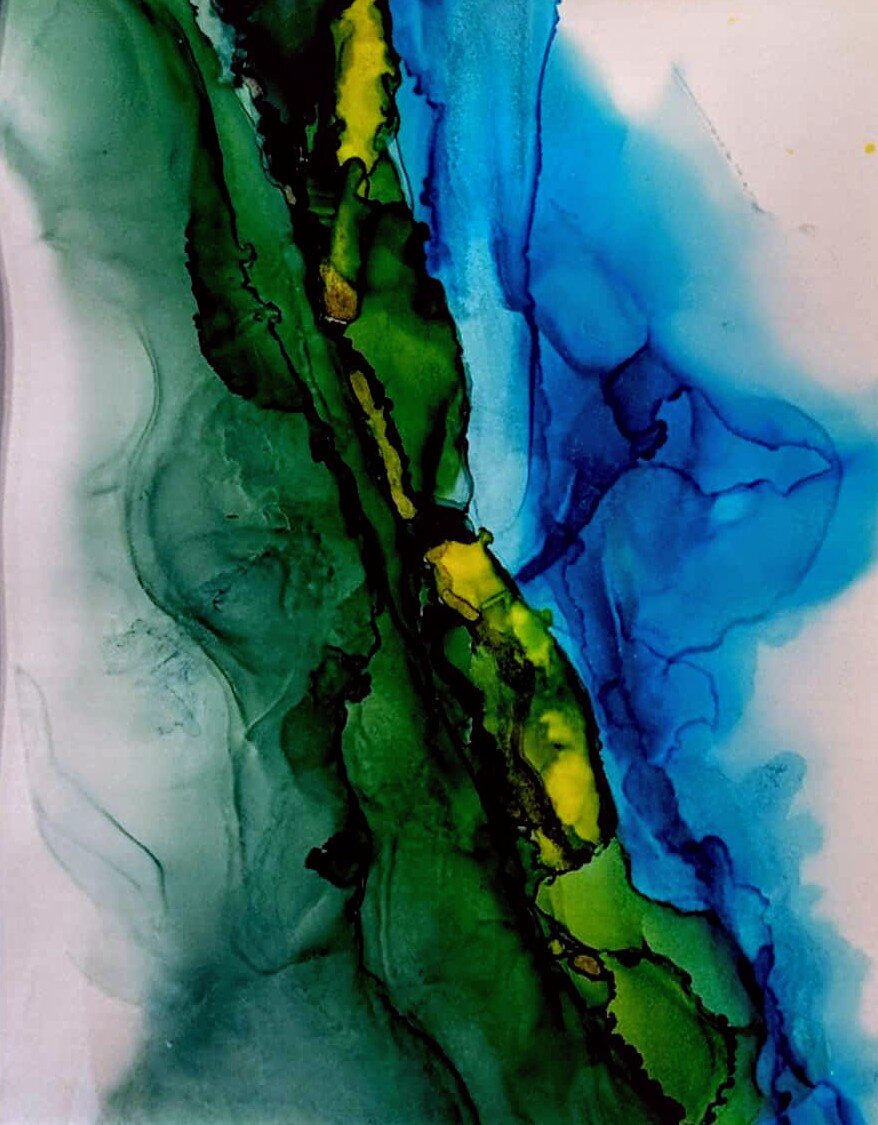
Faith, 8” by 10”, $140
Walk us through your process of creating a piece.
When I start a piece, believe it or not it begins with music. Whatever vibe I’m feeling that day, I pick a playlist. Lay out my materials and off we go. I create. Sometimes there’s a plan in my head, sometimes it just goes wherever it goes.

Supreme,16” by 20”, $250
How did you start out as an artist?
I’m a photographer full time, so creating this type of art was really just exchanging people for acrylic and resin.

Green, 5” by 7”, $100
Do you use bold colours for a specific reason?
I love color. I do have my “go to“ colors, although most of them are usually bold color selections.
Meet Natasha Dichpan!
Our third Colour Me Bold artist Natasha Dichpan is also a live painter and illustrator. She finds joy in colours and mediums that are diverse and distinctive. Painting for her is a meditation which she practices to calm, to heal and to tell stories. Born in Russia, she spent her early years in Israel and is currently based in Toronto. Her art reflects the transformations she underwent while being in entirely different parts of the world. Her art speaks not one, but several languages. In a short interview with us, Natasha talked to us about her inspiration, experience and her most beloved artwork pieces.
What inspires your art?
My artwork is informed through a combination of raw feeling and formal training. I draw inspiration from my present as much as my past and childhood I spent in Russia and Israel. I hope for my work to echo my passion and to become a call to the vulnerable, optimistic and romantic inner-chords that many of us have in common.
Is there a specific piece that stands out to you? Why?
The two pieces that stand out to me at the moment are “Spirit” and “The Nightingale & The Rose”. They are the two most honest and autobiographical works I’ve created so far. They are pretty much self-portraits.

“The Nightingale & The Rose” by Natasha Dichpan
$1500

“Spirit” by Natasha Dichpan
$1500
Do you use bold colours for a specific reason?
I use either intense colours or no colour at all. I know this about myself - I am very much “all or nothing” kind of person, especially when it comes to things that matter most to me. I enjoy using odd colours for natural subjects like portraits or animals, picking colours that are not easily found in nature. It gives my subjects a touch of surrealism, a touch of mystery that I enjoy weaving.