Meet Aml Sultana!
“I enjoy creating abstract art because I had the opportunity to explore a new way of expression and could use so many different skills and techniques to create texture”

“Extracting the Abstract” artist Aml Sultana
What inspires you?
I am inspired by everything ranging from people, my past experiences, and especially music. Even though there are so many different people in my life, they each serve an important purpose in life and help me grow. After deciding to seriously pursue art, I realized that everybody expresses themselves through a form of art, whether they realize it or not. I am a strong believer in experiences telling the tale of your life, so my paintings are created in a way to tell stories from my past experiences. Music is an important aspect of my life so it is attached to every piece of work I have created. When looking at my past work, I can recall what music I was listening to which also reminds me of how I was feeling at that moment. Lana Del Rey, who I discovered in the 9th grade, has been the most impactful artist for me and she is a part of almost every piece of art that I have created since high school.

“Plated Guilt” by Aml Sultana
Why are you drawn to this subject?
Before creating this collection and being introduced to abstract art, I had the wrong perception that art had to be “clean” and “perfect. I used to believe that realistic paintings were the basis of creative art and that every line and detail had to be perfect. My first submission piece for this exhibit was out of my comfort zone because there was no plan and it was all emotion, which is what my past work was about. I enjoy creating abstract art because I had the opportunity to explore a new way of expression and could use so many different skills and techniques to create texture. Abstract art unlocked a different artistic skill that I did not know that I had and I will definitely will be exercising it in the future.
What is your collection about?
My collection focuses on my favourite pieces of work that I have created so far. I was finally able to step out of my comfort zone during the creative process, as I used different materials and an even bigger canvas. This collection tells my story of this past summer and all of the amazing opportunities that I had. I was able to discover new skills, such as murals, and experienced a new feeling of motivation and confidence towards my creative artwork. I am excited to be a part of an exhibition in a gallery that I have admired for a long time. It’s about being sure that this is what I want to do for the rest of my life.

“Auriferous” by Aml Sultana
Meet Maureen Doody!
“I believe that art can forge the path to one’s true self-expression and nurture a mind-body-spirit connection. I hope to engage, inspire and help others find and nurture their true purpose in life through art.”

“Never Enough” by Maureen Doody
How did you start out as an artist?
Art has always played an important part in my life. I’ve always been connected to it in one way or another as a professional athlete, photographer, writer, anthropologist, and business analyst. Painting has always been a natural outlet; a way to escape and speak to a nonverbal part of my existence. It was not until a cancer diagnosis in 2017, however, that I was ‘awakened’ to fully pursue my life-long passion for painting. Holistically, it provided me with a sense of clarity and purpose towards fulfillment of living my most authentic self.
How did you get into creating abstract artwork? What does abstract art mean to you?
I seek to express intangible thoughts and emotions that I do not quite have the words for. Abstract is a language of its own. It is a means to communicate on levels often not yet understood and to expand one’s perceptions beyond the five senses. Abstraction has allowed me to distill and better communicate my emotions and ideas about life, nature and our respective place within it. Abstract does not always have to make sense or dictate a clear narrative. In abstract, you can be anyone you want to be and express anything you want to. Abstract itself is the solution and a remedy; it’s therapeutic. It is a means of exploring subjective experiences as a gateway to broader human concerns. We see art in everything around us every day; but, how we see it is different based on our own personal experiences. To be able to capture that art and interpret it in my own way is what fascinates me. Abstract art requires you to have an open, inquiring mind; you must enter the painting and see where it takes you.

“The Other Side” by Maureen Doody
Is there something that you want to convey through your artwork?
I believe that art can forge the path to one’s true self-expression and nurture a mind-body-spirit connection. I hope to engage, inspire and help others find and nurture their true purpose in life through art. I too, believe in the power of art to heal. From our first lifeline the umbilical cord, as the root that grows in the ground, we are all interconnected to each other and the world around us. The release of love through one’s lifelines and its transformation into energy and mind-body-spirit are one with the earth. Life, bound with love turns into energy in nature, light, music and eventually other people; and, how fluid the boundaries really are. I hope my work is appreciated in emotional terms, serving as a key to within, and letting the beauty be in both the painting and the viewer’s mind.
Walk us through your journey of creating an art piece.
My artistic journey is one of the intrinsic personal explorations. Employing unconventional colours, compositions and tonal schema, my paintings are an authentic expression of ‘revelations of self’; and by virtue, seek to capture the transient nature of life and the essence of the human condition. As an anthropologist, my paintings reflect my connection to the world around me, where one can discern recurring themes of truth, unity of nature, healing, reinvention, resilience, and the power of “I am”.
My process is very intuitive and emotionally driven; with other art forms such as film, music, movement and photography lending inspiration. References in my work to the appreciation of lines, light, and expression reflect a synthesis of these style influences. For me the canvas is a mouthpiece; it comes from its intention. It allows me to speak with vibrant colours, bold strokes, and fine lines. It is a means to whisper my secrets, share my passion, express my anguish, and taunt your sensibilities. Entering the studio is a time of letting go: of expectations, of structure, of rules, and of my own ideas about what’s possible and what’s not...in life and art.

“Hold On” by Maureen Doody
Is there a particular artist who inspired you to become one? Whose techniques do you study, admire or aspire to follow?
My earliest and probably most significant influence in painting stems from my late father, renowned Newfoundland ceramicist William Doody. Under his guidance and mentorship, I developed and honed my skills as a painter in both oil and acrylic mediums. He bestowed in me the work ethic required to be an artist and the importance of precision and detail in my work.
I find beauty and inspiration in a variety of artists, artwork and art forms. For me, it is about the art in whichever form in relation to the people and the universe around us. Art is often examined through the interaction of the principles and elements of art. The principles of art include movement, unity, harmony, variety, balance, contrast, proportion and pattern. The elements include texture, form, space, shape, colour, value and line. The various interactions between the elements and principles of art help artists to organize sensorially their personal stories while also giving viewers a framework
within which to receive and interpret those stories internally. The dynamic between how these formal qualities are used to create a visual and visceral experience inspires my process and understanding.
Helma af Klint is an artist that defies and challenges the boundaries of these artistic parameters, via her use of colour, form, texture, pattern, and composition, to evoke an emotional experience in the viewer.
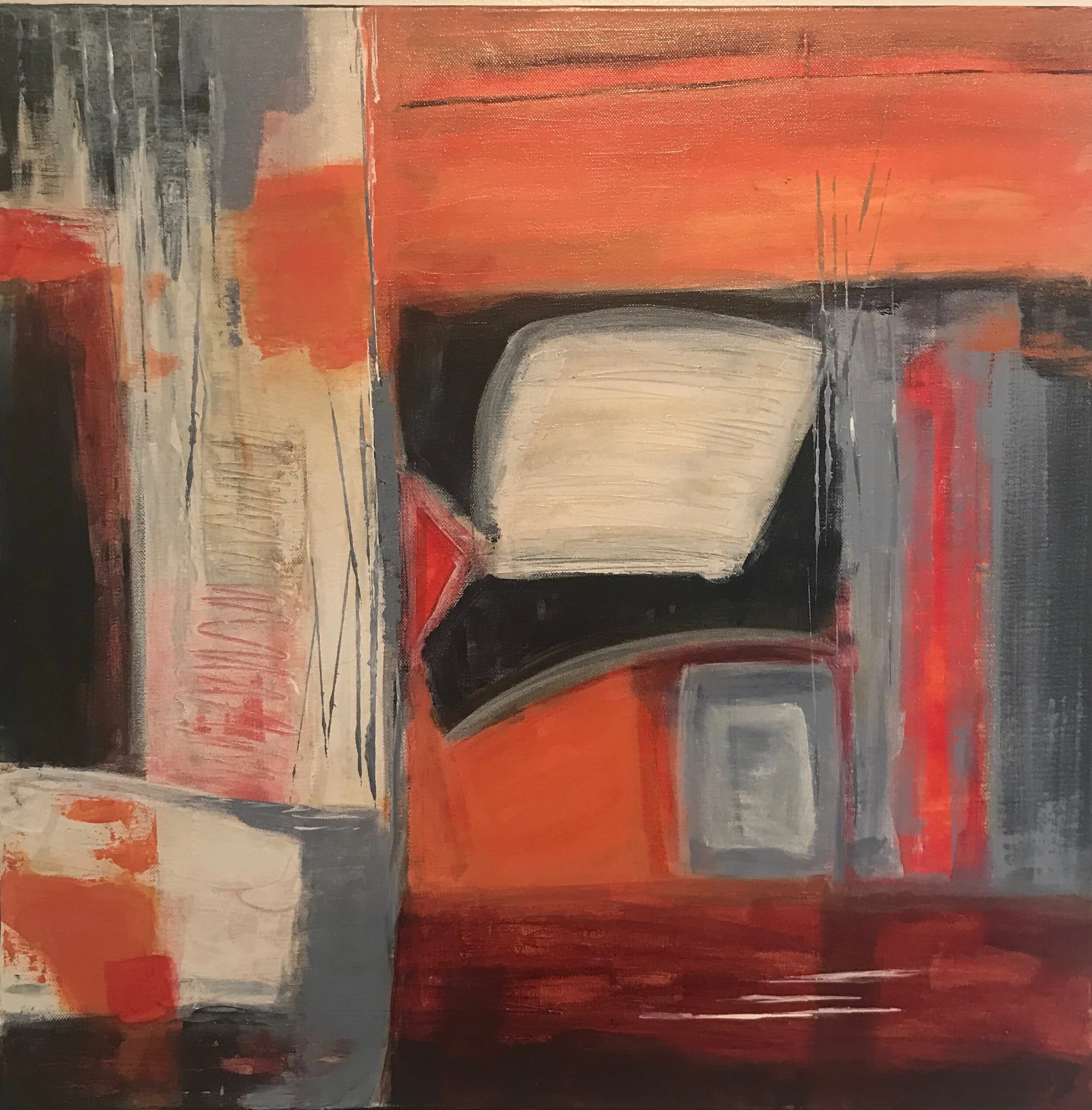
A brief history of abstract expressionism
Before we dive into the history of abstract expressionism, we must examine the foundation that was placed before it in originating abstract art. Abstract art has its origins in the 19th century and can be described as “art that is not a representation of something from the visible world.” The shift from art being imitation to an expression of the imagination began to take place slightly before WWI with artists like Robert Delaunay, Wassily Kandinsky, Kazimir Malevich, and Vladimir Tatlin starting to create art with no recognizable objects. Between WWI and WWII, abstract art had seen very little growth due to totalitarian politics along with a resurgence in realism and surrealism. It was the chaos caused by WW2 that helped birth the movement known as abstract expressionism.

“9” by Toronto artist Daniel Mercier featured in Twist Gallery’s “Abstracting the Extract” January/February 2020 Exhibit
During the late 1930s, as WW2 was impending, many European artists that practiced surrealism had migrated to the United States. During this time, the surrealists’ drive to create art that examined an undermining reality-based human consciousness, in addition to the anxiety and trauma experienced through the world wars, had caused artists to value art as an expression of the self and chaos within the subconscious. After the war, when the United States found itself in a time of economic despair and cultural identity crisis, abstract expressionism became America’s first real contribution to the international modern art world and lead to the eventual dominance that came along with it.
Three Approaches to Abstract Expressionism
Action Painting
Action painting is characterized by random, loose, rapid and sometimes forceful handling of paint by brushstroke or techniques partially controlled by chance such as dripping or spilling paint onto the canvas. This style was most commonly used by painters Jackson Pollock, Franz Kline, and Willem de Cooning.
Abstract Impressionism
Abstract impressionism is seen as a middle ground between imitation and expressionism. This style can be described as more structured than action art but still very abstract in terms of shapes and techniques used. This style was popularized by artists Philip Guston, Helen Frankenthaler, Robert Motherwell, and Adolph Gottlieb.

“Sunlight” by Toronto artist Anna Medvedeva featured in Twist Gallery’s “Abstracting the Extract” January/February 2020 Exhibit
Colour-field Technique/Meditation
The final approach to abstract expressionism doesn’t really have a name, but for the purpose of calling it something, we will refer to it as the “colour-field technique”. This approach describes an artist that uses large fields of colour and specific abstract images to invoke a meditative experience in the viewer. Barnett Newman, Ad Reinhart and especially Mark Rothko specialized in this approach to abstract expressionism.