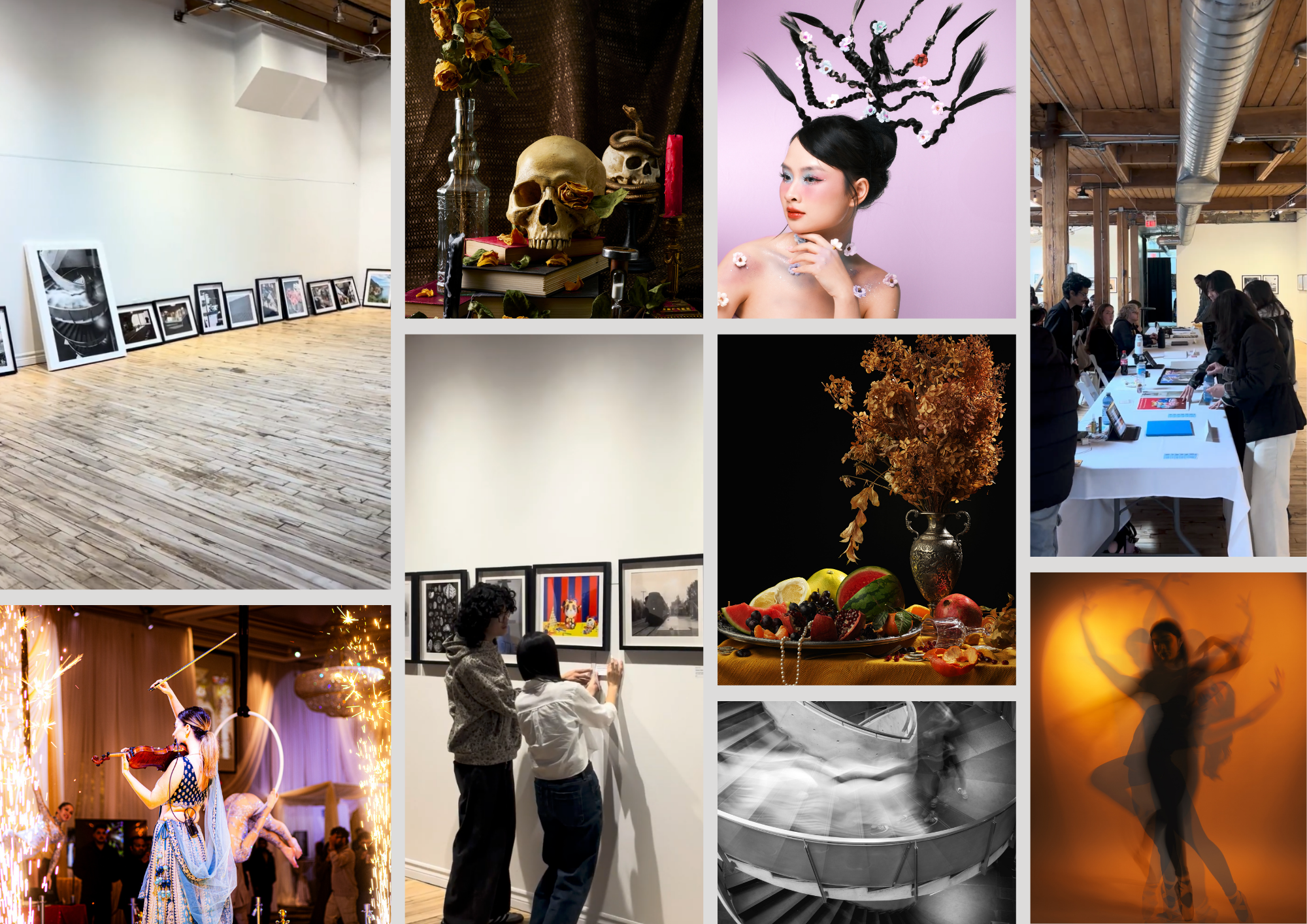
"CAPTURE" GET TO KNOW THE ARTISTS
Step into a world of diverse landscapes at CAPTURE, a photography exhibition featuring the work of 8 talented local artists of the GTA.
This compelling showcase delves into a range of themes, from the peaceful serenity of nature to the vibrant energy of urban life, highlighting the beauty often hidden in everyday scenes. With striking stills of cityscapes, rural vistas, and even the vastness of outer space, CAPTURE offers a unique perspective on both our earthly surroundings and the cosmos beyond.
Step into a world of diverse landscapes at CAPTURE, a photography exhibition featuring the work of 8 talented local artists of the GTA.
This compelling showcase delves into a range of themes, from the peaceful serenity of nature to the vibrant energy of urban life, highlighting the beauty often hidden in everyday scenes. With striking stills of cityscapes, rural vistas, and even the vastness of outer space, CAPTURE offers a unique perspective on both our earthly surroundings and the cosmos beyond.
Raju Alexis


1.How did you land on Photography as a medium, how did your journey as an artist begin?
I bought my first point-and-shoot digital camera in 2003, marking the beginning of my journey into photography. Growing up, I used to indulge in drawing and painting, which perhaps played a role in shaping my understanding of composition, light, and colour. Photography, however, offered a unique advantage—the results were immediate unlike the long process of creating art on a canvas, and this instant gratification sparked a deep enthusiasm for the medium. Over the years, traveling and taking pictures became a way for me to connect with the world, and continue exploring my artistic vision.
2. Are there any challenges in capturing a sense of stillness in a world full of constant motion? How do you overcome them?
Capturing a sense of stillness in a world full of constant motion is one of the defining challenges of long exposure photography, but it’s also what makes the results so rewarding. Scouting the ideal location and a vantage point for the perfect composition is my primary goal. Using neutral density (ND) filters also helps to further extend exposure times, allowing the camera to smooth out chaotic elements. Tripod stability is critical, so I ensure it’s secured to prevent vibrations, even in windy conditions. Patience and flexibility is key and there is a lot of trial and error that goes into creating long exposure images. Post-processing also plays a role in enhancing the desired mood, where distractions are minimized to preserve the serenity I seek to capture.
3. What role does light and atmosphere play in shaping the mood of your photographs?
I shoot only during the blue and golden hours around sunset because they can transform nature into breathtaking compositions with soft, diffused light. The interplay of these natural light conditions not only enhances the textures and colours in my photographs but also allows me to experiment with mood and storytelling.
4. What was your process in choosing these particular pieces for the capture exhibit?
I wanted to choose images that truly reflected my style of photography. Over time, I have found immense joy and fulfillment in creating long exposure waterscapes, where resulting images exude a sense of calmness and peacefulness. There's something almost meditative about the process - slowing down, and observing the subtle play of light and movement.
Leanne Hay
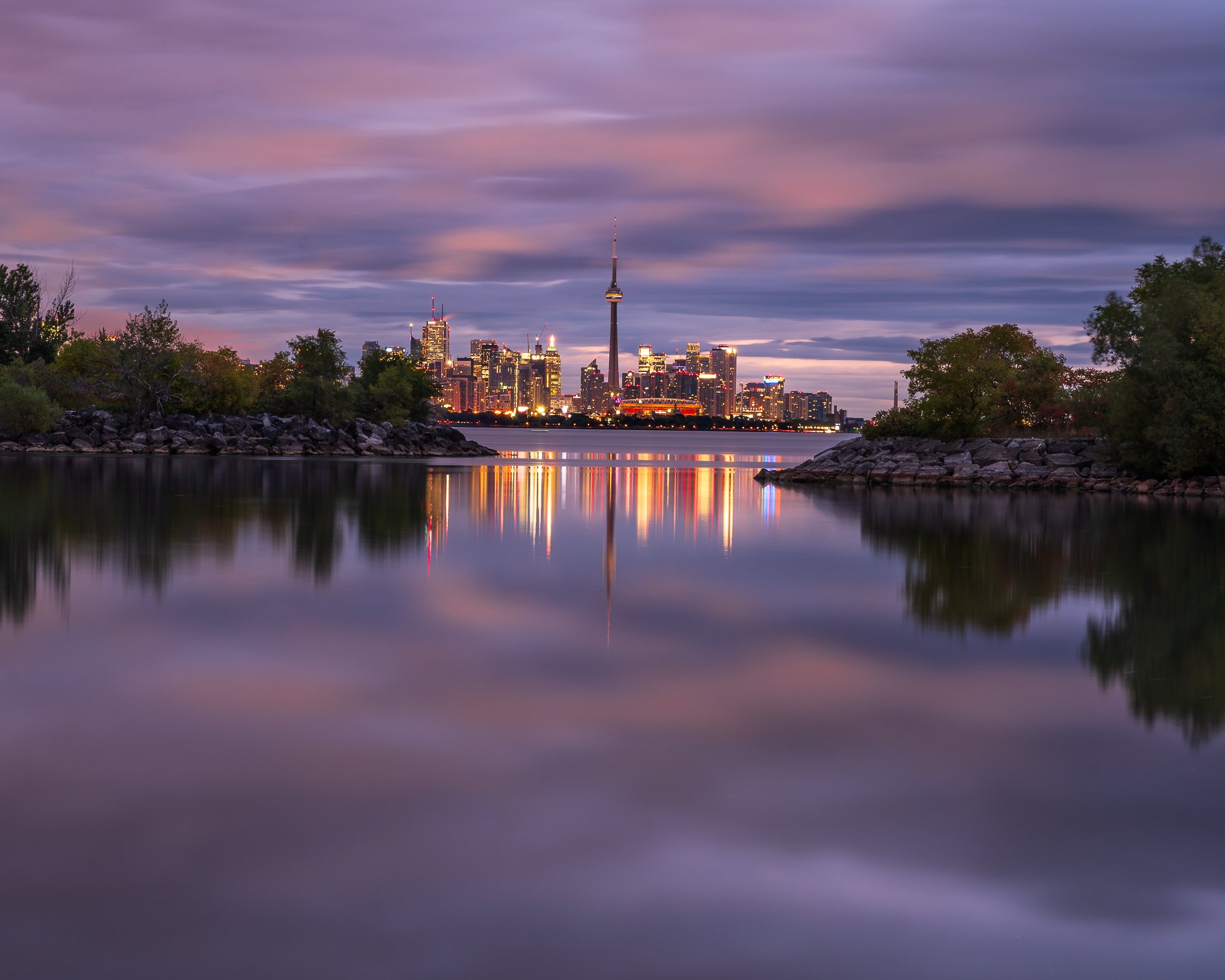


1.Some of your work, like “The Sweet Spot” and “The Morning After,” explores unique lighting conditions. What draws you to blue hour and golden hour, and how do you use these moments to convey emotion?
My favourite thing about this time of day is the anticipation and the surprise of not knowing what you’re greeted with when you get up early and head out in the dark. It can often be the calmest part of the day before the wind whips up and the birds and wildlife are more vocal. With the blues, pinks and mauves that are often present reflecting off the clouds, I like to slow it down and take a longer exposure which smooths out the clouds and water, enhances reflections and intensifies the colours creating a dreamy, serene surprise. I have always liked vibrant colours;from the turquoise of the ocean, to the colour of my car and the clothes I wear.
2. What's the most challenging part of taking photos in a time sensitive window?
The most challenging part of working in a time sensitive manner for me is to calm down and take in the scene. For example, during the various phases of a morning (nautical twilight, blue hour, golden hour, and sunrise) each phase only lasts about 15 minutes. When I see amazing colour starting in blue hour, I get too excited and want to be everywhere at once. I don’t do my best photography when I am running from one place to another. I like to be in the moment and peruse the scene and look for different compositions and perspectives. Are there awesome cloud formations and reflections that would benefit from a longer exposure or is it a pretty golden hour devoid of any clouds with wildlife action requiring a faster shutter speed. I was recently in Botswana during dusk shooting the full moon when a giraffe walked into the scene. I got so overwhelmed with what I was seeing. Before I realized my camera settings were off, he strode out. Most often you have another opportunity to try for the shot, not so with the giraffe.
3. What do you hope viewers experience when they see your work, particularly the pieces featured in CAPTURE?
I hope viewers will experience the awe and joy that I feel when I’m out in nature and be inspired to get out and explore the world for themselves; whether it’s in their own city or travelling further afield. There is so much beauty around us. Going for a walk, taking a weekend drive, or CAPTURING your own sunrise; be present in the moment as you never know what the future
Benjamin Gibson


1.What does the word capture mean to you personally? Is it about freezing a moment, telling a story, or something else entirely?
Thinking about the word “capture” it’s only the first step in the process. The most important, but the first. To capture something is to secure it in place – a moment in time perhaps. To keep something is an entirely different scenario. Good hunters don’t just shoot to kill. They gather it, skin it, butcher it and treat the meat, they give it attention and make it into a part of their life. With photography the same can be said, there is a moment of capture, but then a time comes for choice, and care in the processing of the photo, which photo to print, what format and what size? How to frame it? There is a whole life around works of art as there is a wild animal in the woods. Instead of nourishing the body, the images nurture the soul. I’m a vegetarian for the record.
2. Your work explores the intersection of grit and beauty. What draws you to this duality, and how do you bring it to life in your urban landscapes and portraits?
The more I ventured into commercial photography and filmmaking the more I tried to fight the grit of reality. That’s a lot of what advertising does. The deeper you go into beauty the more you realize perfection is only an illusion that’s very shortly broken by reality. In this series in particular series authenticity of the photos was very important, so processing was kept to a minimal and no retouching was done. I like to keep the grit in the work because it makes it more real, more believable, and maybe not more palatable, but more closely aligned with our shared reality. Through this series of work I embraced the grit of real work, unfinished roads, large industrial ships, dirt and imperfections that despite being pre-conceived as unattractive are actually central to our world and a necessary and inevitable factor to life. And to Canada, the overall subject of the greater series.
3. Are there specific pieces in this exhibit that you feel best represent your artistic philosophy or style? Can you share their backstories?
Light & Lines (Photo taken in Calgary) does a pretty good job of representing the way I look at the world. It’s momentary. Often because moments pass so quickly. I’m often surprised I had the wherewithal to take a photo at all when life moves so fast. Maybe that’s part of why the concept of Capture is interesting Somethings are not looked at as beautiful until you see them in a new way. In this moment, the sun hitting the concrete was beautiful. A minimal and simple abstract painting happening in nature. This photo was part of a short timelapse, trying to capture the suns movements, but the single image represented what the moment was, more than the video in this case.
4. If there’s one takeaway you want people to have after experiencing your work, what would it be?
If people take anything away from my work, I’m grateful. If I could choose, I would want people to step outside of themselves for a moment when they look at my work. Get lost in a moment that looks at something in a unique perspective. They are now experiencing a thing it in a different way. I would like the viewer to take away the understanding that many perspectives exist and are valid. Be it through the eyes of someone else’s moment or a share moment in time. Moments that will never really exist again. I’d be more interested to learn more about any given viewer, their life, and their loves, than they might realize, for instance. And I of course would love it if they visited my website and followed me on Instagram to keep up with new work.
Anastasiia Khvostyk


1.Your work beautifully showcases bustling urban life and serene natural landscapes. What draws you to explore this duality, and how do you balance these contrasting worlds in your photography?
The duality of urban life and natural landscapes fascinates me because it reflects the diverse experiences that shape our world. Urban scenes offer vibrant energy and dynamic stories, while nature provides a sense of calm and timeless beauty. Balancing the two in my photography lets me explore both sides of life, highlighting the unique character of each—whether it’s the hustle and movement of city life or the tranquility of a quiet forest.
2. How do you adapt your techniques and style when transitioning between photographing urban environments and natural landscapes?
Photographing urban environments often means focusing on compelling angles, creative framing, and capturing fleeting human moments. Nature, on the other hand, is unpredictable—it’s shaped by shifting weather, light changes, and unique moods, like the drama of a sunrise or the softness of a cloudy day. This unpredictability makes every nature shot distinct and pushes me to be patient and adaptable, creating imagery that feels truly connected to the moment.
3. How has living in Toronto influenced your artistic perspective, and what unique opportunities has the city provided for your photography?
Living in Toronto has profoundly shaped my artistic vision, offering a vibrant mix of cultures, architecture, and green spaces to explore. The city has given me incredible opportunities, such as showcasing my work at exhibitions like “Capture” at Twist Gallery. These events not only allow me to share my art but also connect me with like-minded individuals who inspire and support my creative journey, helping me set and achieve new artistic goals.
Alex Christoforou

Image via Alex Chistoforou
1. Can you share more about the transition from your abstract work to architectural photography? How has that evolution influenced your artistic vision?
My past abstract work was largely made up of mirrored objects creating an abstract form. Soon after I began applying this to architecture, I was inspired to focus solely on the buildings in their original form. While I have largely moved away from abstract, the mirrored technique can still be found in my recent work including “escalate” which is part of this exhibition. This gradual change has influenced the way I perceive architecture. Abstract principles have always encouraged me to look beyond the surface and not take things at face value.
2. How do you decide which architectural details to highlight in your work, and what draws you to a particular structure?
One of the many aspects I like to focus on is the directionality of lines and light. I use these two variables in tandem to draw the viewers eye. This influences my decisions as to what details to highlight. I’m usually drawn to various forms of architecture including brutalism, neo-futurism, Georgian revival and gothic. I usually am drawn to a subject for their architecture as well as their surroundings. Since simplicity is the hallmark of my style, empty skies and buildings standing alone typically catch my attention.
3. What guided your decision in selecting these specific pieces for the Capture exhibit?
I wanted to display my signature style as well as some new concepts I’ve been working on. As an artist I’m always trying to find new ways to expand my approach, adding more uniformed images to separate from my black collection. All of the selected works fit my minimalistic style, while still highlighting the immense detail. I also choose to use metallic paper for all my black images, bringing out more of the silver and gold, while also affecting how light interacts with the physical image.
4. How do you hope viewers connect with your body of work?
The balance and simplicity in my work creates an immersive experience, while also offering viewers the space to focus on smaller details in each structure. There tends to be more scrutiny with minimalist works as the details tend to be emphasized. My hope is that each person who views these works are able to pick up on how the isolation in each piece affects not only the buildings themselves but the entire composition.
adam cohen
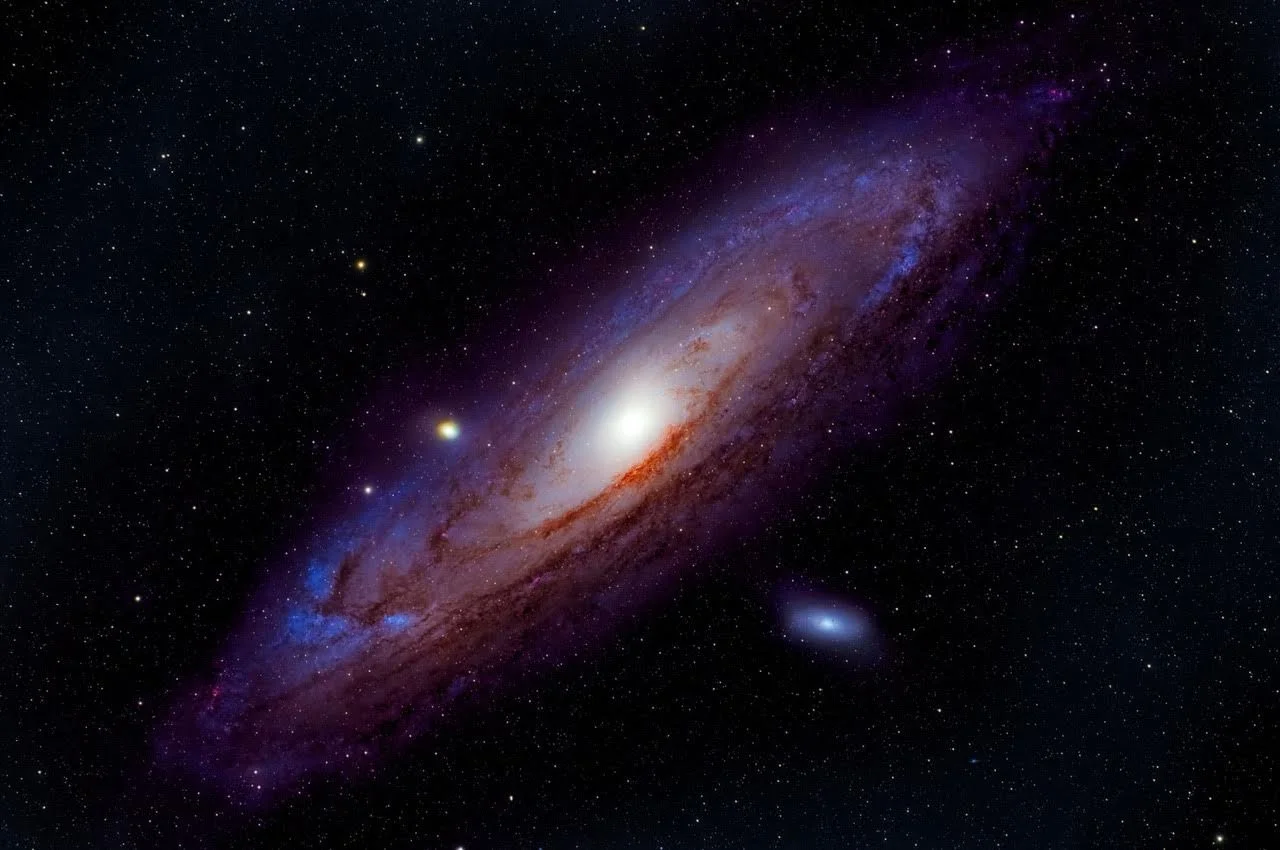
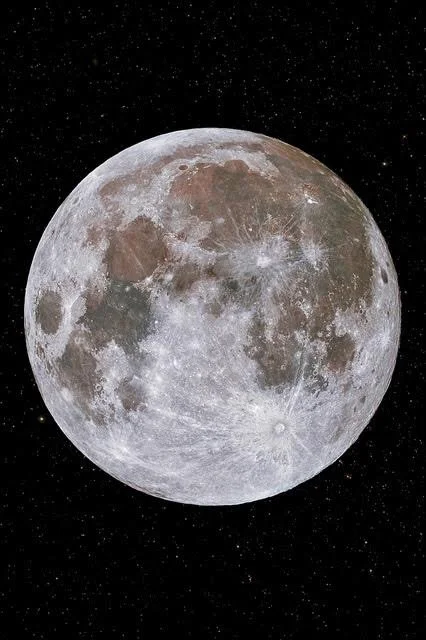
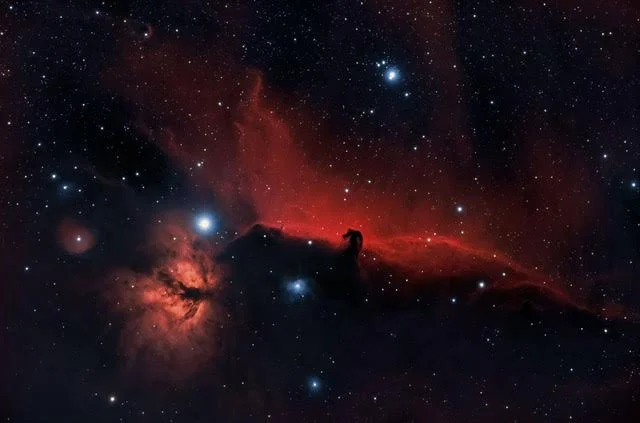
1. How do you decide which celestial subjects to focus on for your projects?
I decide which celestial subjects to focus on for my projects based on a combination of personal interest and current astronomical events. I keep an eye on planetary alignments, meteor showers, and significant space missions. I also consider the accessibility of certain celestial events from my location and the equipment I have available. Sometimes, inspiration comes from the stories and myths surrounding different celestial bodies, making them intriguing subjects to capture and explore.
2. Can you elaborate on how working with your mentee, an astrophysics graduate, has influenced your creative process?
Working with my mentee, an astrophysics graduate, has greatly influenced my creative process by introducing me to new scientific concepts and perspectives. Their deep understanding of astrophysics challenges me to think beyond the visual aspects and consider the scientific significance of what I am capturing. This collaboration enriches my projects, allowing me to create images that are not only visually striking but also scientifically informative. It's a dynamic exchange of ideas where science meets art, leading to a more comprehensive narrative in my work.
3. How do you think astrophotography contributes to a greater public appreciation for science and the universe?
Astrophotography plays a significant role in fostering public appreciation for science and the universe by making the cosmos more accessible and relatable. Through the lens of a camera, distant galaxies and nebulae become tangible, sparking curiosity and wonder. These images bridge the gap between complex scientific discoveries and the general public, inspiring a sense of connection to the universe. By showcasing the beauty and vastness of space, astrophotography encourages people to explore and learn more about the cosmos, ultimately enhancing public understanding and appreciation of science.
Varad Thalnerkar


1. What drew you to photography as a way to express yourself and connect with others?
As I ventured out to practice and experiment, photography became more than a hobby—it became a way to connect with others. Meeting people who shared my passion was inspiring, and the love and support from this creative community have kept me motivated to grow and bring my best to the table. Photography, for me, isn’t just about capturing images; it’s about building relationships, sharing stories, and expressing emotions that words often can’t convey.
2. How has exploring various types of photography enhanced your creativity and approach to storytelling?
Each genre has taught me something unique. Portraits taught me to capture the essence of a person; street photography honed my ability to find beauty in the everyday; and astrophotography deepened my patience and appreciation for the vastness of the universe. These experiences have not only expanded my creative horizons but also allowed me to use my camera gear to its fullest potential. By embracing diversity in my work, I’ve become a better storyteller, able to weave emotions, light, and perspective into a narrative that resonates with viewers.
3. What advice would you give to aspiring photographers who are exploring different genres of photography?
Consistency is key. Keep capturing moments, experimenting, and learning from your mistakes. Remember, every photograph tells a story, so take the time to understand what you want to say through your work. And most importantly, enjoy the journey. Photography is as much about personal growth as it is about creating art.
Colin Shillingford
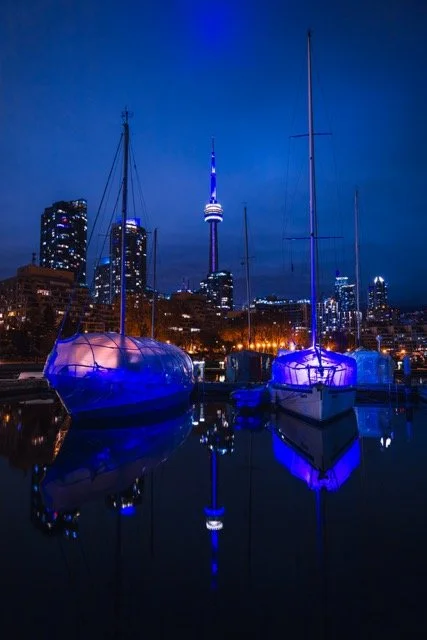
Image via Colin Shillingford
1. How did you select the pieces featured in the Capture exhibit, and what themes guided your choices?
I chose images that were all shot at locations along the Toronto waterfront, featuring picturesque views of the skyline. Each piece I’ve chosen communicates a sense of stillness and serenity which I experienced while capturing all of these unique moments in my daily life.
The collection as a whole is vibrant and full of colours that are deeply saturated and harmonious with each other, or complementary with the other selections. All of the compositions combine to create a snapshot of Toronto’s beauty and essence.
2. What kind of response do you hope to evoke in viewers through your body of work?
I hope that viewers feel compelled to meditate on the peaceful energy that exists within the images I create. The feedback I receive about my art often refers to the emotions and moods that are contained in my photographs.
Blue is the colour that appears most in my photos and I love the way it resonates with others. I try to combine different tones and shades of blue in order to evoke an energy that people associate with tranquility, spirituality, nature, depression, love, sadness and other other similar meanings.
My overall wish is that those who observe my work are left feeling soothed and stimulated to contemplate whatever range of thoughts or feelings that are sparked by their own imaginations.
3. What is your favourite part of the creative process when it comes to capturing photographs, and what aspect of it brings you the most fulfillment?
I typically begin the process of creating my images by taking a camera with me outdoors in search of locations that offer me a combination of picturesque views as well as an opportunity to shoot in solitude. This is why my shots generally do not have crowds of people in them.
Capturing photos of Toronto that communicate a feeling of ‘loneliness’ (even at times when there are people out and about in the places where I’m shooting) is something I have become more and more drawn to along my journey as a photographer. There’s an aura of mystery and enchantment that I feel when I look back at my images that fuels me to continue further down that path.
Considering that millions of people live in the city and the downtown area is so densely populated, I feel like the work I do is a testament to the fact that peace and moments of seclusion can be found in urban environments if you make the effort to search for them.
My favourite activity apart from documenting beautiful sunsets (and sunrises) and learning different shooting techniques with my camera has to be the editing process. I get to relive each moment in front of my computer screen and breathe life back into the moment so that the moment can be experienced for an eternity by myself and others. It’s at this stage where I really get to pour my artistic instincts and sensibilities into each picture. Tweaking the colours and lighting, and finding the right balance of saturation and contrast until everything feels right is the most rewarding part of it for me.
To fully immerse yourself into the exhibit, visit Twist Gallery in person at 1100 Queen Street West, Toronto. The exhibit will run from Jan. 3rd to Jan. 27th, 2025. All artwork sizing and pricing is available on Twist’s art for sale page.
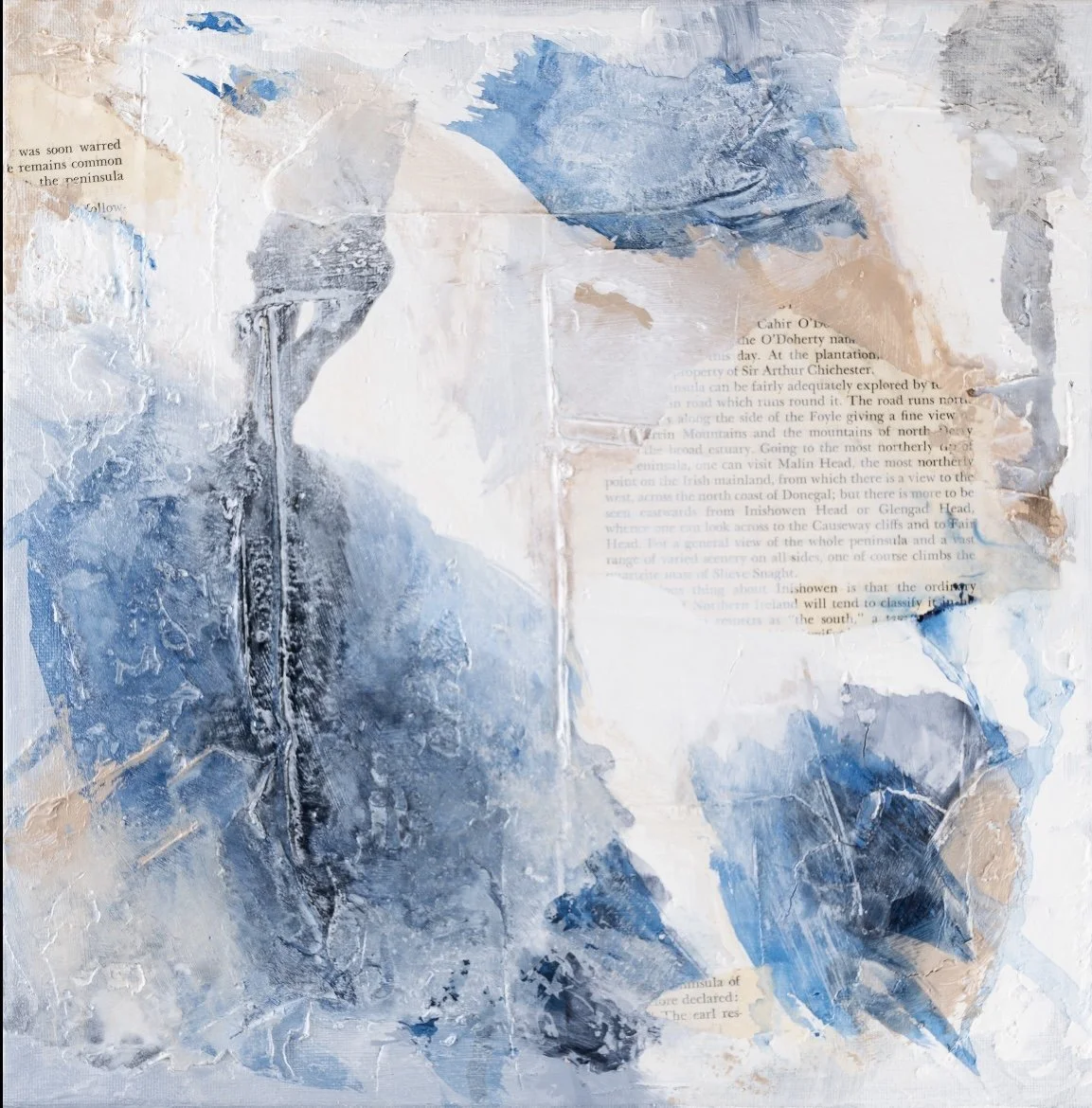
"FORM & FREEDOM" GET TO KNOW THE ARTISTS!
Form & Freedom will be Twist Gallery’s first 3-month long exhibit running from Oct. 3 to Dec. 16, 2024. Featuring bold abstract works, this collection celebrates the tension between form and fluidity, inviting viewers to experience the beauty of artistic freedom and the power of creative exploration. Twist invites readers to meet the artists and dive into their unique creative processes.
In honour of the theme, Form & Freedom, Twist Gallery is scrapping our usual form of only month long exhibits. Form & Freedom will be Twist’s first 3-month long exhibit running from Oct. 3 to Dec. 16, 2024. This theme explores the dynamic relationship between structure and expression. Featuring bold abstract works, this collection celebrates the tension between form and fluidity, inviting viewers to experience the beauty of artistic freedom and the power of creative exploration.
The vibrant, abstract art exhibit features the dynamic works of eight local artists, showcasing a kaleidoscope of colours, textures, and forms. Each artist brings an unique perspective, blending bold hues and imaginative techniques to create captivating visual experiences. The exhibit celebrates diversity and creativity, offering visitors an immersive journey through contemporary abstract expression, reflecting the rich talent and innovation within the local Toronto art community.
Twist Gallery will be holding the opening reception for the Form & Freedom exhibit on October 24th, 2024 from 6-9pm. Each artist involved in the exhibit has unique perspectives, techniques, and creative processes. Although, they all experience artist intuition in their own ways.
ellee sy lee


As a Korean-Canadian, Ellee SY Lee is influenced by Eastern and Western cultures which helps her to create art shaped by the dual influences. She’s fascinated by how post-impressionists used colour emotionally and expressively, employing basic shapes and distinct brushstrokes.
“I’m intrigued by the philosophical and spiritual notions rooted in Eastern traditional landscapes, which emphasize simplicity, spontaneity, and naturalness, often expressed through simple lines and shapes,” said Lee.
Lee combines these influences in her work to experiment with new visuality through the interplay of bold colours and simplified shapes and lines. After returning from a decade-long break, Lee aimed to create paintings that evoke positive feelings, offering a “temporary respite from a fatiguing and monotonous world.”
“I had realized art is powerful enough to console frail souls and enrich our lives after spending time away from my artistic practice,” Lee said.
In the past, Lee created abstract painting influenced by abstract expressionism and non-representational art, without reference to anything outside of artwork. Now that she has grown an appreciation for nature and its significance, Lee creates semi-abstract paintings where natural motifs recur, and referential images are often used.
“I see the interplay of colours, lines, shapes, and perspectives as a metaphor for mutual interactions occurring in nature and life, making the world interconnected,” said Lee.
Lee hopes viewers feel a sense of connectivity while experiencing positive energy and expanding their imagination through her art.
colleen todd


Each of Colleen Todd’s paintings has a “one of a kind” identity. Ironically, she doesn’t set out to make each of her paintings unique and one of a kind. It simply happens organically.
According to Todd, each piece is influenced by the mood she’s in the day she starts her painting. From the colours and tools she chooses to use, to the mixed media pieces she decides to incorporate, the end result is always unexpected.
Todd says it’s an amazing feeling when one of her pieces creates a connection with someone. When looking at abstract art, it isn’t a recognizable object or scene and yet it can tap into feelings and emotions that are unexplainable, helping create emotions, intrigue and mood.
Todd believes in art “speaking to you” and hopes her pieces evoke that feeling in others. Her pieces decide when they are finished. Sometimes it happens quickly, sometimes months but it happens when it feels like there’s nothing more to add.
douglas robinson


Before Douglas Robinson returned to painting full-time, he had a successful career in advertising. His desire to get back to his creative roots helped him decide to leave the advertising space.
“As a creative person, I believe painting is one of the purest expressions of creation,” said Robinson. “The creation of art is an individual pursuit, a quest for freedom and self-discovery.”
Robinson has always felt he was meant to paint, draw and design. His paintings are visual stories formed by his life experiences, his journey, and his connections.
“These stories through design, colour, texture, mark making, and sheer abandonment create a connection, evoke emotions and reactions,” said Robinson. “Colours help to connect with moods and desires while contrast is used to convey energy and reactions.”
Robinson uses form to create a journey through each piece. Form helps to create a flow, guiding you through each painting. He uses form in his work like a visual beginning and end through a novel.
“My journey is a creative path with no limitations and the courage to follow my heart,” said Robinson.
Freedom is a concept that Robinson uses in his work to express the type of energy he wants. He uses large spontaneous strokes to create more energy and voice, whereas smaller strokes and mark making create quieter conversations. Robinson sees painting as a journey of self-discovery.
“I’m at a point in my return to painting that I’m beginning to follow the spontaneity within me and the more I do that, the freer I paint,” said Robinson.
His work is constantly evolving everyday that he paints. He is pursuing imperfection and not perfection.
Tina ding


Tina Ding often draws inspiration from the countries she has travelled to, transforming real scenery and objective facts into lyrical and contextual images. Her journeys help allow her to see the world not just as it is, but how it feels, “a synthesis of reality and imagination.”
The experience of immersing herself in such places around the world transforms her artistic perspective. This led Ding to focus on the flow of colours and shapes that reflect her emotional connection to the scene.
One of Ding’s goals is to paint the “joy of living” and bring happiness, peace, and delight to her audience. To convey this she focuses on vibrant colours, dynamic movement, and organic shapes that radiate life and energy.
“Colour is a central element for me,” said Ding. “I use bright, bold hues that can uplift and energize, evoking emotions of happiness and warmth.”
Ding also pays close attention to the flow and rhythm of the composition.
“By creating movement through brushstrokes and abstract shapes, I aim to capture a sense of vitality, a pulse that mirrors the experience of being in the moment and feeling connected to life,” said Ding.
Her goal is to offer her audience a moment of peace, joy, and reflection by immersing viewers in an environment where light, colour, and form come together in harmony, drawing them into a space of serenity and delight.
Balancing the lyrical and contextual elements in her art comes from emerging the emotional impact of a scene with its physical presence. While she begins with real-world inspiration — a landscape, a moment in nature — her focus shifts towards translating the feeling the place evokes, rather than reproducing it.
“The contextual aspect grounds the work, often providing recognizable forms or details, while the lyrical dimension emerges through my use of colour, abstraction, and expressive brush work,” said Ding.
Over the years her painting style has evolved from a more representational approach to one that embraces abstraction and emotional expression. She has increasingly become more focused on how to convey the essence of a scene through colour, movement, and composition rather than depicting it exactly as it appears.
“Ultimately it’s about capturing the essence of a moment, not just its appearance,” said Ding. “By blending the concrete with the poetic, I invite viewers to experience both the beauty of the physical and the deeper emotions it stirs with them.”
Recently, Ding has been experimenting with more vibrant, contrasting colours and looser brushstrokes to capture the energy of nature. Her materials have also shifted towards a mix of thicker acrylics and layered textures to achieve a sense of depth and fluidity. This allows Ding to explore how abstract forms can evoke both visual and emotional qualities of the natural world.
Amy Armstrong


Amy Armstrong uses texture to tell a story with her art. Each layer she paints adds depth and intrigue, each layer building on the one before. Armstrong compares this to life — every year, every lesson, every adventure building off the one before. Each experience, whether bad or good, is important for making a fulfilling life.
“Each layer matters and without the layers that make up the texture in art, it wouldn't be the same or have the depth that I long for — in my art and in life,” said Armstrong.
When viewers look at her artwork in person, the various layers and how each builds on the next is clear. There are pops of colour shining through along with markings, patterns and expressive brush strokes.
Acrylics are her favourite medium for achieving depth, and building on each layer. How thick each layer is depends on what she is trying to achieve. Much of Armstrong’s process is an intuitive response.
“There’s part of me that knows when a certain colour or marking should show through the layers or when much of it should be concealed,” said Armstrong. “This is the part that I love about creating abstract art and letting things truly flow when I’m painting without having too many rules and restrictions.”
The first thing Armstrong thinks of when she hears “Form & Freedom” is organized chaos. The collection that’s currently at Twist Gallery represents having a plan but allowing spontaneity to be included too. The first few layers of her collection represent the freedom part of the exhibit with markings, whimsical and expressive brush strokes, unusual patterns, and various layers.
Form comes in when Armstrong uses unique techniques to create lines that cover the layers but still allow certain parts of the underlayer to be visible in different ways. The lines she uses are vertical and horizontal which adhere to the form part of the exhibit.
“More layers, colours, and markings were all needed to create more depth and tell the full story,” said Armstrong.
Some of the pieces in this collection have so many layers because she felt like the pieces weren’t finished yet. It is an intuitive decision for Armstrong, and she knew some of the piece’s stories weren’t done yet.
helena krolak


Helena Krolak was inspired to transition from a long career in the tech industry to becoming a full-time artist after reaching a tipping point. She says she kept receiving signs that she should return to the art industry but would continuously ignore them. This went on until one day she had enough. Krolak decided that she would invest in herself wholeheartedly and try a different path. She took a chance, and started painting again.
She decided she would commit to three months and go from there. After the first three months, she decided to give herself another three months, and so on.
“It wasn’t easy, but by making that initial choice, I gave myself permission to try regardless of the outcome and that was the pivotal factor,” said Krolak.
Krolak often uses themes of healing, harmony, and authenticity in her work. To her, freedom is achieved when people are most themselves.
“It’s not a place you reach, but a state that you embody; to freely express your truth and authenticity,” said Krolak.
Krolak’s journey then became about reaching that embodiment. In order for her to feel truly free, her journey included healing her limiting beliefs and past trauma. Her journey also included radical acceptance, a deeper understanding of herself, and a willingness to be open to larger internal shifts.
As Krolak worked on healing, she evolved and found more harmony and balance within herself. WIth that inner understanding, she could clearly see the balancing and harmonizing outside of herself which led to freely expressing what was previously unexpressed.
“The fluidity and flow of my work in this exhibit captures the feelings of that healing, evolution, and that ultimate expression of that embodiment of freedom,” said Krolak.
Krolak feels like her creative process continues to evolve. This evolution includes more exploration of various levels of play and doing away with any perceived boundaries. Each evolution, Krolak focuses on various elements and combinations. Whether it’s remembering past skills or trying completely new misting or splatter techniques. As Krolak evolves, by extension, her work evolves too.
“Not only do I feel the shifts internally, but I get to experience them through my art and see them in my finished pieces,” said Krolak.
maylin morales


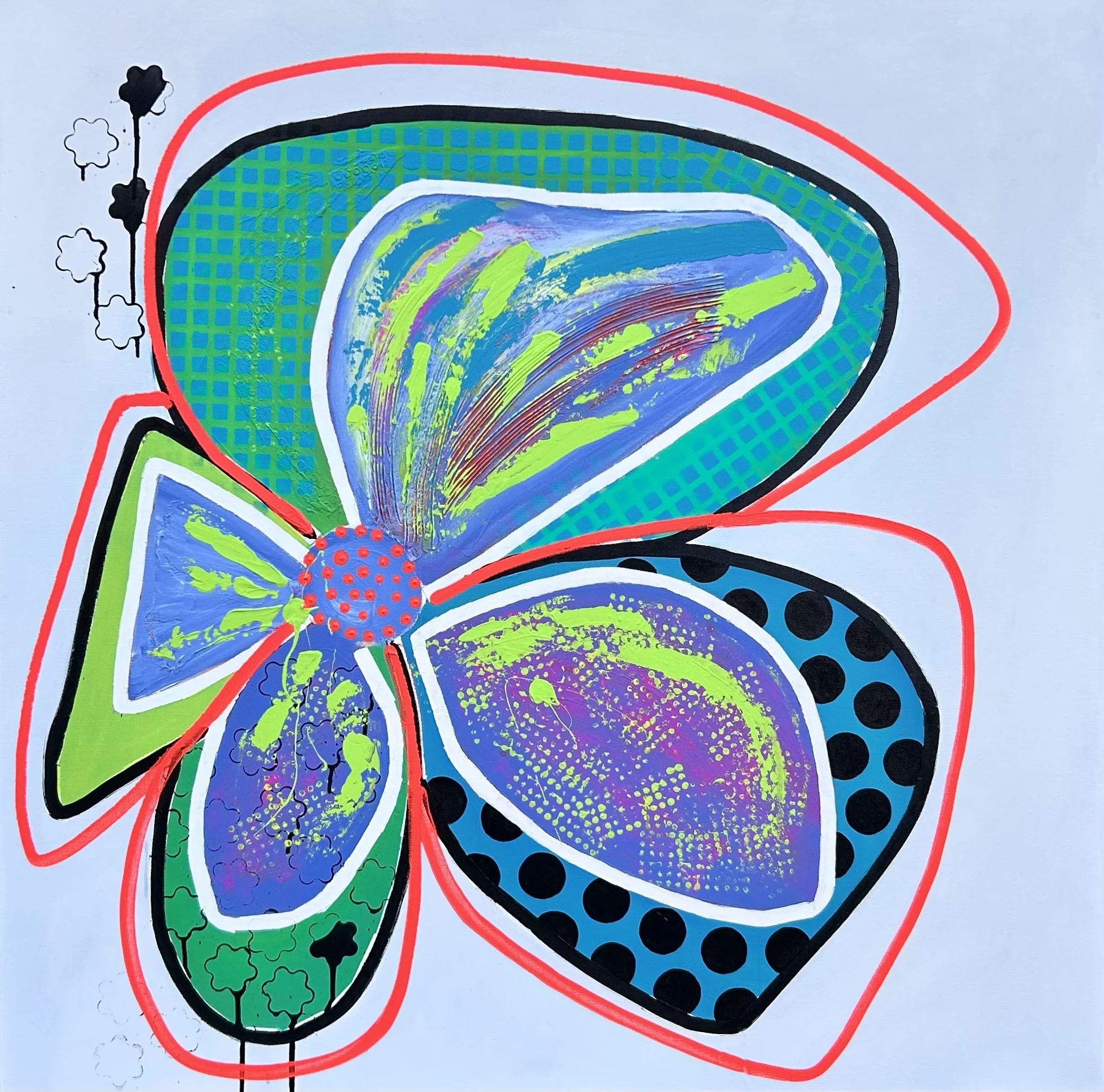
Maylin Morales spent over a decade in the technology field as a programmer and data scientist. She uses painting to escape from her analytical mind and enter a state where she allows herself to be playful and free.
“The ego needs to be removed to allow creativity to flow; stepping away from perfectionism and trusting the process,” said Morales.
She also loves the physicality and movement involved in working on a big canvas for hours. Morales’s Cuban heritage is very present in her artistic process. She loves to listen to Cuban music and dance while she is painting a piece.
“It’s a great ingredient that reflects in the vibrancy of my work and I hope others can feel it too,” said Morales. “I am very proud of my Cuban heritage.”
Although the subject of Morales’ work is not directly related to the broader Latina experience, it’s a big part of who she is. Morales sees the theme of Form & Freedom as a paradox. Her experience managing software development projects has been helpful in managing her own art projects and setting goals as an artist.
“I believe being an artist is a balancing act between both [form and freedom],” said Morales. “Experiencing artistic freedom and the structured aspects and discipline required to maintain an art practice in general.”
In the past, Morales has mentioned her process as a journey “from sounds to emotion, from emotion to colours.” Music is essential to her creative process as it has the power to evoke deep emotions in her.
“I intuitively translate those emotions and sounds into colours, so they can also be experienced visually,” said Morales.
When Morales hears drum beats, they make her feel grounded and connected to the earth. She then associates that feeling with red hues and the element of fire. These personal associations allow Morales to create her own language.
kristen stephen


Kristen Stephen’s use of India inks on canvas is central to her creative process. They offer a fluidity that aligns with Stephen’s desire to create paintings where the canvas itself becomes an integral part of the work, not just a passive surface. She was inspired by Helen Frankenthaler’s technique of allowing pigments to soak into the canvas. Stephen embraces the idea that the material should interact with the medium.
“By dyeing the canvas, I create a base that feels organic, as if the painting is growing from within rather than being applied on top,” said Stephen.
This unique approach allows for harmony and spontaneity as she layers inks in a way that feels instinctual, constantly responding to how the inks absorb and flow. When approaching a blank canvas, Stephen relies entirely on her feelings or experiences, letting her instinct guide her. This process is deeply subconscious for Stephen. There’s no predetermined image or structure for her pieces.
“I allow the painting to unfold naturally through many layers of ink, with each mark feeling like an expression of something deeper,” said Stephen.
Her work embraces Carl Jungian’s ideals and explores the subconscious by using her spontaneous actions to reveal the inner truth of the piece. Blue frequently dominates Stephen’s palette, as it feels most aligned with her emotional state. Love, sadness, and the human spirit are all recurring themes in her work. These themes emerge organically, echoing her emotional landscape.
“Despite differing opinions of my use of glitter and diamond dust, I find them irresistible,” said Stephen. “They add a touch of seduction and allure to the depth of the work.”
While Stephen’s work often reflects her personal insights and emotions, she finds it difficult to openly explain the specific stories behind them. The process of painting allows her to express these feelings without the need for words, creating an emotional connection between the piece and the viewer. Attending art gallery openings is still an important part of Stephen’s practice, as it helps her stay connected to the broader art community and inspires new directions in her own work.
Growing up in her mother’s gallery was a formative experience that profoundly shaped Stephen’s relationship with art. From an early age, she was exposed to a wide variety of artistic techniques and styles, which fueled her curiosity and passion for painting. Being immersed in that environment nurtured her understanding of how artists express themselves and how art connects with people emotionally. This early exposure instilled in Stephen a sense of dedication and discipline towards the craft.
To fully immerse yourself into the exhibit, visit Twist Gallery in person at 1100 Queen Street West, Toronto. The exhibit will run from Oct. 3 to Dec. 16, 2024. All artwork sizing and pricing is available on Twist’s art for sale page.
Twist Gallery will be holding the free opening reception for the Form & Freedom exhibit on Oct. 24, 2024 from 6-9pm. This is where viewers can engage with the artists and fellow art lovers to further explore the stories behind the artwork.
Surfacing Opening Reception: A Huge Success!
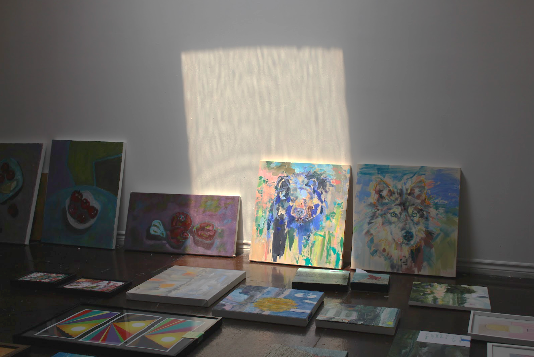
Our opening reception was a huge success on Thursday, June 2nd! We curated a space that encapsulates the spirit of PROJECT ART TORONTO and it turned out looking amazing..
Our opening reception was a huge success on Thursday, June 2nd! We curated a space that encapsulates the spirit of PROJECT ART TORONTO and it turned out looking amazing. The Surfacing Exhibit displays passion, hard work, collaboration, and creativity. Ewa Stryjnik is the director of PROJECT ART TORONTO, an art studio where artists can rent the space, attend art classes, or workshops.
The turn out was amazing and we just wanted to thank everyone for coming! This event brought together many people around the Queen West community to acknowledge the result of expression and skill. We were pleased to host such a meaningful experience for our amazing guests and artists.

The Surfacing Exhibit is showing 21 studio artists’ supportive and passionate work, most of which were created during the times of Covid-19. Their pieces represent a time when the group encouraged each other to create, explore, and grow.
While the art was observed, our community was achieving something much more meaningful, a night of face to face communication and personal connection. Something many have lost within the past few years.
Our own Twist Gallery communications team showed up to the event in support of Twist Gallery because we love seeing the gallery filled with art and art lovers!

We are so pleased to be a part of PROJECT ART TORONTO’s exhibit and allow them to use our space to display their Surfacing pieces. It was an absolute pleasure working with a larger team this month. While we are not often approached by groups, this community allowed for an easy transition and cohesive selection of pieces to work with. PROJECT ART TORONTO utilized our space and gave us something to really admire: their passion and hard work. Ewa and PROJECT ART TORONTO’s studio artists truly love being artists and they inspire our audience to start a passion of their own, whether that be art or anything you are passionate about.
The artists also came together during the Opening Reception to surprise Ewa with flowers and a card to show their appreciation!

Ewa Stryjnik not only inspires artists to continue their passion for art. But guides each artist to maximize their creative potential. This was perfectly displayed during our installation day and throughout our Opening Reception. Styjnik’s energy churned our blank canvas gallery into a perfectly curated template for students to display their art and a cohesive journey for patrons to participate in. While she envisioned where each piece thrived, she communicated that to her students and worked with them to find a balance between visual satisfaction and the space as a whole.

We would just like to say thank you again for coming to the Surfacing Opening Reception! We had a great time, and we hope you had a great time as well! The Surfacing Exhibit is open until June 25th, so if you missed the Opening Reception don’t worry, come experience Surfacing at Twist Gallery all month long at 1100 Queen Street West. We are open every Tuesday-Friday from 11:00am-6:00pm and Saturday from 11:00am-4:00pm.
Looking forward to seeing you again and hearing your thoughts on the Surfacing Exhibit!

Meet the Gestures Artists
With work so breathtaking, words are necessary to describe the beauty of Gestures. Twist Gallery’s two-month-long exhibition displays 8 local Toronto artists’ brush strokes, showing just how intentional and deliberate each stroke is.
With work so breathtaking, words are necessary to describe the beauty of Gestures. Twist Gallery’s two-month-long exhibition displays 8 local Toronto artists’ brush strokes, showing just how intentional and deliberate each stroke is. Experience the feelings illustrated in this exhibition, it is sure to leave a mark
→ Join us at 1100 Queen Street West, Tuesday to Saturday from 11 AM to 6 PM ←
Gestures Opening Reception
Join us for light appetizers, refreshments, music, and a chance to meet the artists.
Thursday, April 7th, 2022 | 6 pm to 9 pm
1100 Queen Street W
Along with the incredible works done by our various artists it is important to us that we get to know each artist more personally. We asked each artist to send in a short paragraph explaining a bit about who they are in order for us, and you to feel more connected to them outside of their work! All of the artists from this exhibit have such incredible stories and explanations for why they love their craft, and we invite you to learn more about how they came to be who they are, and why they decided to create. Keep reading to get the full story!
MEET THE GESTURES ARTISTS
Alice Kelso
Alice Kelso is a Canadian artist, teacher, and social advocate. Though based mainly out of Hamilton and Toronto, she has also shown her work at pop-up exhibitions in the UK. As a graduate of OCAD University's painting program (BFA) and Sheridan College's social services program (SSW), she teaches (and learns) through an anti-oppressive and holistic framework. Alice's work is abstract but representational and her process is expressive and cathartic. It showcases the patterns created by natural growth through texture, mark-making and colour harmonies; conceptual interconnectivity between art and science, people and the world around them.
Andrea Higgins
Andrea is a contemporary self-taught artist with a background in music, film and dance.
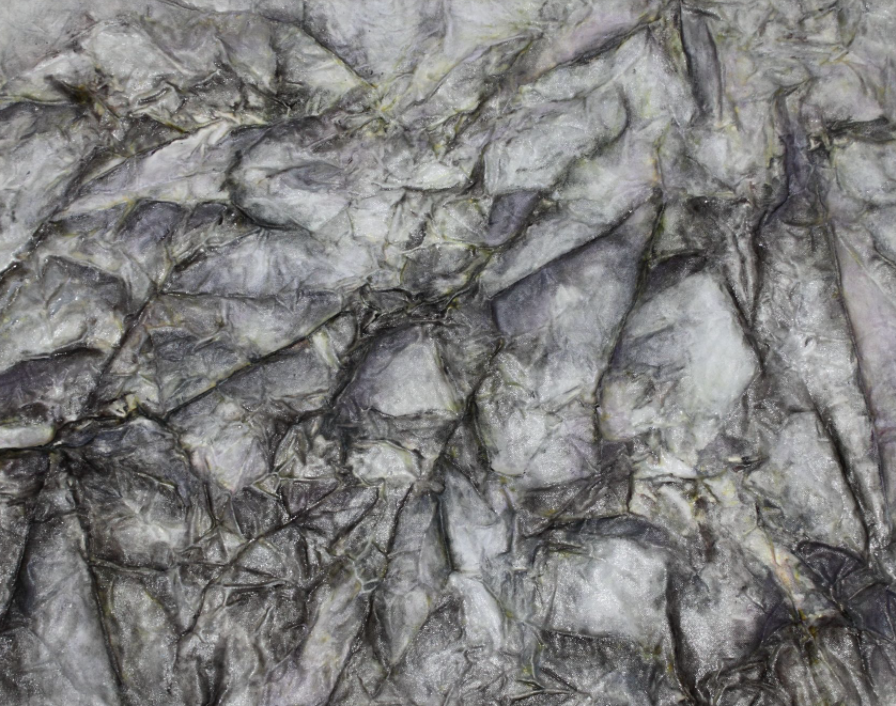
Her work is physical and improvisational, driven by emotion captured through an abstract lens. She describes her works as a dance with one's self, spontaneous and free, releasing energy and emotions in a limitless direction.
Similar to the way music creates a soundtrack to our lives, colours play a role in the background of our everyday moments yet carry meanings that vary from person to person.
Andrea lives and works in Toronto, Canada.

Andrea Rosara
Andrea Rosara is an interdisciplinary artist from Venice, Italy. He works primarily in the media of painting and drawing and has an interest in printmaking. He holds a Bachelor’s of Fine Art and a Master’s of Fine Art/Visual Studies in Painting, Drawing and Printmaking from the Accademia di Belle Arti di Venezia. Andrea has exhibited his work in a wide variety of solo and group exhibitions in Venetian galleries and art festivals including Atelier 3+10, the Festival of Contemporary Art Giudecca, La Fenice Gallery, Techwood Venezia, and Accademia di Belle Arti di Venezia. He is now based in Toronto, Canada.
Caroline Chorazy
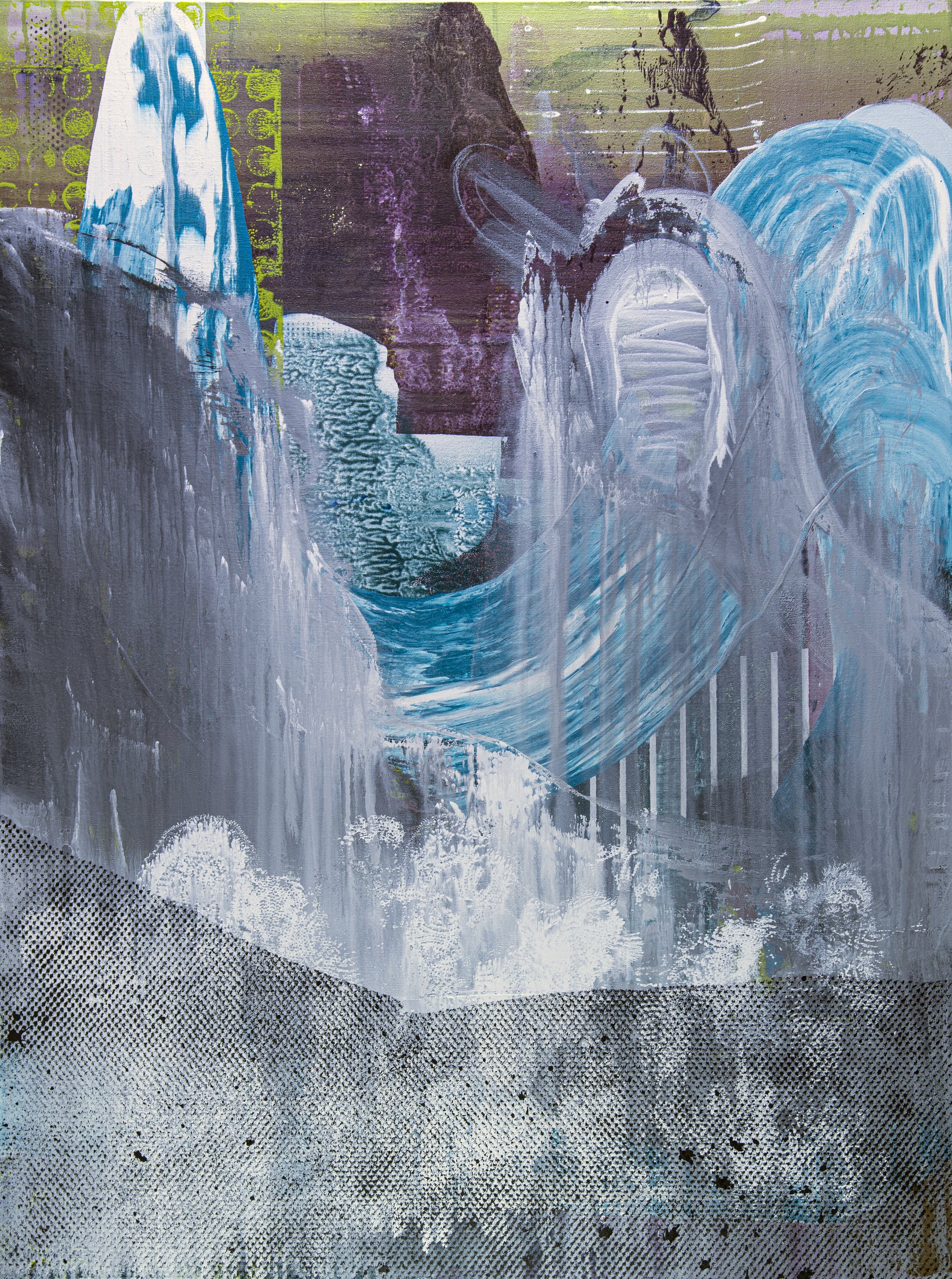
Caroline Chorazy is a self-taught, Toronto-based abstract artist specializing in acrylics and gold leaf. She draws her inspiration from natural elements in an attempt to capture organic movement and flow in all of her artwork. Her use of gold leaf and pigment gives each piece a unique gesture and ability to change appearance or shape in cohesion with the room and light.

Moses Salihou
Moses is a contemporary artist whose artwork reads like visual poetry; subjective & limitless in its interpretation. His inspiration and creativity are sourced from his surroundings, the environment and his imagination. Moses’ creative process is guided by a desire to establish a dialogue through his work without setting any limits.
As a versatile artist, Moses uses various supports (canvas, paper, reclaimed materials) and mediums (oil, acrylic, watercolour, pigment and charcoal). Originally from Cameroon, Moses now calls Toronto home and his artwork is proudly featured in private collections in Canada and abroad.

Seokhoon Jun
Seokhoon Jun loves family, friends, and nature. Currently studying art therapy at Toronto Art Therapy Institute with an interest in how art and spirituality come together in life. Glad and grateful for the opportunity to connect through art.
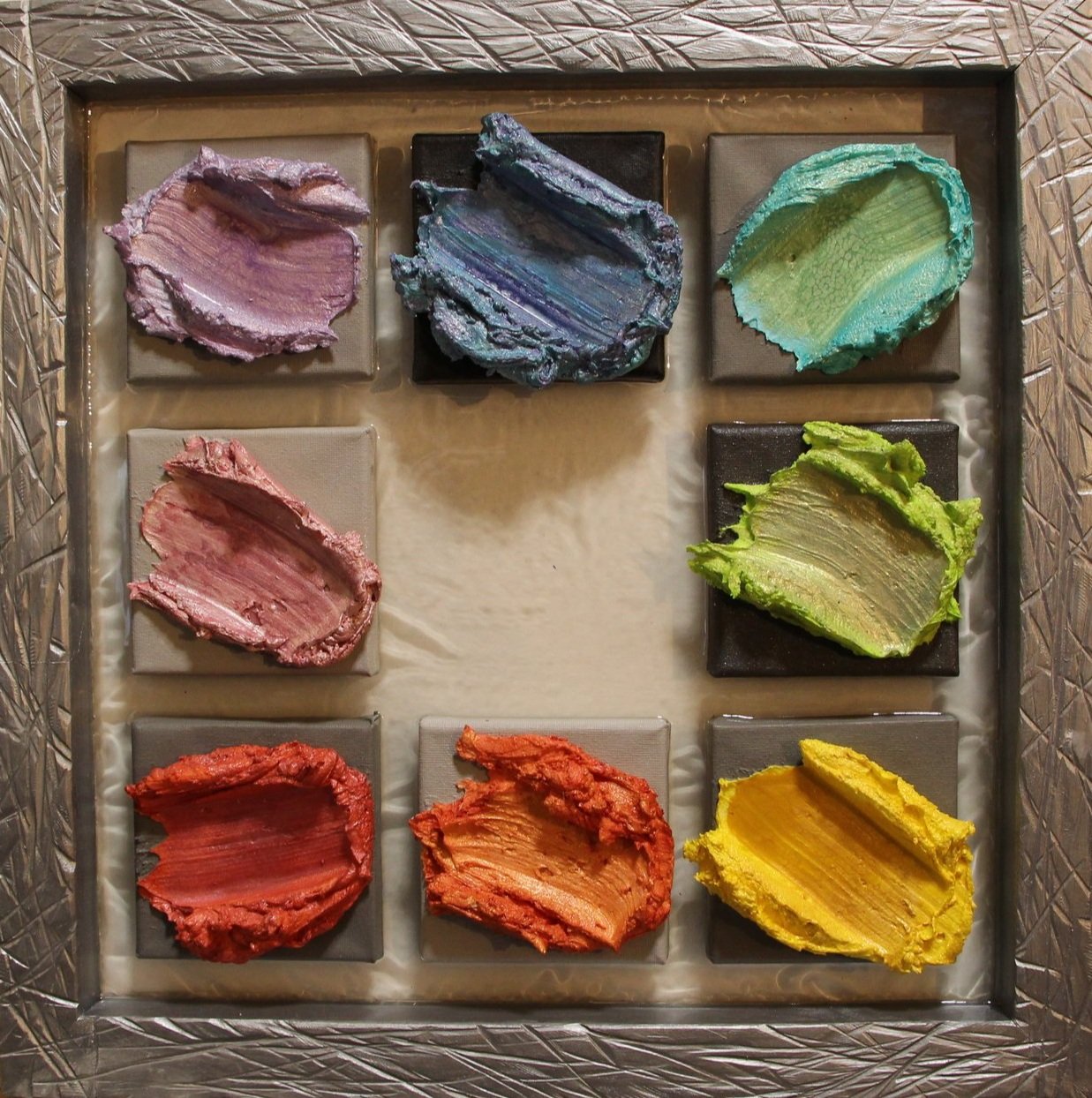
Valentina Youkhanna
Valentina Youkhanna is a self-taught artist who has always had a creative side since childhood. She spent a lot of her time as a kid drawing, colouring, and painting. In her early 20s, she began painting with acrylics and it’s been love ever since. She is not only passionate about the arts and creativity but also had a career as a mental health worker and facilitated art groups for those facing mental health and addiction challenges. In her late 20s, Valentina decided creativity would take the main seat in her life and pursued an education in hairstyling which ultimately led her to work in both professions. By 2019 she would dedicate and commit more time to her creative outlets and left the mental health sector to solely focus on her hairstylist career and art.
Valentina is passionate about healing through art and believes everyone is creative. She believes everyone has gifts and talents in the arts but as time goes on and people “grow up” they forget what it means to play, to have fun, and let your mind be creative. She hopes to see more people tune into their intuition and create from the heart and soul to express or heal. She values community, supporting one another and believes there is abundance for all in the art world and no need to compete because as she states, “no two people can draw the same line.”

Vian Ewart
Vian’s early career was in the graphic side of journalism. About 15 years ago Vian had the opportunity to go to the Gallery School at the AGO, and then the Toronto School of Art, and then the three-year adult art course at Central Tech Art School. For several years since, Vian has been part of the ProjectArt studio group in Toronto. He has also been involved with a number of group exhibitions from the Praxis Gallery to Lennox Contemporary to Don Valley/Forest Hill and most recently Gallery 1313. Last year he completed a couple of commissions in Canada and the U.S.
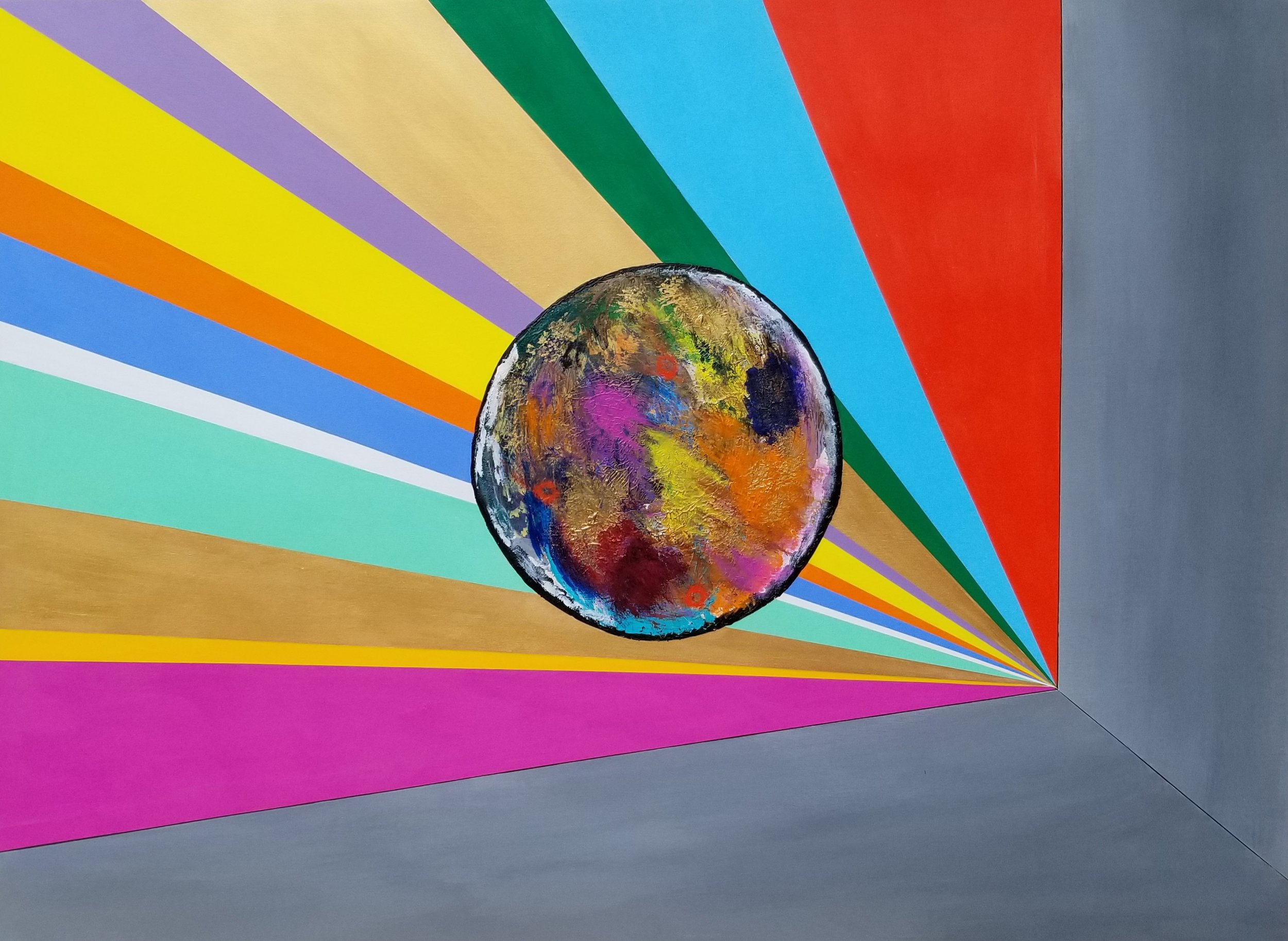
We hope to see you there!
This exhibit is one of the longer ones, and we felt that this was necessary due to the complexity and emotional depth inherent in a lot of the artists pieces. We hope that this blog post gave you some insight into why each artist decided to express themselves through this medium, and how their art has helped shaped their life. We are excited to see you at the new exhibit Gestures and hope this work will inspire you in the way it was meant too.
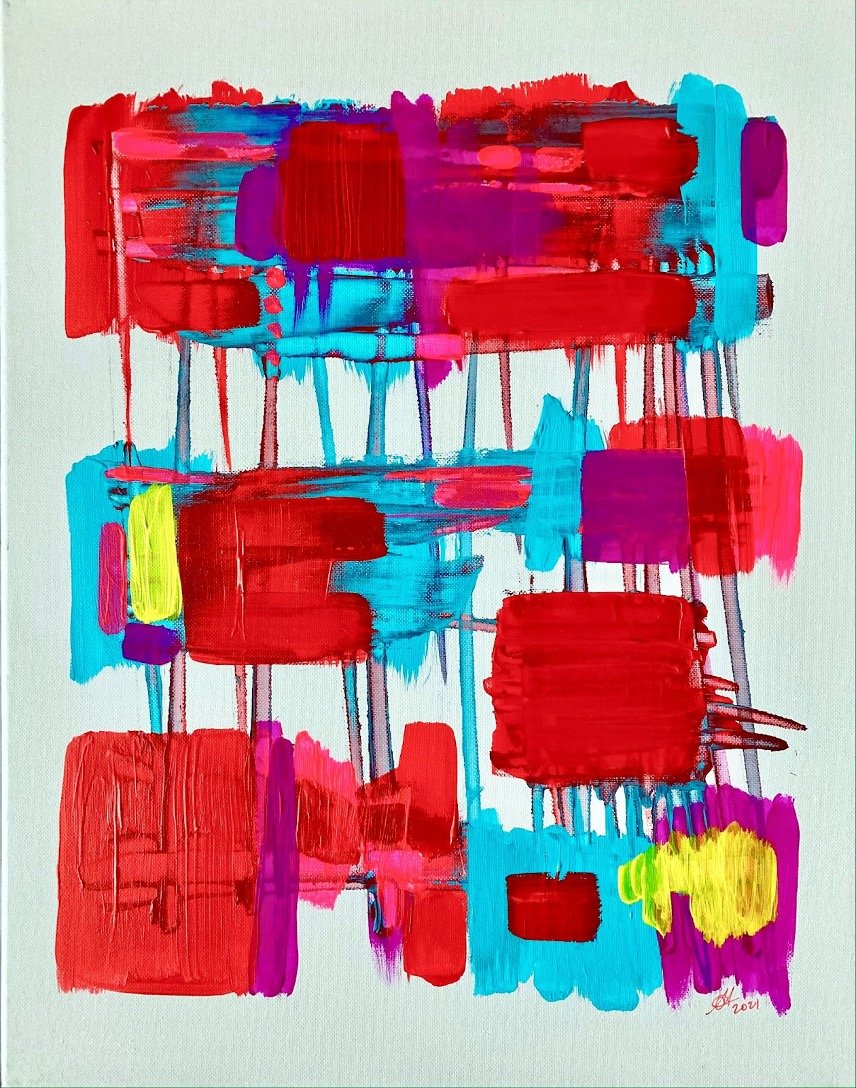
Get to Know the Artists From Chromatics! March 2nd-26th
This month Twist Gallery has chosen 7 local Toronto artists to be a part of our Chromatics Exhibit. Each of these artists has their very own unique inspirations, creative processes and messages they display in their art.
This month Twist Gallery has chosen 7 local Toronto artists to be a part of our Chromatics Exhibit. Each of these artists has their very own unique inspirations, creative processes and messages they display in their art. Their artwork communicates the same theme of expressing themselves through the use of bold and vibrant colours. How they use and express these colours is entirely unique.
→ Join us at 1100 Queen Street West, Tuesday to Saturday from 11 AM to 6 PM ←
Liz Szymczak
Liz Szymczak’s painting journey started in 2018 as therapy for anxiety, post-heart attack. She initially started painting rocks that she gathered from her walks at the lake. From there she jumped to small canvases, and now Liz’s largest piece to date is 36” x 48” and she hopes to go even larger! Painting opened up in her a well of creative energy that lay dormant for most of her life. Now painting is her sanctuary! All of her work is intuitive and many of her works have appeared to her in dreams. Liz’s only hope is that her art makes the viewer feel- because that is what makes life so beautiful!
Tamar Kevorkian
Tamar is an Armenian Canadian painter born in Beirut, Lebanon. Tamar grew up in Montreal, where she studied Fine Arts at Concordia University and Photography at Dawson Institute of Photography. Her infinite imagination and inspiration from her life experiences along with the influence of Pablo Picasso give life to an empty canvas.
Tamar’s preferred mediums are acrylic, oil pastel, charcoal, and ink, using brushes and palette knives of various sizes. She brings forth harmony to explore and create the visual imagery of her cubist graffiti paintings. Now living in Toronto, Canada, Tamar actively paints both on canvas and on digital media.
“Art should have no boundaries, therefore I paint freely and boldly because Art always matters.”

Judith McKay
Judith McKay is a Toronto-area abstract surrealist artist. Her intensely coloured, vibrant landscapes and portraits are influenced by magical realism and surrealistic dreams. The concept underlying her work is that of inseparable and contradictory opposites. The playful duality of abstract and representation—altering perception and reality. Interconnectedness and dissolving boundaries permeate her work—one element flows into another, merging and mixing, creating something altogether new. We think we recognize the places and people in these paintings but they are not as we remember them.
Her artworks featured at the Chromatics exhibit depict powerfully ethereal women spirits and sensual flowing skies, birds, and flowers in vivid, hopeful colours. Her mission in creating these works is to offer an alternative elsewhere, an escape from the chaotic world we find ourselves in. She uses acrylic on canvas; painting with swirling motion to give a sense of floating in ambient air.
Recent exhibitions include the Loft Gallery Group Exhibition, The Artist Project, Toronto Outdoor Art Fair, HIRAETH, a solo show at the Urban Gallery, Toronto and FUSION, a shared solo show with Moses Salihou at the Freedom Factory Gallery, Toronto. Her work can also be found in private and corporate collections across Canada, the US, and overseas.

Adeeba Aslam
Adeeba comes from a deeply artistic family of painters, potters and clothing designers with roots in Pakistan. She is a self-taught artist who derives inspiration for her work from her spirituality, lived experiences and interactions with her community.
Over the past several years Adeeba has been trained with and is currently under the mentorship of a prominent Canadian artist, Catherine Shea.
Influenced by expressionist painters, Adeeba typically doesn't have a plan before exploring the canvas. She works with acrylic paint and selected mediums using unconventional tools and techniques to create her abstract pieces. Using bold colours, spatial and organic structures, Adeeba’s paintings evoke an ethereal depth and drama in telling her stories. The process of painting is both a deeply emotional and meditative experience for Adeeba.
Adeeba’s work has been featured at various locations in Toronto, where she was born, raised and currently resides.
For more information about her work, contact adeeba.aslam@gmail.com. Check out her Instagram: @adeeba.aslam.art.

Andrea Higgins
Andrea is a contemporary self-taught artist with a background in music, film, and dance. Her work is physical and improvisational, driven by emotion captured through an abstract lens. She describes her works as a dance with one's self, spontaneous and free, releasing energy, and emotions in a limitless direction.
Similar to the way music creates a soundtrack to our lives, colours play a role in the background of our everyday moments yet carry meanings that vary from person to person.
Andrea lives and works in Toronto, Canada. Check out her Instagram: @andreahigginsart.

Giuseppe Mandarino
Rooted in Italian tradition, Giuseppe was born in November 1976 and raised in the Downsview neighbourhood of Toronto. Giuseppe has been passionate about putting paint to canvas since his childhood. Experimenting with his artistic style by fusing a combination of textures, colours, and mediums his creations are one of a kind pieces developed through emotions, surroundings and human connections. Giuseppe speaks through his work, and each paint stroke is an expression. His art is created to channel feeling, movement, and inspiration for those that view it. With a love for his hometown of Toronto, Giuseppe has created custom work for an array of local art collectors, entrepreneurs, and admirers. The world that surrounds us has inspiration everywhere if we take the time to notice it, which Giuseppe displays on his canvas.
“Do something you really enjoy and it will never feel like work. I’m grateful for my family’s support, and for the opportunities I have been given.”

Kim Benoit
Creating art is the perfect occasion for an artist to explore happiness. Experiencing art is a mindful activity which allows time and space to experience an emotion. In the paintings from Kim’s series “What Is Happiness?”, she proposes to expound on happiness. What aspects of art make someone feel good? Making a painting that aims to have someone explore their happiness or even to guide them to feel happy is no easy task. She needed to find a visual vocabulary to define happiness. All artists choose a palette to convey the mood. Dark colours can be calming or depressing, bright colours can be uplifting or overwhelming. The use of space can attract or repel. Loose brush strokes and flowing organic shapes can be freeing or disorienting. Strict movement and controlled geometric shapes can evoke safeness or confinement. All of these elements affect the experience. In Kim’s series ‘What Is Happiness?’ She selected paintings that are bright, flowing, and organic for the Chromatics exhibition. To see Kim’s other paintings which express stricter controlled geometric expressions, go to kimbenoitart.com.
The artist’s portion of the proceeds of the sale of these paintings will be donated to research and programs which support people with a mental illness.

We hope to see you there!
Meet Tanmay Upadhyaya!
Who is Tanmay Upadhyaya?

Source: @tanmay.art
“I'm a Toronto based marketer, passionately in love with colours. My venture into the joys of merging colours with canvas only began very recently. I look forward to seeing where this new voice for expression will lead. I enjoy creating abstract art - using acrylics primarily - and try to evoke a sense of beauty and inspiration through the interactions between colours as they find their place on the canvas. I endeavour to create pieces that produce the same passion for colours in others that I have always felt.”
What are you passionate about?

“54 Shades of Happiness”, acrylic on canvas (32 x 48”), $600
“I LOVE LOVE LOVE colours. They make me happy, energize me and inspire me. My lifelong love for colours started quite early in my childhood. I grew up in a culture that is very colour-centric and that affected my sensibilities in the most positive way. My work on display at Twist Gallery screams COLOUR. I have employed bold, vibrant colours in a congrous manner, laid on the canvas using non-traditional painting tools. All my pieces also explore order in chaos. There is a sense of controlled randomness.”
What does ‘Energy’ mean to you?

“And a Very Good Evening to You Too Mr. Rothko”, acrylic on canvas (32 x 48”), $600
“Energy, to me, is the invigorating power of colours. Colours have immense transformative powers and are capable of affecting our moods and general well being. I hope that my work is able to channel this energy and help people feel the joy.”
Energy at Twist
Don’t miss this fantastic exhibition! Be sure to visit us at 1100 Queen Street West and check out our newest artists featured. Our doors are open every Tuesday to Saturday from 11am till 6pm.
You can call us at (416) 588 - 2222 or email your questions and inquiries to info@twistgallery.ca.
And since you’re here, why not browse the Twist Artist Showcase? CLICK HERE.
To see what’s Upcoming at Twist Gallery CLICK HERE.
Follow us @Twistgalleryand @TwistGallery!
Meet Elizabeth "Ela" Szymczak!
Our exhibit, Energy, has a special place in Ela’s heart, quite literally. She started painting late last year after suffering a heart attack at 48 years old. This event jolted her onto a new life trajectory that includes a special focus on art.
Ela’s Heart
She bravely took fear from this traumatic experience and used it to facilitate a new love and appreciation for life. For her, energy translates to life. While inspiration sometimes comes to her in dreams, her paintings always exude pure, raw emotion.

“Catharsis” acrylic on canvas (30”x 40”) $750
While she hates talking about herself, her art does the speaking for her. Her piece, “Catharsis” illustrates a purge from repressed emotions and the subsequent relief created through this expression. The deep yet bright red oscillating lines seem to call to the lines created on a heart rate monitor. This new heartbeat is painted over the dark background, representing the new life created out of trauma. The thick textures create dimension, making the piece come to life, much like she did. It hangs on the wall with her other works seemingly radiating from it and creates a storyboard on the gallery wall for her experiences.
“Energy to me is life. All my paintings are driven by pure emotion. Some have come to me in dreams. I really don’t know how else to explain it. It’s raw emotion.”
- Elizabeth “Ela” Szymczak
Energy at Twist
Don’t miss this rest of this amazing collection! Be sure to visit Twist at 1100 Queen Street West and check out our newest exhibits. Our doors are open every Tuesday to Saturday from 11am till 6pm.
You can call us at (416) 588 - 2222 or email your questions and inquiries to info@twistgallery.ca.
And since you’re here, why not browse the Twist Artist Showcase? CLICK HERE.
To see what’s Upcoming at Twist Gallery CLICK HERE.
Follow us @Twistgalleryand @TwistGallery!
3 Tips for Hanging a Painting
So, you’ve just fallen in love with a piece of art you’ve seen in your local art gallery. You know that it would be the PERFECT addition to your home, so you pass through and buy it. The gallery director puts a little red sticker on it, signifying that this particular piece is spoken for; its dance card is full. Now comes the hard part: waiting for the exhibition to be over, so you can proudly display your new cherished treasure. But how should one display art? There must be rules to follow or a guideline? Sort of. Below are Twist Gallery’s 3 Tips for Hanging a Painting. Enjoy!
🎨 🎨 🎨
3 TIPS FOR HANGING A PAINTING
🎨 Hang a painting by its focal point.
Every piece of art is exceptional and different. Art tells unique stories, boasts diverse triumphs and impacts viewers individually. Therefore, it’s your job; nay your duty, scratch that; your privilege to decide where the art’s focal point is located. Essentially, the focal point, is where the viewer’s eye is naturally drawn. Often times, this is the centre of the painting, however many artists play with asymmetry in space and varying scale. So, what does that mean? It’s up to you! You fell in love with this painting for a reason. Where does your eye naturally fall on the canvas? This part of the painting should be hung level with your eye.
For instance, check out this vivid piece by Sandra Di Leo below.

Figure 1 “Rebel” by Sandra Di Leo; 30 X 40 acrylic on canvas; $2,100
At Twist, we’ve been debating where one’s eye instinctively falls on Di Leo’s work. Some follow the curves of the powerful black lines reaching rest inside the circular shapes. However, other eyes tend to focus on the bright colours, especially the electrifying greens and glowing pinks. Wherever you decide the focal point is located, it should be hung close to eye level.
🎨 Carefully think about lighting the artwork.
Lighting can be tricky, especially if you don’t have track mounted lights at your home. You want to avoid direct sunlight because it can be very damaging to surfaces. Try to mount the art in a room with lots of natural indirect light. Also, you’ll want to give your artwork even light. This is why many gallery’s mount works on walls with numerous light sources to ensure an even amount of light bathing the canvas. Lastly, consider the type of light (if not natural light). Fluorescent light is awful for dramatic art. You’d be wise to stick with bulbs and light sources that replicate soft daylight. For example, take a glance at Courtney Senior’s “Where the Magic Happens”.

Figure 2 “Where the Magic Happens” by Courtney Senior; 48 x 48 acrylic on canvas; $2,000
As the bright colours shatter and splinter apart revealing the strong dark tones of the background, Senior’s expression is fully realized. A robust piece such as this requires a room full of indirect light. Any direct sunshine or incandescent light would overwhelm the already strong colour pallet presented.
🎨 Group pieces of art together for dramatic effect.
When you are decorating a space, consider how several paintings can work together. Perhaps the canvas’ were created by the same artist and represent similar thematic elements or feelings? Conversely, this can work when the paintings are dissimilar. Imagine the contrast and complication to viewers by pairing pieces that clash or challenge each other. Can you think of a time when artistic elements clashed so strongly that the effect was incredibly profound and memorable? After all, art is about expression and creativity. Ultimately, it's up to you. Consider the work of Elena Dinissuk featured next.

Figure 3 “Beach Tranquility” by Elena Dinissuk; 24 x 24 acrylic on wood; $500

Figure 4 “Flying Over the Ocean” by Elena Dinissuk; 24 x 24 acrylic on wood; $500
These two pieces compliment and accent each other. The wild and energetic ocean waters of the first painting is referenced by the same blue hues in the second. Furthermore, viewers regard the land and sky embodied with oranges and pale blues in the second painting. This only highlights the lack of land in the first painting. As viewers begin to consider both paintings simultaneously, they see elements that are repeated and elements that exists individually. Dinissuk’s work instigates an exciting story of the majestic mighty ocean and our beautiful planet.
We hope you’ve enjoyed reading our 3 tips for hanging a painting. And if you think we’ve missed anything, please comment below and let us know your tips. We’d also love to hear from anyone who has purchased from Twist Gallery in the past. How did you hang your art? Share a picture on Instagram and remember to tag us! @twistgalley
And since you’re here, why not check out the other artists in our Artist Showcase? CLICK HERE.
To see what’s Upcoming at Twist Gallery CLICK HERE.
Keep us in your focal point by following us @Twistgallery and @TwistGallery!