"PONDER" Get to Know the Artists!
As we open our doors to our new Ponder Exhibit, we are thrilled to introduce you to the creative minds behind the art that will be showcased. In this blog, you will get a deep dive into the artistic visions of the participants, bringing exclusive insight straight from the source.
As we open our doors to our new Ponder Exhibit, we are thrilled to introduce you to the creative minds behind the art that will be showcased. In this blog, you will get a deep dive into the artistic visions of the participants, bringing exclusive insight straight from the source.
Join us as we explore their unique perspectives and passion for their work. Each question and answer reveals not just their technique but also the core to their creativity.
Whether you are an art connoisseur or a curious reader, there's something here for everyone to appreciate and ponder.

SUSAN ROSS
You mention being inspired by the shapes and patterns found in nature. Can you elaborate on how you translate these natural abstractions into your artwork, particularly for this exhibition?
Working intuitively allows me to tap into the inherent abstraction of the natural world. I intensify and enhance those abstract elements. When painting more abstractly, I grapple with finding the right balance between recognizable forms and personal interpretation. Colour is a powerful tool in this process—I love creating bold contrasts. The shapes and patterns I draw from the landscape, reflections in water, and the interplay of light and colour become focal points in my work. Ultimately, this exhibition is all about connection. Through my art, I aspire to transport viewers to those meaningful places and evoke their own memories and experiences.
What drew you to focus on impressionistic landscapes, and how has your style evolved over the years?
I have always been drawn to the natural world, it has been a vital part of my life. Throughout my painting life, my work has weaved in and out of pure abstraction to impressionistic landscapes. I find the natural world to be inherently abstract.
I really loved the idea of combining the two. This body of work in particular came out of years of abstract painting.
You've received several awards for your work, including The Sun Times People’s Choice Award. How has this recognition influenced your artistic journey so far?
It really helps to sustain the work when you get recognition for it. Not that I would stop if I didn’t have it, but it helps. I think it's very important for the work to have a connection with the viewer. Painting is such a solo experience so to share it and have it appreciated is very rewarding.
Can you elaborate on what you feel is uniquely "Susan Ross" about your Canadian landscapes?
I think growing up in northern Ontario, with its rugged and intense terrain, has left an indelible mark on my artistic sensibilities. That raw beauty serves as a constant wellspring of inspiration for my paintings. My love for nature is deeply embedded in my work. The landscapes I create draw from personal experiences—whether it’s kayaking, hiking, or leisurely walks. When I capture reference photos, they freeze moments from these special locations. To me, it’s all about forging a dialogue with nature through my art.
How do you hope viewers will engage with and interpret your works in the "PONDER" exhibition?
I would hope there is a connection or an experience that can occur between the viewer and the painting. It’s incredibly rewarding when someone tells me that a particular painting evokes memories of a special place or a moment from their past, transporting them back to that time. If my painting can transform into a real place for the viewer—one where they’ve had a meaningful experience—that would be the ultimate achievement for me.

TREVOR CLARE
How do you balance traditional techniques like acrylic and gouache with digital art in your creative process?
I've been painting with traditional mediums since I was around 10 years old, grounding my artistic background in the physical nature of painting. In the past five years, I've started exploring digital art and discovering compelling ways to combine my knowledge of both worlds. My experience with traditional mediums has profoundly influenced my digital work, as many of the same principles seamlessly transfer to the digital realm. I continue to work with gouache and practice plein air painting whenever possible, as it's an excellent way to sharpen and refine my skills. Drawing inspiration directly from the real world adds immense value to my artistic journey.
Can you explain the concept of "neo-nostalgia" and how it manifests in your work?
I've always been drawn to nostalgia, naturally gravitating toward themes that evoke a sense of place and its significance. This deep connection to the past informs much of my work today. I’ve coined the term 'neo-nostalgia' to describe my approach—where the digital, contemporary medium of technology intersects with traditional, timeless subject matter.
How do you choose which urban landmarks to feature in your paintings?
Much of my work draws inspiration from the local landmarks and hidden gems within my own community. Some of these places are well-known, while others are more unexpected—small mom-and-pop shops, diners, bookstores, and convenience stores where I would spend time with friends or grab last-minute groceries. These seemingly ordinary places hold deep meaning for me, shaping my daily life in subtle yet significant ways. As I began sharing my art, I discovered that many others shared similar connections to these spaces. I strive to capture places and experiences that resonate with people in nostalgic and sometimes surprising ways. I also welcome requests and recommendations from the community, always keeping an open mind.
What advice would you give to aspiring artists who want to capture the spirit of their local communities in their work?
Over the years, I've learned the importance of keeping an open mind. It's essential to observe and pay attention to even the most mundane or unexpected places, as they often hold the most rewarding surprises. These seemingly ordinary spots can sometimes inspire the best work. My approach involves finding ways to tell a story and capture the essence of a place’s spirit. This often means using vibrant, neon color combinations, playing with light to evoke a mood, and incorporating subtle signs of life. Storytelling transforms a piece of art from something merely visually appealing into an immersive experience that invites viewers to connect on a deeper level.

CHRISTIE BAKER
As a self-taught artist with a diverse professional background, how have your past experiences in figure skating, advertising, and music management influenced your artistic voice in your artworks?
I have always been a creative person. I believe it is that sense of creativity that connects each phase of my life, and serves as the through-line on the long and winding path that led me to where I am today. As an ice dancer, I was drawn to the artistic side of figure-skating; advertising is innately creative; and my work in music management was highly focussed on the branding and PR side of the industry. My artistic voice comes from me being authentically me, and I wouldn’t be the person I am today if not for all of the things that came before.
How do you ensure the emotional depth of each piece is conveyed to the viewer?
Creating a sense of emotional depth is a moving target. What connects emotionally for one person will not necessarily connect for another. My litmus test when I am nearing the end of a piece, the question I ask myself that is the only guide I can rely on, is “Does it speak to me? Do I feel something when I look at it?”. If I can honestly answer, “Yes”, then I am satisfied.
How has your studio mentorship impacted the works you've created for "PONDER"?
The studio mentorship I completed was a few years ago, before my first art show. I was thrilled to be selected, having no experience in the art world at the time. My mentor was a well-known landscape artist from the west coast who had a beautiful way of capturing small moments with such simplicity, I couldn’t help but be inspired. I have tried to find my own way of doing that, of distilling moments and places and memories into simple gestural marks and brush strokes. When the mentorship began I was new to painting, still very insecure and feeling my way through mediums and techniques. I didn’t even know how oil paints work! I cried a lot during that mentorship, but I also celebrated some major triumphs. That was the beginning for me. It gave me the confidence to press forward and lead to the type of work I create today, including the pieces in PONDER.
What techniques help you maintain a consistent artistic voice?
Like many artists, I struggle to maintain a consistent artistic voice, while still allowing myself to explore and push beyond the work I am currently creating. When I really need to produce something consistent, I focus on three things: my mark-making, my colour palette and my subject matter. If I can keep at least two of these three things consistent, the work will be cohesive.
What inspired your latest series of pieces?
My landscape work is inspired by memories, and the pieces I am showing in PONDER are no exception. When I start a painting I have no vision in my mind. I don’t typically paint from images. However, as I lay down colours and move paint around, I begin to see shapes, shadow and light. By about half-way through a painting I know that I am painting something from my past, a distant memory of something meaningful, impactful, and important to me. It is like each painting lives somewhere in my subconscious, and then reveals itself to me in its own time. I don’t strive for realistic re-creation, but let the haziness of the past, as seen through the veil of emotions, take centre stage.

DAVID MOIR
Can you share how your experiences in the northern Ontario environment have shaped your artistic identity?
My experiences in the Northern Ontario environment has helped shape my artistic identity. The natural beauty of Lake Matinenda and the surrounding region inspired a deep appreciation for the rugged wilderness that defines Algoma. In addition to my experiences in Northern Ontario, my travels across Canada have exposed me to a diverse array of scenery. This connection to the North was further influenced by the work of the Group of Seven, whose ability to capture the essence of Canada’s landscapes has always inspired me. Their dedication to portraying the raw beauty of the North resonates with my own artistic vision.
What emotions do you aim to evoke in viewers through your depictions of northern landscapes?
Through my depictions of northern landscapes, I aim to evoke a love of nature in viewers. The beauty of the wild, mostly untouched wilderness is something that has always resonated with me, and I want to share that connection through my art. Through my art, I hope to share with others the sense of awe and reverence I experience in these natural environments.
By capturing a scene, I strive to inspire an admiration for nature, reinforcing the importance of preserving these landscapes for future generations. My hope is that, in experiencing my work, people will feel a connection to nature and an appreciation of the tranquillity and inspiration that the northern wilderness offers.
How has your artistic practice evolved as you continue to explore the landscapes of northern Ontario?
As I continue to explore the landscapes of Northern Ontario, each new experience in these remote places teaches me more about the subtleties of the natural world, allowing me to fine-tune my skills and deepen my understanding of the environment I seek to capture.
I've also developed recurring themes in my work, particularly my focus on painting lighthouses. These structures, often found in isolated and lonely places, have become a symbol of resilience and solitude in my art. They serve as a bridge between the human presence and the wilderness that often surrounds them. Additionally, my exploration of themes like isolation has extended to other elements, such as sunsets and secluded spots in the wilderness, where I aim to convey the beauty and tranquillity of these moments.
In essence, my artistic practice is continually shaped by the unique character and emotions of these extraordinary environments.
What do you hope audiences will reflect on when they view your paintings in the context of the "PONDER" exhibition?
In the context of the "PONDER" exhibition, I hope that audiences will reflect on the beauty of nature that my paintings seek to capture. I want them to feel a connection to the landscapes I depict, encouraging the importance of preserving these environments.
What advice would you give to emerging artists who are also inspired by their natural surroundings?
For emerging artists who are inspired by their natural surroundings, my advice is to make the effort to immerse yourself in nature as often as possible. There's no substitute for the firsthand experience of being in the environment you're trying to capture. Whether it’s sitting quietly by a lake, or hiking to a remote lookout, these experiences will influence your work and deepen your connection to the natural world.

DIVYANI CHANDORKAR
How do you balance the personal, introspective nature of your "wonder-filled thoughts" with the public presentation of your art in this exhibition?
Balancing the introspective nature of my "wonder-filled thoughts" with public presentation is about creating a bridge between my inner reflections and the viewer's experience. My pastel-themed landscapes—featuring dreamy skies, calm seas, flower fields, and a subtle sailing ship—capture my personal sense of tranquillity. By focusing on universal themes of nature and serenity, I invite viewers into a shared moment of peace and contemplation. The art remains deeply personal, yet it offers a space for others to find their own meaning and connection within the work.
What unexpected connections have you discovered between your cultural background and painting expressions?
The unexpected connections between my cultural background and painting expressions often reveal themselves in subtle ways. Growing up in India, I was surrounded by vibrant colors, intricate patterns, and a deep appreciation for nature and symbolism. These influences naturally seep into my work, even when I'm not consciously aware of them.
For example, the use of color in my pastel-themed landscapes often reflects the bright and warm hues found in traditional Indian art and textiles. There's a certain fluidity in how I approach composition, which I realize echoes the flowing, rhythmic patterns seen in Indian designs. Additionally, the themes of tranquillity and connection with nature in my paintings are deeply rooted in cultural values that emphasize harmony and balance.
These cultural influences enrich my art, adding layers of meaning that might not be immediately obvious but are felt on a deeper level. It’s a continuous journey of discovery, where I see how my heritage subtly shapes my creative expressions, blending the personal with the universal.
What aspect of your artistic voice do you feel is most prominently showcased in your artwork for this exhibition?
In this exhibition, my artistic voice is most prominently showcased through the serene and contemplative quality of my pastel-themed landscapes. The use of soft colors, dreamy skies, and tranquil scenes reflects my focus on evoking a sense of peace and introspection. This approach captures the essence of my inner world while inviting viewers to find their own moments of calm and reflection.
What role does color play in conveying emotion in your artwork for this show?
In this show, color plays a crucial role in conveying emotion by setting the mood and enhancing the overall atmosphere of my artwork. The soft, pastel hues create a calming and soothing effect, helping to evoke feelings of serenity and introspection. By carefully choosing and blending colors, I aim to guide viewers through a gentle emotional journey, allowing them to connect deeply with the tranquillity and subtle beauty of the scenes.
What has been the most profound personal revelation you've experienced while creating your abstract works for this exhibition?
The most profound personal revelation I’ve experienced while creating my abstract works for this exhibition is how deeply my emotions and inner thoughts can be translated into visual language. Working abstractly has shown me the power of non-representational forms to express complex feelings and states of mind. This process has been especially meaningful as immigrating to a new country and starting from scratch has adversely affected my mental health. However, starting to paint here in Canada has been like a ray of hope, allowing me to explore and understand my emotional landscape in new and meaningful ways.
What new artistic territories or techniques do you hope to explore in your future artworks?
In my future artworks, I hope to explore new artistic territories and techniques such as mixed media, incorporating textured materials, digital enhancements, and palette knife techniques. I’m also interested in experimenting with dynamic color palettes, unconventional compositions, and interactive or immersive art forms to expand my expressive range and engage viewers in new ways.

TAMARA THOMPSON
Can you describe your process of layering glazes to create a new reality from old images?
The process of layering glazes enhances and enables me to tell a story of my travels through local parks and beaches, as the layered patterns found in the image references emerge. Sometimes the old images are short video clips looped that illustrate the contrasting patterns of light and shadows emitted from the motion. The mix of flora and fauna within the images are deconstructed through observation and repetitive motions. The layering of paint glazes allows the process of observation to show through, and show myself navigating through the feeling the memory of the space evokes. From this process of layering, a new image emerges that is a closer representation of the intrigue and vibrancy of the landscape, that surpasses the exact likeness of the place but instead illustrates the emotional significance of it through small intersections of memory.
How has your residency at the Living Arts Centre influenced the pieces you've created so far?
The artist residency at the Living Arts Centre was a great opportunity to uncover new ways of working after completing my final year at OCAD University. The collaborative space allowed for conversations and peer reviewed critiques and enabled me to build a body of work. I was able to work at and explore my layering techniques of paint mediums, playing with different pigment strengths and paint opacities. I also had space to create larger and smaller works, to explore how the brushstrokes changed over time in conjunction with the various sizes and glaze strengths.
In what ways does your work reflect the interplay between anxiety and calm reflection?
My work reflects the interplay between anxiety and calm, as the completed image of the landscape emits a peaceful energy, but the physicality of the layering and capturing motion through a slow medium like paint, is an anxious act. The motion captured through the layering of glazes of color and light completes a final imaginative piece that allows the viewer to feel a sense of calm and positive exploration of each brushmark and section of the painting. The universal experience of memory of places being in fragments and not complete final pictures, is demonstrated through this interplay of anxiously trying to capture emotion and patterns from observation, and the calm reflection of the finalized work. Overall, the viewer may react to certain areas of abstraction more vividly than others, as they recall a memory of place through a previous experience.
How does the layering process enhance the emotional impact of your paintings?
The layering process enhances the emotional impact of my paintings, as each layer is a reflection of the remnants of texture, color and natural patterns of the landscape that was experienced. Sometimes it is multiple images of the landscape that I reference in motion, and the layering process allows me to build on each texture and pattern to form a new perspective of the landscape. By doing so, the elevated emotions from the memory of the place is evoked through the exploration of the visual layers.
What role does memory play in the creation of your abstract pieces?
Memory is a key ingredient in my creation process and practice, as it is an integral part of the emotions that are evoked in the final imagery of the piece. Memory is not linear, and often we think of places once travelled in small bite size pieces and fragments. Other times we remember how the places made us feel, or vividly remember details such as the contrast of shadows in the water, the sound of wind in the leaves or how hot the sun rays felt in the moment. Through the layered abstraction of my work, the viewer may find pieces they remember or relate to.

BARBARA CHAPMAN
What inspires you to explore the skies and atmosphere in your pieces
I grew up on the eastern edge of Canada where the sky has always told a story about what was to come and often the atmosphere near the ocean had a presence that could be felt before it was seen. My deepest memories are that of fog and mist and the smell and sound of the ocean.
Do you think you see the world differently than non-artists? If so, how?
I often wonder about this, and yes, I believe maybe, but perhaps it is not a seeing but a noticing and a feeling. I notice colours and shapes that sometimes others don’t and I often see light and shadow as a colour and a temperature.
Your statement mentions the "network of natural communication" in forests. How do you represent this interconnectedness in your paintings?
The connection of trees and their surrounding infrastructure is often represented through their root systems and the places where trees become joined with the earth and the underground. Roots are also indicative of the incredible network of fungi that live and support ecosystems and of course, parallel our human and familial connectedness.
Are there any particular environmental issues that you aim to highlight through your art?
I worry mostly about climate change and the deforestation that continues to take place in this country and beyond. Trees are one way that the planet stays cooler, our air cleaner and precious soil stays in place.
Can you describe your process for choosing colours to represent the mood and atmosphere of old growth forests?
I have studied colour theory in depth and prefer to work from a colour palette that reflects the natural world. Umbers, siennas and ochres are staples for me as well as the colours of the impressionists. Mostly modern colours do not find their way into my language of colour.

JESSICA. E. TURNER
You focus on vulnerable feminine subjects. What draws you to these themes, and what do you hope people feel when they see your work?
My focus on feminine subjects arises from a profound interest in exploring the complexities of my own femininity—how societal expectations, cultural narratives, and personal experiences shape my identity. We are all intricate beings, and our subconscious often remains hidden due to fear, leading us to protect ourselves.
Femininity can be suppressed out of fear of the vulnerability associated with it. In my paintings, however, there is no fear of vulnerability; instead, it is portrayed as a form of protection and a divine experience. While these moments may be fleeting in real life, they find permanence in my art. My paintings serve as a personal reminder of the deeper parts of myself that yearn to be expressed.
I hope that when people view my work, they connect with their own inner depths and recognize the beauty in vulnerability, longing, and yearning. My art aims to gently inspire viewers to explore and express their subconscious selves in a healthy and meaningful way.
Do you have any funny or interesting stories from your time in art school?
My first year in undergraduate school at OCAD University, it was mandatory to take a drawing class. We had an unexpected life drawing of a nude male model, and after we were all finished, we had to walk around the classroom to look at everyone’s drawing. When people got to my drawing, they burst out laughing. That one stayed with me because although funny to look back at, I was actually horrified in that moment.
Have you ever had a "happy accident" while painting that turned out great?
Yes, "happy accidents" can be a delightful part of the creative process! Sometimes, an unexpected brushstroke or colour blending in an unplanned way can lead to a surprising and beautiful result. These moments often add a unique character to the piece, making it more dynamic and layered. It’s like the artwork takes on a life of its own, guiding the process in a direction you hadn’t anticipated but that enhances the overall composition.
You mentioned that painting helps you find peace. Can you share a time when creating art helped you through a tough moment?
When I returned to Belleville from Toronto at the beginning of the pandemic in 2020, I faced a challenging adjustment period. The pressure of completing my final year of school online, coupled with the difficulty of leaving behind a supportive community, left me feeling isolated. The experience was so overwhelming that I needed significant help from doctors to cope. Being an artist can be inherently isolating, so having a network of peers is essential. Finding a new art community in Belleville was a turning point—it encouraged me to continue creating and sharing my work. This connection not only supported my artistic practice but also helped me work through the residual emotions from the pandemic.
What advice would you give to someone who wants to start making art but feels unsure about it?
Don’t overthink it—just start. I learned about a technique called “automatic writing” during a writing class at OCAD. The idea is to let go of your thoughts and just write without judgement. I believe this approach applies to all art forms as well. Dive in, think about it later, and keep practising. Over time, you’ll see improvement. Sometimes, thinking too much can hinder your progress in learning something new. Remember, courage is often underestimated. And it takes courage to do anything new.

As we’ve gotten a deeper understanding into the artistic vision, we hope you have gained an appreciation for the stories and inspirations behind our talented artists. Their answers have given a glimpse into their artistic world.
Thank you for joining us and we hope you enjoyed getting to know our artists.To truly immerse yourself in their incredible work, we invite you to visit Twist Gallery in person at 1100 Queen Street West, Toronto.
See the art up close, feel the creative energy, and be inspired by the stories behind each piece. Don't miss out—plan your visit today and experience the magic of our gallery firsthand!

Interviewing Our 8 Vibrance Artists
Twist Gallery is very excited to showcase our new exhibit Vibrance, and give you a chance to get to know the 8 talented artists on a deeper level to better understand their artistic process. Vibrance is centred around life’s moments, both in the mundane and the exciting, encouraging our intertwined connectivity of the human experience. We asked our artists some questions about the ‘vibrancy’ of their work. To find out more, keep reading!
Twist Gallery is very excited to showcase our new exhibit Vibrance, and give you a chance to get to know the 8 talented artists on a deeper level to better understand their artistic process. Vibrance is centred around life’s moments, both in the mundane and the exciting, encouraging our intertwined connectivity of the human experience. We asked our artists some questions about the ‘vibrancy’ of their work. To find out more, keep reading!
Amanda Pistillo
Amanda is a self-taught artist whose work is centred around the feeling of joy, the tranquility of being happy, and extending that to others. She hopes to entice a feeling of inspiration and motivation in others to create their own unique art work.
How does the title ‘Vibrance’ connect to you and your art?
"Vibrance" to me and in terms of my art is about the light that radiates within your heart and soul. It is that powerful energy that brings forth happiness and love! Each piece that I create is a one-of-a-kind creation always made with lots of love and with the hope that they bring happiness to others!

All of your paintings are centred around John Lennon. What aspects of his life inspired your work?
John Lennon's empowering mission for a world with peace and love coupled with his never-ending call for inner courage and strength are very inspirational to me. I wanted to try and capture the light and radiance of his heart and soul within my artwork.
How have you cultivated such a unique style of painting?
I love to create art, it helps to centre me and brings me so much peace. Over time I have learned to exercise a sense of courage when creating my art, just being totally free. I enjoy using a rainbow of colours within my work, along with an edgy/sweet kind of look. I never have an exact plan of how the piece will turn out, I just go with the flow and try to be fearless. I've found that the best process for me when I'm creating my art is to just listen to my heart and let go of any control.

Do you have any advice for beginner artists who are nervous to explore new mediums and areas of art?
I think it's really important to be yourself and to have a sense of fearlessness when creating your art. There are going to be people who will have opinions about what you have created and want to change your style of art, but always remember how unique you are and to never conform to other people's expectations. Always believe in your art and in who you are. Your art is a reflection of you, and all of your divine creativity and your beautiful soul! Always remember to keep persevering, try new techniques, and always always stay true to yourself!
Daniella Williams
Daniella is keen on expression, keen on capturing the moments that truly make us human. Whether it be alone, with a partner, in a public setting with strangers… she makes sure to grasp deep emotion in a way that makes the viewer feel comfortable and understanding. Daniella focuses on all of the little details that are incredibly important in the final composition of her piece, and will make sure to capture every angle and shadow.
How does the title ‘Vibrance’ connect to you and your art?
I wanted to be a part of Vibrance because I felt that the concept and title of the show was one that reflected the overall essence of my work. My paintings emphasize colour and dynamic imagery of people in mundane scenes. Therefore, when I begin a painting my end vision is a scene where I have pushed the colours and skin tones of the subjects in unexpected ways. I want my paintings to be vibrant and energetic as well as probe the viewer to ask questions about the narratives I develop.

Why have you explored the themes of intimacy, self-reflection and voyeurism with your Domesticity collection?
My work touches on themes of intimacy, self-reflection and voyeurism because I’ve always been concerned with the idea of being perceived. I want to explore the tension and discomfort that exists in this as an individual but then paint it in a way that feels intimate to the viewer. As curious humans we love to get a look into the psyche and inner experiences of people around us; hence our fixation on social media and consuming images. Similarly, I have struggled with my own body image, and self-perception as a young bi-racial woman in an age of internet and image consumption, so it's always felt important to create paintings about these ideas.
What is the narrative behind the Domesticity paintings?
The Domesticity series paintings are meant to follow the domestic lives of four young adults who share a home. Their relationship to one another is ambiguous and highlighted by their inherent separateness in each scene. The setting of each painting is clearly a home yet none of the inhabitants ever meet the others gaze or interact. Domesticity was meant to be a look inside a troubled home life, one that looks bright and beautiful at first glance but harbours tension and restlessness at a second glance.

How do you choose your muse for your paintings? (Are they friends of yours? Models? Strangers?)
The subjects of my paintings really depend on where I am and what I’m feeling inspired by at the time. A lot of my most recent pieces were of friends who I had sit and act out different scenarios and narratives for me. Whereas many of my other paintings are of strangers I capture in passing. For instance, my newest painting “In A Sea Full of Women’ was a collage of several people I observed on different beaches in Italy and Greece. Mainly what I look for in my subject is a sense of mundanity, I want them to look like everyday people and to tell some kind of story in their expressions or body language.
Sandra Lambert
Sandra has a spirit that can be seen directly through her paintings. She focuses on the things that make her happy and takes inspiration from the little parts of life that may be overlooked otherwise. High saturation and crisp lines in her art convey an intense wave of emotion and expression.
How does the title ‘Vibrance’ connect to you and your art?
My first love in painting is colour. I’ve always been attracted to fresh, bright colours - colours that remind me of summer gardens or brightly coloured insects and birds. Loving the colours in nature, I’ve wanted to capture that feeling of freshness and aliveness without limiting myself to representation. So, it’s more of a desire to express the essence of an experience of nature - fields, sunset, fruit, flowers, insects, birds - the vitality that, at our core, we share with the natural world.

What attracted you to painting utilizing such rich saturated hues?
When I discovered acrylic gouaches- especially the Japanese colours- I fell in love with them. I rarely mix them, instead using them straight from the tube. They convey the intensity of my emotions and my experience of being saturated with the beauty of the world around me - an intensity that is difficult to convey in words, other than poetry, but seems to come more easily in the language of paint.
What would you say your biggest inspiration has been during your art journey?
I am like a sponge, soaking up visual stimuli- natural and urban landscapes and the work of other artists. I think it was John Berger who talked about the importance of receptivity in the act of painting. That resonates for me- what you take in then moves through you and into the paintings. It’s not that you don’t need to learn techniques and practice a hell of a lot, but I think it’s good to stay open and receptive to the world around you and the impulses of your own soul.
What drives you to create? How does it impact your personal growth?
I don’t really know what drives me to paint, other than I’m not happy if I’m not making something. And there’s nothing like the feeling of being completely absorbed in making a piece of art; it’s that loss of self-consciousness, that sense of rightness, of doing what I’m supposed to be doing. Also I never get bored- there’s always a new idea and something new to learn and try, and you can never get complacent because you can never really capture what you set out to capture so it’s always in front of you like a breathtaking view that is never reached because it’s always just around the next bend in the road.

How do you know when to stop, when do you really know when a piece is finished?
I used to overpaint more than I do now. I didn’t trust what I was doing and was trying too hard and worrying about the end product. I do that less now and trust more in the process. It helps to work on 2 or 3 pieces at a time so you don’t get hung up on getting one perfect. Maybe that is something I’m learning from painting- perfection is not where it’s at in art or in life- instead it’s trying, experimenting, failing sometimes and succeeding sometimes, but keeping on working with an open mind and a playful spirit. Also there are happy accidents - ‘mistakes’ that turn out to be wonderful surprises. I’m trying to keep that attitude in regards to other parts of my life - what we hope and expect often do not occur but sometimes what seems ‘wrong’ can turn out to be a gift.
Allen Ford
Allen, a man well versed in our society’s natural fast pace and how our minds can interpret the advertising all around us, excels in collage style art that encourages the viewer to expand their horizons across many places. He uses second-hand bright and colourful advertising materials to create a whole new piece of art, enticing a sense of unusual inspiration from many different things at once.
How does the title ‘Vibrance’ connect to you and your art?
Excellent question! I feel vibrancy in my art is found in creating new meaning with the posters. Originally all these posters have a clear meaning and intent. Take the huge panel with the Andy Warhol poster from the AGO exhibit. Originally that poster had a very clear purpose. But rip it, tear it, and mash it up with other posters, and something new and unexpected is created with its own energy and meaning. To me that is vibrant.

Your collages reinterpreted old advertising posters from across the city. How do you see advertisements subconsciously affecting our decisions making as consumers?
Advertisements affect our decisions just as all other forms of inspiration do. We are first triggered not by the entirety of something but by one single element of it. It's like being at a club...or an opening night of an art show! You see somebody across the way, you don't know them but the way they wear their hair, or stand, or hold their glass connects with you. Advertising is no different. We see or hear a word, see an image or a colour, and it sticks. And you then want to know more.
What does your artist process look like?
It looks like a mess! When I am in full creating mode, my apartment...err...studio is literally strewn with posters and panels. I then proceed to mimic a squirrel in a park digging for nuts. I know a specific poster is buried somewhere, I just need to find it! There is usually one core poster fragment I build around. It might feature a word or sentence, or perhaps an image or colour. With that foundation, I simply look to then build around it as I add, shuffle, rotate, and rip other poster fragments in. I rarely have a defined image I am looking to create though. It is very much a process that is about finding the finished image. And when do I know something is finished? When I get a tingle on my arms, a smile on my face, and start nodding. Then I know I have created something!

What do you hope the viewer draws from engaging with your work?
I like to imagine viewers of my work as a kind of urban archaeologist. This art requires viewers to reconstruct what they see, but also imagine and parse what they can't. I feel viewing my art also asks people to be creative themselves. These posters, once all ripped and torn, all fragmented words and images, ask every viewer to create their own meaning, find their own inspiration.
Eleanor Lowden
Eleanor’s art will take the viewer to a universal happy place - a beautiful garden, which holds the power to be exactly what we need as humans. She makes sure to share her beautiful imaginations in a way that is inviting while also exciting.
How does the title ‘Vibrance’ connect to you and your art?
It’s such a pleasure to be part of the Vibrance Show at Twist Gallery. I think my work often reflects a certain vibrance, the colours and the mood and the settings that inspire me. I’m thrilled to be showcasing my work with this group of artists whose work I admire.

What inspired you to create your Joyful Garden Series during the pandemic?
I began my Joyful Garden series during the pandemic in the summer of 2020. I was living in a condo with no garden of my own. During lockdown we were all limited and my outings were mostly to walk my dog. I started noticing gardens and outdoor spaces and gained a new appreciation for them. I began creating my garden series around this time, I felt like I finally had a garden of my own. It was my own form of abstract art that also felt very liberating and fun.
Do you have a favourite place to create?
I create in my home studio, I love the early morning hours the most. I’m up at 5:30 am and I paint until 7:30 am. when I walk my dog. I then come back and grab a coffee and paint for another few hours. But the early morning hours are still the best.

Do you ever hit a creative block? How do you overcome it as an artist?
I rarely have a creative block. I am always looking for more time to paint. If I have a day I don’t feel like painting, I always have administrative work to do. My website or my books or my Instagram…..All things that need to be done!
Phero
Phero’s lust for life and appreciation for all shines through his digital and painted art pieces. His idols, exuberant and talented, bring a sense of inspiration to the viewer for this kind of vibrancy in their own life. He combines mediums to fully grasp expression and emotion in his subjects.
How does the title ‘Vibrance’ connect to you and your art?
Vibrance, to me, means full of life and energy, vibrating at the highest possible power or potential. I feel like my pieces are exactly that they are full of energy, they show movement in their stillness because they are vibrant.

What inspired you to paint these POC pop culture icons?
I draw my inspiration or choose my “subjects” based on things I believe in or I enjoy. I love hip hop culture which is why a lot of my pieces are so deeply linked to hip hop and the surrounding elements.
What does your artist process look like?
I usually start it with a mood board or a reference board where I gather pictures of the subject and try to figure out how I can capture them. Then, I start to pencil things in lightly (or outline things digitally), and then I start to drop colour in places and see how the composition comes together, making alterations where I need to.
What attracted you to painting with and utilizing such rich, saturated hues?
Early on my artist journey when I was trying to develop my unique style, I wanted something where people would be able to easily identify my work immediately. I found the easiest way to do that was to use vibrant colours. It is easy to unify an exhibit when the colours are the same across all pieces.

Rahul Ohja
Rahul’s abstract mind encourages the viewer to step out of their comfort zone and feel the emotions of life that may be previously unexplored. He uses colours and shapes in a way that has an other-worldly effect, a way that will inspire creativity in a vibrant and fun manner. Read for further tips for beginners that Rahul was nice enough to share with us.
How does the title ‘Vibrance’ connect to you and your art?
I believe vibrance is a state of being full of energy and life. My thoughts and variant emotions represent my belief in colours being a central part of all living beings and non-living objects.
I love working with bright sparkling colours & textures in creating bold, vibrant, and colourful abstract art. I try to reinvent myself through my artwork and observe the world with extreme detail — from colour to line, and light to shadow. I do this because it fulfills me, helps liberate me, enriches me.
How have the events in your life influenced your creative process?
As beings, I believe we are all creators – some masterful with their words, others captivating through their actions and outliers, like myself, through our ability to enthrall with colours on canvas. I have trotted the globe, living and serving in three continents and hence, it is safe to say that my creations transcend cultural and geographic contexts to offer any beholder a sight worth more than what meets the eye. Predominantly through abstract work, I use colours, brushes and strokes as media to explore parts of my own subconscious that have been shaped, ostensibly, by experiences I do not vividly remember.
What attracted you to painting in the style you have come to adopt?
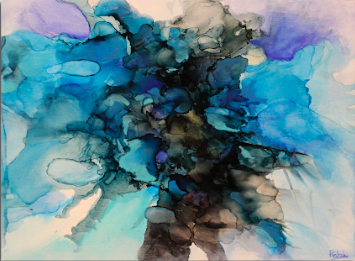
I do abstract art! I believe every colour has a meaning, it speaks of something, when many colours blend it has a language, a language that has nothing to do with realism or perfectionism... it’s just so powerful… and that is where abstract is born. I direct these colourful, bold, and boundless abstract language onto canvas and try to connect to people with an aim to sooth, to heal, to energize and help them search for inner peace and tranquility and give life a real meaning!

Do you have any advice for beginner artists who are nervous to explore new mediums and areas of art?
Abstract art can be a challenge. Beginners may believe that it is very easy, and anyone can do it. For those who have created abstract artworks or have taken a course, know that things can get a little complex. Creating an abstract piece requires certain skill sets. Don’t let the challenge turn you away. If you are a beginner , there are some tips you can keep in mind to start your journey as an abstract artist. You have to keep the following three main components of abstract artwork in mind:
1. Composition: While composition plays an important role in all types of artworks, it is especially essential in abstract art. Since abstract art is generally vague, it is important to have a focal point in your painting to capture the viewers’ attention. The shape, size, and placement of the objects on the canvas help create a good composition.
2. Colour: Since there aren’t any objective rules when it comes to abstract art, it can be easy to get carried away with the colour. However, it is advised to not throw all the colours on your palette onto the canvas before calling it a day. In fact, think about your colour palette before you even pick up the brush. Ideally, choose a limited number of colours and try to get creative with them. Mix these colours on the canvas to create an endless stream of changing shades and colours instead of picking a different tube every two minutes.
3. Texture: While using the right colors and composition, to ensure that you create an attractive piece of artwork, the texture makes the abstract painting really stand out. You can use various techniques and materials to add texture to your painting. In fact, you can just apply the paint more thickly in places. However, make sure that the texture is consistent throughout the artwork. Even if you have multiple different ideas on how to add texture, leave the rest for your next projects and only use one or two techniques per painting.
Nicole Dimt
Nicole guides you to the future through vivid colours and unique shapes with impeccable attention to detail and design. Her art is limitless, combining a magical imagination with real-world vibrancy that will leave the viewer craving more.
How does the title ‘Vibrance’ connect to you and your art?
Vibrance is the perfect word to describe my art. Every piece I make incorporates multitudes of every colour, which is the main goal of everything I create. In my work, I use the most saturated version of every colour I can, as I want my art to be eye-catching, as well as remind myself, and viewers, of the fascination and the joy that being a child once brought. I use vibrant colours so that my art feels lighthearted, fun, and just a little chaotic.

The subject in your artwork varies from nature and cityscapes to self-portraits. How do you decide on what subject to focus on?
My undergrad and the assignments it gave me are what opened me up to exploring many different subject matters within my art. I like to keep a very open-ended and diverse portfolio, and like to play with as many styles as I can. Anything can inspire me. Whenever I see a picture, or another artwork that I like, I get inspired to make something just like it, no matter what it is.
Do you prefer an abstract or realism style? Why?
It's hard to choose between the two - I often refer to my art as "abstracted reality," because that's exactly what it is. I always start my artworks with a reference of something from real life, such as nature, architecture, or fabric, and edit it digitally to create new wonderlands and worlds, which I then replicate. I would say this is my natural style. Granted, I do love to play with pure realism, and have a few pieces that showcase that in this exhibition. I like to create realism pieces when I find a reference that catches my eye, and I want to test my skill and
What would you say your biggest inspiration has been during your art journey?
My biggest inspiration throughout my art journey has definitely been all the amazing artists, and friends I met during university. My professors, peers, and mentors are who pushed me to be the artist I am now, and showed me new worlds and possibilities within painting. Many of these people helped me come up with themes and motifs, and really helped me connect with my art and understand it for what it is - something that did not come easily to me. It has been amazing to be around such creative people in my life, and this has continued post-grad into my workplace where I work as a concept artist, surrounded by brilliant minds who are fluent in the digital arts.
We hope you enjoyed getting to know a little more about the talented artists behind Vibrance! Don’t forget to come check out the exhibit, on from October 4th - 29th.
Also Read: Event Space Toronto, wedding venue Toronto, Wedding Reception Toronto
Surfacing Opening Reception: A Huge Success!
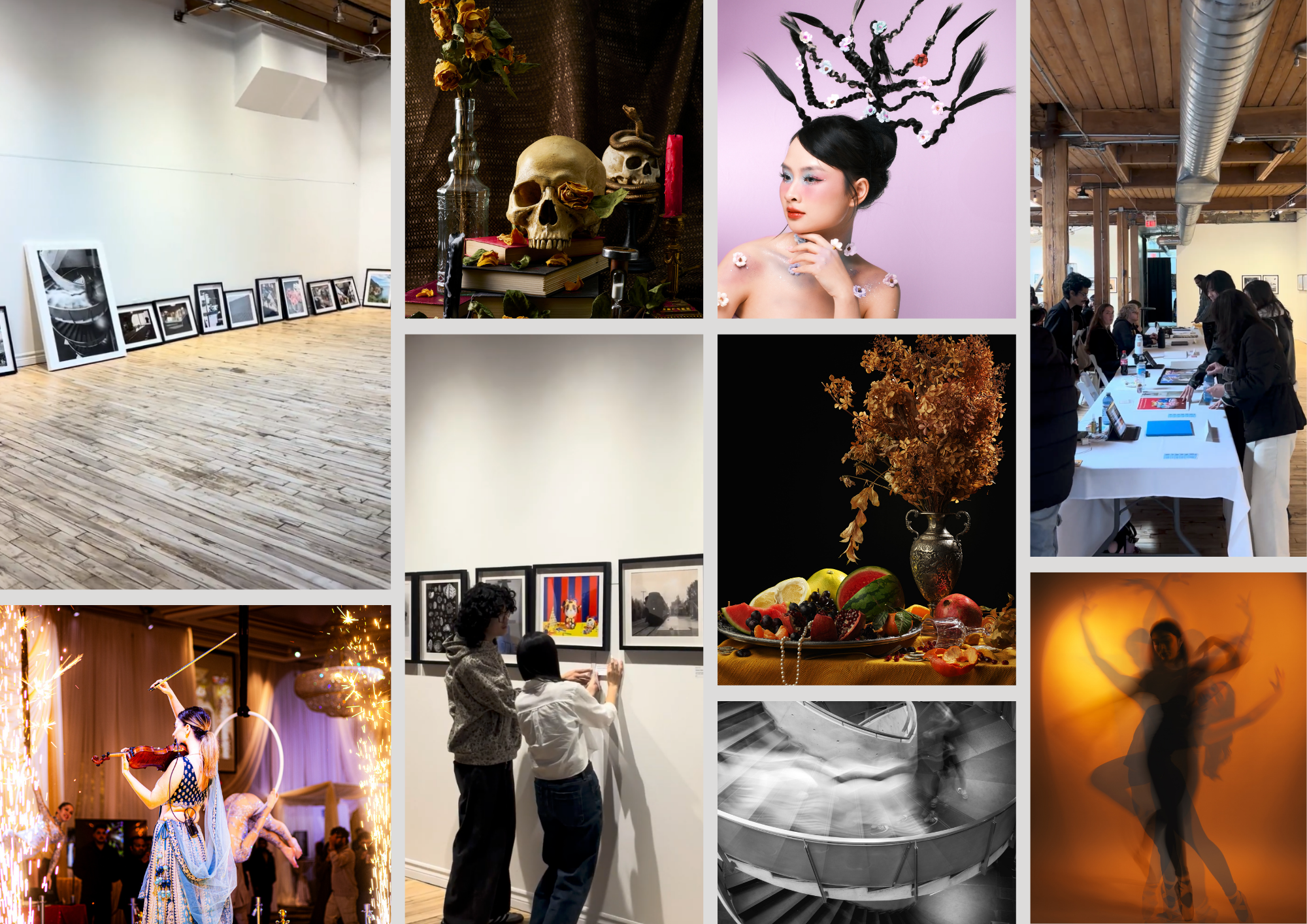
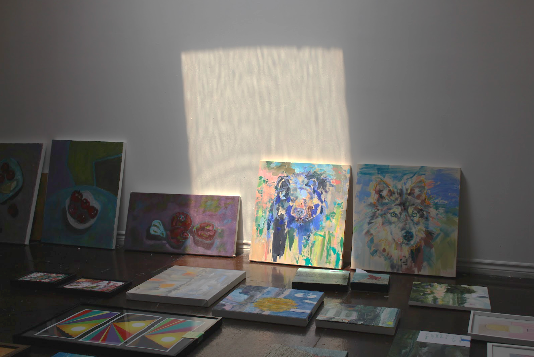
Our opening reception was a huge success on Thursday, June 2nd! We curated a space that encapsulates the spirit of PROJECT ART TORONTO and it turned out looking amazing..
Our opening reception was a huge success on Thursday, June 2nd! We curated a space that encapsulates the spirit of PROJECT ART TORONTO and it turned out looking amazing. The Surfacing Exhibit displays passion, hard work, collaboration, and creativity. Ewa Stryjnik is the director of PROJECT ART TORONTO, an art studio where artists can rent the space, attend art classes, or workshops.
The turn out was amazing and we just wanted to thank everyone for coming! This event brought together many people around the Queen West community to acknowledge the result of expression and skill. We were pleased to host such a meaningful experience for our amazing guests and artists.

The Surfacing Exhibit is showing 21 studio artists’ supportive and passionate work, most of which were created during the times of Covid-19. Their pieces represent a time when the group encouraged each other to create, explore, and grow.
While the art was observed, our community was achieving something much more meaningful, a night of face to face communication and personal connection. Something many have lost within the past few years.
Our own Twist Gallery communications team showed up to the event in support of Twist Gallery because we love seeing the gallery filled with art and art lovers!

We are so pleased to be a part of PROJECT ART TORONTO’s exhibit and allow them to use our space to display their Surfacing pieces. It was an absolute pleasure working with a larger team this month. While we are not often approached by groups, this community allowed for an easy transition and cohesive selection of pieces to work with. PROJECT ART TORONTO utilized our space and gave us something to really admire: their passion and hard work. Ewa and PROJECT ART TORONTO’s studio artists truly love being artists and they inspire our audience to start a passion of their own, whether that be art or anything you are passionate about.
The artists also came together during the Opening Reception to surprise Ewa with flowers and a card to show their appreciation!

Ewa Stryjnik not only inspires artists to continue their passion for art. But guides each artist to maximize their creative potential. This was perfectly displayed during our installation day and throughout our Opening Reception. Styjnik’s energy churned our blank canvas gallery into a perfectly curated template for students to display their art and a cohesive journey for patrons to participate in. While she envisioned where each piece thrived, she communicated that to her students and worked with them to find a balance between visual satisfaction and the space as a whole.

We would just like to say thank you again for coming to the Surfacing Opening Reception! We had a great time, and we hope you had a great time as well! The Surfacing Exhibit is open until June 25th, so if you missed the Opening Reception don’t worry, come experience Surfacing at Twist Gallery all month long at 1100 Queen Street West. We are open every Tuesday-Friday from 11:00am-6:00pm and Saturday from 11:00am-4:00pm.
Looking forward to seeing you again and hearing your thoughts on the Surfacing Exhibit!
June ‘Surfacing’ Group Exhibit with PROJECT ART TORONTO
This June, Twist Gallery is excited to partner with PROJECT ART TORONTO to showcase the ‘Surfacing’ Group Exhibit. ‘Surfacing’ will showcase art from 21 studio artists, created during the two years of Covid-19. ‘Surfacing’ is about strength, hard work and supportive camaraderie..
This June, Twist Gallery is excited to partner with PROJECT ART TORONTO to showcase the ‘Surfacing’ Group Exhibit. ‘Surfacing’ will showcase art from 21 studio artists, created during the two years of Covid-19. ‘Surfacing’ is about strength, hard work and supportive camaraderie. The exhibit will run from June 2nd- 25th, 2022. ‘Surfacing’ will be having an Opening Reception at Twist Gallery on June 2nd, at 6pm- 9pm. Meet the artists and supporters of PROJECT ART TORONTO and Twist Gallery. The Opening Reception and exhibit are both free to attend.
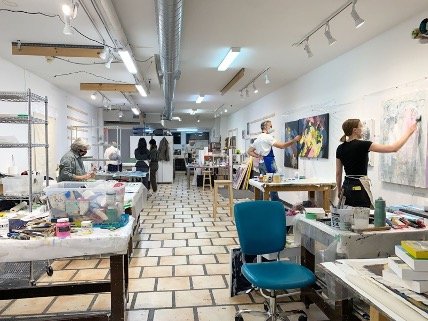
Ewa Stryjnik is PROJECT ART TORONTO’s director since the studio opened in May 2010. PROJECT ART TORONTO is an art studio that offers classes, workshops and studio spaces for artists to work on their own. “The studio is alive 24/7. PROJECT ART is an unfolding art pursuit,” Ewa says.
Photo by PROJECT ART TORONTO.
We had a conversation with Ewa and she shared a little more about PROJECT ART TORONTO and what ‘Surfacing’ means to her.
Twist Gallery: Why was PROJECT ART TORONTO started?
Ewa: For about 10 years, I was an art instructor at the Art Gallery of Ontario School of Art.
In 2010, AGO School of Art received funding to renovate the school and all instructors, including myself, were laid off. My students encouraged me to find a new space where they could continue painting. In May 2010, PROJECT ART TORONTO was born.
Twist Gallery: Can you explain what PROJECT ART TORONTO is?
Ewa: PROJECT ART TORONTO is an art studio where students and artists can develop their paintings independently with guidance and suggestions from instructor Ewa Stryjnik. For years we offered structured classes but since most of the artists continued attending classes, it naturally evolved into an Open Studio practice where artists can experiment with different techniques and develop their own styles. There are scheduled Open Studio classes as well as the option to rent a studio space on a daily, weekly or on monthly basis.
PROJECT ART TORONTO occasionally invites artist instructors to teach workshops. Instructors can rent our studio by the hour to teach workshops and/or classes. It’s a great way to share our space and for students to learn new perspectives and approaches. Our studio welcomes students and artists of all ages and we greatly value the camaraderie and support of our studio artists.
Twist Gallery: What does art mean to you as the director of PROJECT ART TORONTO?
Ewa: My biggest passion is to discover and point out the natural, creative talent in every person. Everyone is unique and should be proud of their own style and ideas. Secondly, I like to motivate all my artists to work hard and have a disciplined routine to master their technique and style. As I often say: “Passion to start, work to achieve.”

Photo by PROJECT ART TORONTO.
Twist Gallery: What does Project Art mean to you as the director?
Ewa: It means an Artist Studio! I’m happy that we have the space where we can paint, gather, chat, have classes, workshops and studio spaces for artists to work on their own. The studio is alive 24/7. Project art is an unfolding art pursuit. Also, I’m very grateful for all the friendships that developed throughout the years. In a way, our studio is our life and time capsule. A safe place where we can escape to and find a supportive camaraderie.
Twist Gallery: When did the artists paint the ‘Surfacing’ exhibit artwork?
Ewa: Most of the paintings were created during the Covid times. The lockdowns allowed the artists to paint more. Our group encouraged each other to create, explore and grow.

Photo by PROJECT ART TORONTO.
Twist Gallery: Can you explain how the ‘Surfacing’ artwork represents irrepressible creativity, undeterred spirit and a commonality of strength?
Ewa: During the uncertain times of Covid, we pulled ourselves together. In our commonality of strength, we focused on painting and improving our techniques. Painting became a positive outlet, a haven from the anxieties of the outside world. We realized that the beauty of art is very much needed these days. I hope that the paintings in our group exhibition ‘Surfacing,’ will showcase and celebrate that beauty and positivity of life and humanity.
Twist Gallery: How do you feel about Twist Gallery partnering with PROJECT ART TORONTO?
Ewa: It’s so great that venues like Twist Gallery exist. It is a beautiful, very cool gallery-event space that is large enough to host our group exhibition. We’re very grateful that Twist Gallery rents their space to the local artists allowing us to share our art with a new audience. I hope that our paintings will brighten up many lives and that we’ll be able to exhibit at Twist Gallery in the future. It is a pleasure to work with Twist Gallery art director Nadia Kakridonis and her team.
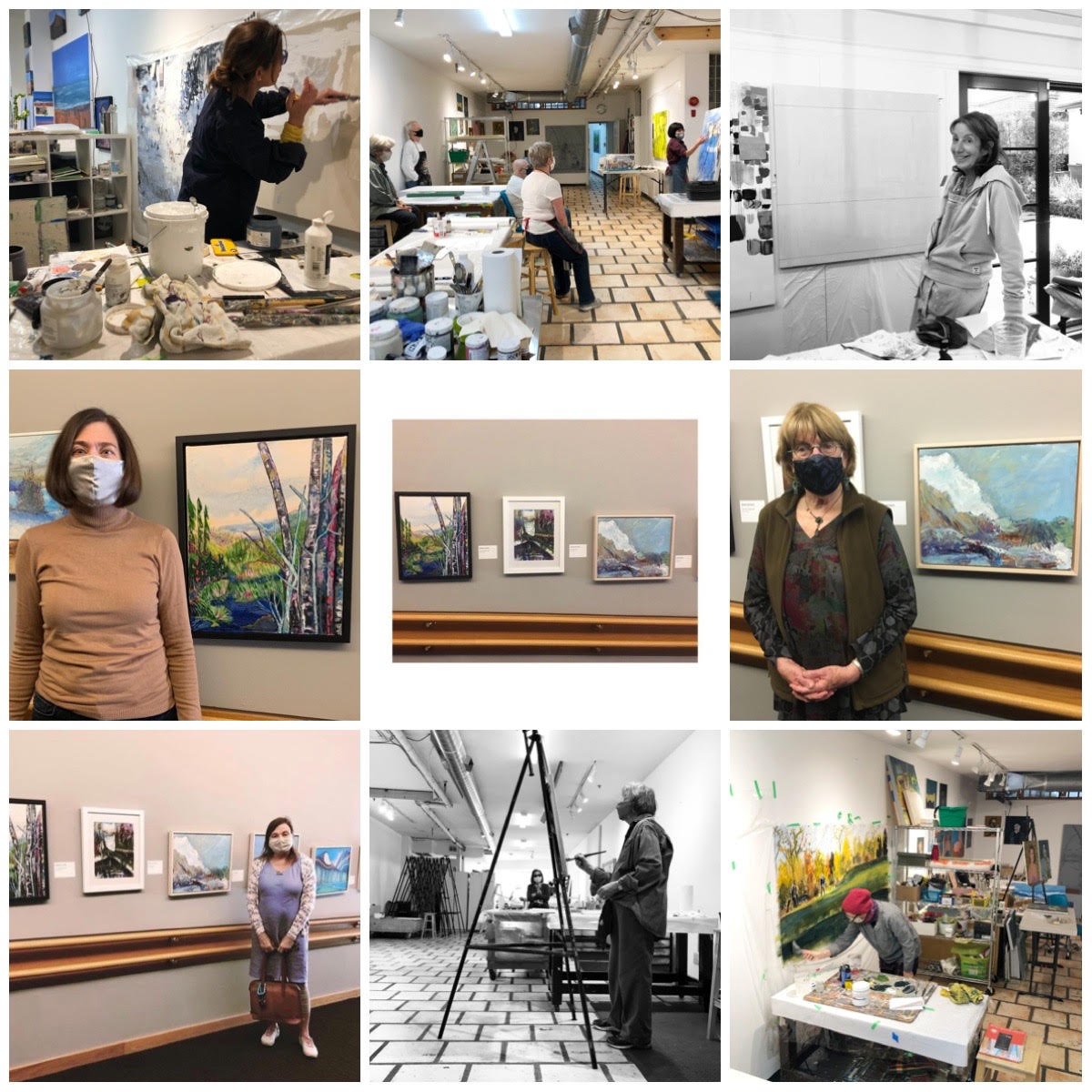
Photo by PROJECT ART TORONTO.
The 21 featuring ‘Surfacing’ artists are: Peggy Bell, Zora Bily, Maureen Bradshaw, Jeff Briggs, Geoffrey Cheung, Donna Chudnow, Marlene Etherington, Vian Ewart, Liz Haney, Andrea Higgins, Lisa Litowitz, Katharine Lochnan, Larissa Mattwich, Diana Menzies, Wendy Robertson, Janna Robins-Walters, Lisa Rose, Javier Silva, Linda Snowden, Ewa Stryjnik, and Selina Waxman.
We are so excited to be partnering with PROJECT ART TORONTO for the ‘Surfacing’ group exhibit. ‘Surfacing’ is about 21 studio artist’s passion and hard work. Even in difficult times, the artists encouraged each other to create, explore and grow. Experience ‘Surfacing’ in person, opening June 2nd- 25th, 2022 at Twist Gallery. Don’t miss your chance to meet the artists, attend the Opening Reception June 2nd, at 6pm- 9pm. Twist Gallery is open Tuesday- Friday, 11am- 6pm, and Saturdays 11am- 4pm.